-

Which breeds are best for meat-type ducks? Two recommended improved hybrid lines
1. Digao duck The Digao duck is a large hybrid-line meat duck developed by the Australian Digao company from introduced Pekin ducks. It was introduced into China in the 1980s. Parent-stock breeder ducks of this breed were raised at the Guangdong Overseas Chinese Farm. In 1987, the Nanhai County breeding duck farm in Guangdong Province introduced parent-stock Digao ducks, and the commercial ducks produced were well received. The Digao duck's appearance is similar to that of the Pekin duck. Ducklings have red-yellow feathers, which turn white after the juvenile plumage is molted. The head is large and slightly long, the neck is thick, the back is long and broad, the breast is wide, the body is slightly long, the breast muscles are full, and the tail is slightly raised, with 2-4 sex feathers
-
Introduction to the new cotton line ZGK9822
ZGK9822 (formerly named Zhong 221) is a new disease-resistant, insect-resistant cotton line bred by the Cotton Research Institute of the Chinese Academy of Agricultural Sciences. It carries two insect-resistance genes, BT and cpTI. This line has passed the genetically modified organism safety assessment of the Ministry of Agriculture. I. Characteristics: The growth period is 130 days, belonging to the medium-maturing, slightly early type of variety. The plant is tower-shaped and fairly compact, with a plant height of 82 cm. The leaves are medium in size and dark green. It has strong boll-setting ability, and the stems are thick and resistant to lodging. The bolls are oval, with a boll weight of 5.6 g and a lint percentage of 39%.
-
Harlequin glorybower (Clerodendrum trichotomum) is salt- and alkali-tolerant and can grow in saline-alkali soil.
Harlequin glorybower, also known as stinking chun and paohuatong, is a landscape plant in the genus Clerodendrum, family Verbenaceae. It is native to East China, Central China and Northeast China, and has been introduced at horticultural centers in Beijing, Tianjin, Hebei, Shaanxi, North China and Yanqing. It mostly grows on hillsides, roadsides, stream banks and near villages. It is a deciduous shrub or small tree; young branches have short brown pubescence; leaves are simple and opposite, ovate, 5-16 cm long, apex acuminate, base mostly truncate, margin entire or wavy-toothed, nearly glabrous on both surfaces; petiole 2-8 cm; corymbose cymes borne at the top or in leaf axils; calyx purplish-red, five-lobed almost to the base.
-
Preliminary Report on the Breeding of Dongxuewang Tao, a New Extremely Late-Ripening Peach Line
With the breeding objective of developing new varieties that are extremely late-ripening, high quality, storage-tolerant and high-yielding, we carried out hybridization in 1998 using Dongxue Mi Tao (Winter Snow Honey Peach) as the female parent and Zhonghua Shou Tao (China Longevity Peach) as the male parent, obtaining 50 hybrid fruits. In 1999, 46 hybrid seedlings were raised, top-grafting was carried out in 2000, and fruit was borne in 2001. The fruit traits were excellent, and multi-site trials were conducted in 2004. It was selected as a new line and tentatively named Dongxuewang Tao. Its main traits are as follows. (1) Botanical characteristics: The tree habit is relatively spreading; the main branches and perennial branches are grayish white, 2
-
Comparative Analysis of 5 Wrinkled-Skin Linear Pepper Varieties
In order to screen and breed superior local varieties of wrinkled-skin linear pepper and promote the development of the traditional wrinkled-skin linear pepper industry in Duyun City, the Duyun City Vegetable Station, with the support of the Qiannan Prefecture Director's Fund, conducted a comparative screening trial of wrinkled-skin linear pepper varieties from March to November 2006 in Shazhai Township, known as the "Home of Peppers." 1 Materials and Methods 1.1 Test Varieties Five test varieties were used, all local varieties. Namely: 1) Sandu Zhouqin linear pepper; 2) Guiding Houchang linear pepper; 3) Dushan Mawei linear pepper; 4) Duyun Machang linear pepper;
-
New wheat bran works well as livestock feed after alkaline treatment
As soon as wheat is harvested and threshed, there is new wheat bran to feed livestock (cattle, horses, donkeys and mules). Many farmers are used to feeding new wheat bran directly to livestock, but this feeding method is actually not good. Because when livestock eat untreated new wheat bran, the oral mucosa is often punctured by the wheat awns and becomes inflamed. Therefore, when using new wheat bran to feed livestock, it must first be soaked in 0.3%-0.5% quicklime water for 4 hours to alkalize and soften the new wheat bran, and then rinsed with clean water before feeding. In this way, livestock not only avoid mouth punctures when eating it, but also digest it easily, gain calcium
-
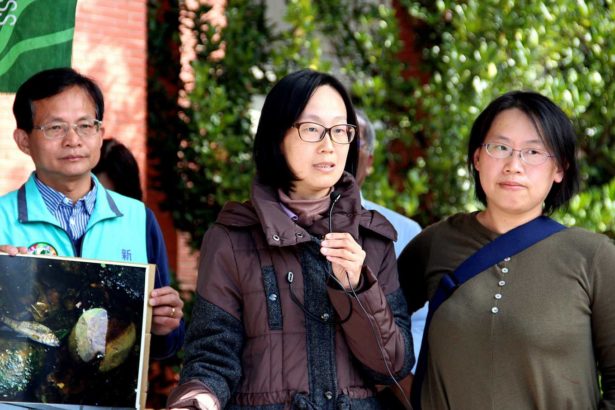
Witnessing the pollution scene! Large numbers of dragonfly nymphs and stream fish die downstream of the factory; the alliance calls on TSMC to keep its partners in line
Witnessing the pollution scene! Large numbers of dragonfly nymphs and stream fish die downstream of the factory; the alliance calls on TSMC to keep its partners in line
-
Introduction to the Content Determination Method for Aminophylline Tablets
Anhydrous theophylline - Take 20 tablets of this product, weigh accurately, grind finely, weigh accurately an appropriate amount (approximately equivalent to 100 mg of aminophylline), place in a 200 ml volumetric flask, add 20 ml of 0.1 mol/L sodium hydroxide solution and 60 ml of water, shake for 10 minutes to dissolve the aminophylline, dilute to volume with water, mix well; filter, accurately measure 5 ml of the subsequent filtrate, place in a 250 ml volumetric flask, dilute to volume with 0.01 mol/L sodium hydroxide solution, mix well, and follow the spectrophotometric method (Appendix page 17)
-
What are the occurrence patterns of the privet hawk moth (Clanis bilineata)?
Occurrence patterns of the privet hawk moth (Clanis bilineata): In Hebei, Shandong, Jiangsu, Anhui and other places, 1 generation occurs per year, and the mature larvae burrow into the soil at a depth of 10 to 15 cm to overwinter. In early to mid-June of the following year, pupation begins. The pupal stage lasts 10 to 15 days. In early to mid-July, adults emerge, with mid-month being the peak emergence period. During the day, adults rest quietly among branches and leaves, and begin activity in the evening; adults are phototactic. Generally, egg laying begins 3 hours after mating, with eggs mostly laid on the underside of leaves and a few on the upper side. Each female lays an average of about 350 eggs. Adults live 7 to 10
-
How is the new line pepper variety 2001?
The new line pepper variety 2001 was developed by researcher Zhuang Canran of Northwest A&F University and the Baoji Agricultural Technology Extension Center. From 1999 to 2001, regional trials were conducted in different ecological zones of Shaanxi, and production demonstrations were carried out in Shandong, Shanxi, ** and other provinces (regions), showing characteristics such as early maturity, disease resistance, high quality, high yield and wide adaptability. In February 2002, it passed the approval of the Shaanxi Provincial Crop Variety Approval Committee. 1 Characteristics The line pepper 2001 belongs to the determinate growth type, with robust growth, plant height 55-65cm
条件筛选