-

Introduction to the cultivation methods of the household potted plant Alocasia macrorrhizos
Alocasia macrorrhizos is a trade name, also known as "Dishuilian" and "Foshoulian", and other common names include Henyutou, Langdu (Guangdong), wild taro, mountain taro, big-root taro, big-worm taro, Tiantou, Tianmeng, etc. What is called "matixiang" (calla lily) in Taiwan, China actually refers to Alocasia macrorrhizos. Introduction to the cultivation methods of Alocasia macrorrhizos 1. Required temperature
-
Detailed Introduction to Potted Kumquat Planting Techniques
When visiting friends' homes, we often see potted kumquats on their balconies, and we always wonder how they manage to grow potted citrus trees so well. Let the editor of the Huayugu official website, the gardening know-it-all, explain in detail the cultivation methods for potted kumquats.
-
How to grow potted yew? An introduction to the cultivation methods
For yew, loam is the best soil, though a mixed substrate made from peat soil, perlite and other materials combined with loam can also be used. Good water retention, fertilizer retention and aeration are beneficial to the growth of yew. Although clay retains water and fertilizer, it is not airy, which is not conducive to the growth and development of the yew root system. Although sandy soil is airy, it has poor fertilizer and water retention.
-
How to grow flowers hydroponically? A brief introduction to soilless culture techniques and methods
Hydroponic flower growing is a common form of soilless culture, and there are many methods for it. A few of the commonly used ones are briefly described below. The deep flow technique is characterized by the plant roots being fully or partially immersed in the nutrient solution; the nutrient solution is flowing; the nutrient solution is mixed with air to dissolve oxygen
-
Introduction to Suzhou Bonsai: Get to Know This Jiangsu Specialty
Suzhou is one of the earliest birthplaces of bonsai art in our country. Suzhou bonsai art has a long history and its own unique structural forms and artistic style. It is one of the main schools of Chinese bonsai, known for its long historical origins, unique traditional craftsmanship, quaint and elegant characteristics, natural and smooth style, and graceful and varied
-
Introduction to Sichuan-style bonsai: one of the Chinese bonsai schools
Sichuan was called Ba-Shu in ancient times. In the first year of the Zhenguan era of the Tang Dynasty (627 AD), the Jiannan Circuit was established, so in the past Sichuan-style bonsai was also called Jiannan bonsai. After Emperor Xuanzong of Tang, the provincial seat was moved to Yizhou, which is present-day Chengdu, and its jurisdiction covered not only Sichuan but also parts of Yunnan and Guizhou
-
Introduction to the Suzhou School of Penjing: One of the schools of Chinese penjing
Suzhou, a city with 2,500 years of history, is located on the lower reaches of the Yangtze River, on the shores of Taihu Lake, with rolling hills and a dense network of rivers and waterways. Its humid climate and abundant rainfall are ideal for the cultivation and growth of plants, providing an extremely favorable regional environment and natural conditions for the development of tree-stump penjing. Suzhou is not only a unique water city
-
Introduction to the Shanghai School of Penjing: One of the Schools of Chinese Penjing
Shanghai sits on the south bank of the Yangtze River estuary. Its entire territory is an alluvial plain, with only volcanic rock hills such as Sheshan in the southwestern part. Rivers and ports are densely distributed across the suburbs, and the Huangpu River and Wusong River (also known as Suzhou Creek) flow through the city; these serve as the main drainage channels and shipping routes of Taihu Lake. During the Tang Dynasty it belonged to Huating County, and in the Song Dynasty the town of Shanghai was first established.
-
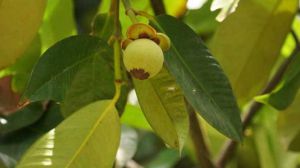
Which regions are suitable for growing mangosteen trees? Introduction to the main producing areas
Mangosteen originated in Southeast Asia, and is widely cultivated in Thailand, Malaysia, Myanmar and the Philippines, among other places; Thailand in particular is the country where it is grown the most. It is not abundantly produced in China, but it has been introduced and cultivated there, for example in Guangdong, Fujian, Hainan, Taiwan, China and Yunnan. It has very strict environmental requirements, so at present it is only grown on a small scale in trial plots.
-
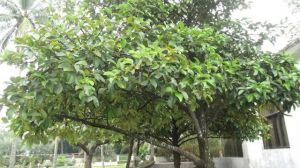
What does a mangosteen tree look like? A detailed introduction to its appearance and characteristics
The mangosteen tree is about 12-20 m tall, with many branches, an upright trunk, dark brown bark, and a conical crown. The leaves are elliptical or oblong-ovate, dark green on the surface and pale yellow-green on the underside, and the leaves break easily, exuding a yellow resin when broken. The flowers are terminal, with 4 petals, and are red in color.
条件筛选