-

Introduction and Characteristics of the Yangmai 158 Wheat Variety
Yangmai 158 is a breakthrough new wheat variety that combines high yield, multiple resistances, good quality, and broad adaptability. It is suitable for planting in parts of the lower and middle reaches of the Yangtze River under different terrains, soil types, and cropping systems with moderate to good fertility and water conditions. This product has successively participated in comparative trials in Jiangsu, Anhui, Xinyang in Henan, Shengxian in Zhejiang, Xinshao in Hunan, Hubei, and other locations, and ranked among the top in all of them. It increased yield by 14.86% compared with Yangmai 5, by 20.46% compared with Een 1, and by 28.36% compared with Zhemei 1. The average yield per mu is 3
-
Spider Plant Characteristics and Detailed Variety Introduction
Spider plant (Chlorophytum comosum) is a perennial evergreen herbaceous plant in the family Asparagaceae. Its roots are fleshy, and its leaves are slender, resembling those of an orchid. The stolons that emerge from the leaf axils of the spider plant can grow about a chi long, both rigid and pliable; the leaves clustered at the tips of the stems hang down from the rim of the pot, swaying in the wind, shaped like a crane spreading its wings and leaping. Hence, the spider plant was known in ancient times as the "crane-orchid." The spider plant has clustered leaves resembling flowers and stays green year-round; it is a famous foliage plant, hailed by people as the "aerial flower." According to research, the spider plant has the ability to absorb toxic gases. Generally, keeping one pot of spider plant in a room
-
Introduction to the Characteristics of the Wheat Variety HumaI 16
The new barley variety HumaI 16 is spring-type, a two-row long-awned hulled barley, with green seedlings, medium-to-high tillering ability, 800,000 to 1,000,000 plants per mu, and a spike-bearing rate of 33%. 45%. Effective spikes 390,000 to 400,000. Grains per spike about 26. Seed-setting rate above 97.0%, thousand-grain weight about 42.0 g, plant height 8595 cm. This variety matures early, maturing around May 12 of the following year, with good maturity appearance; lodging resistance; strong resistance to adverse climatic factors such as late spring cold and sharp high-low temperature changes;
-
Introduction to the High-Quality Early Indica Rice Variety Jiayu 948
Variety characteristics: The whole growth period of this variety is 107-108 days, about one day earlier than Zhe 852, and it is suitable for light cultivation. Tillering is moderate, and the panicle shape is relatively large. The total number of grains per panicle is about 110, the number of filled grains is about 90, the seed-setting rate is 80-85%, and the 1000-grain weight is 22.5-23.0 grams. It has good cold tolerance at the seedling stage, is not prone to seedling rot, has a high rate of healthy seedling formation, and has moderate flexibility in seedling age. It is relatively tolerant to fertilizer and resistant to lodging. It is moderately resistant to rice blast and bacterial leaf blight, colors well in the later stage, and ripens with green stems and yellow grains. The grain quality is excellent. According to the determination by the Rice and Rice Products Quality Testing Center of the Ministry of Agriculture
-
Introduction to the Characteristics and Traits of the Luomai No. 8 Wheat Variety
2008-6-3008:21:36 Luomai No. 8 was bred by the Luohe Academy of Agricultural Sciences and passed national approval in 2007, approval number: Guoshenmai 2007008. Characteristics and traits: semi-winter type, seedlings semi-prostrate, rapid stem elongation and jointing. Leaves wide and short, strong tillering ability, medium earing rate. Plant height about 75 cm, compact plant type, flag leaf relatively small and upright, good light penetration between rows. Spike spindle-shaped, long awns, white glumes, white grains. Grains semi-hard, uniform and plump. Average number of spikes per mu 400,000-470,000 spikes, grains per spike
-
Introduction to the new late japonica rice variety Jia 991
Jia 991 was approved in March 2003 at the 27th variety approval meeting of the Provincial Agricultural Crop Variety Approval Committee. In the 2000 and 2001 Jiaxing municipal trials, the average yields per mu were 537.2 kg and 563.7 kg respectively, a decrease of 4.38% and an increase of 3.19% compared with the control Xiushui 63 (both differences not significant), with a two-year average decrease of 0.60% compared with the control. The two-year average whole growth period was 158.5 days, the same as the control Xiushui 63. In the 2002 municipal production trial, the average yield per mu was 563.03
-
Introduction to the Variety Characteristics and Cultivation Methods of Dutch Parsley
Variety origin: native to the Netherlands. Introduced from the Beijing Academy of Agriculture and Forestry Sciences. Characteristics: prefers a cool climate, relatively cold-tolerant, with optimal growth at around 20 degrees Celsius; long daylight easily promotes bolting and reduces quality, so it should be cultivated in protected areas with delayed autumn planting or advanced early planting. Cultivation points: transplant when seedlings are about 40 days old, water frequently with small amounts, keep the soil moist, apply sufficient base fertilizer, ensure topdressing, and take care to prevent the soil from drying out and waterlogging in the field.
-
Detailed Introduction to the Dengmai 996 Wheat Variety
Dengmai 996 was bred by Henan Xiantianxia Seed Industry Co., Ltd. from a mutant line of Zhoumai 11. Approval number: Yushenmai 2007008. Characteristics: a weak vernalization, early-maturing variety with a growth period of about 204 days, the same maturity time as the control Yumai 18. Seedlings are semi-erect, with strong cold resistance, medium tillering ability, and a high spike-forming rate. Plant height is 84 cm, the stems have good elasticity, and it is relatively resistant to lodging. The plant type is compact, the flag leaves are held upright, and the spike layer is neat, with good yellowing at maturity. The spike is spindle-shaped, with long awns and white grains. The grains are semi-hard, relatively plump, with high test weight and a low black embryo rate.
-
What kind of chicken is the Yugan black-boned chicken? An introduction to its breed characteristics
The Yugan black-boned chicken is named after its place of origin, Yugan County in Jiangxi Province, and is a local breed used both as medicine and as meat. The Yugan black-boned chicken has a long history of rearing; according to textual research, as early as the Qin Dynasty, Wu Rui, the magistrate of Panyang (present-day Poyang), kept black-boned chickens at the foot of Wucai Mountain in Dengdun Township, Yugan County. Its main characteristics are: the whole body is black, with feathers, skin, meat, bones and internal organs all black, and it is especially noted for its medicinal value. According to blood group factor testing by the Institute of Genetics of the Chinese Academy of Sciences, it differs in type from the Taihe chicken and other black-boned chickens, has outstanding characteristics, and is
-
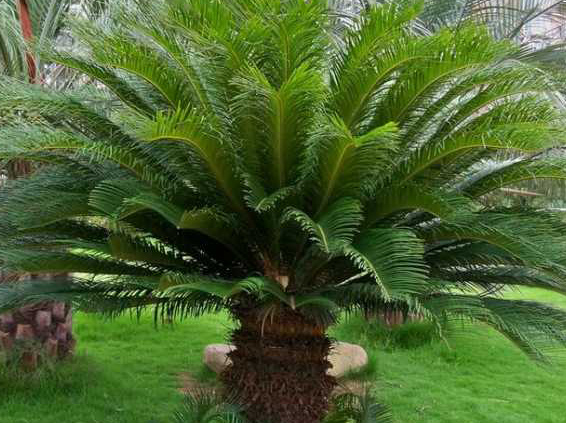
What Types of Cycads Are There? Introduction to Common Varieties
Cycads are a rare plant group in the world, with 24 extant species. Those commonly seen in gardens include: Cycas rumphii, Cycas szechuanensis, Cycas panzhihuaensis, Cycas micholitzii, Cycas multipinnata, Zamia cycads, and others
条件筛选