-
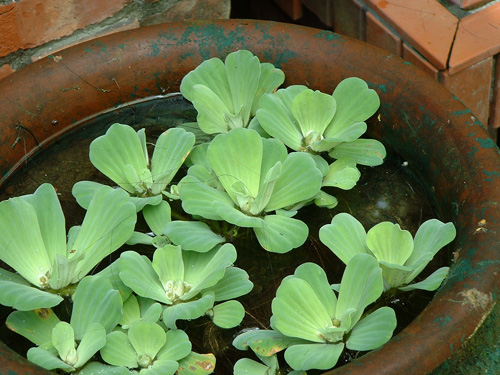
Pistia stratiotes (Water Cabbage, Water Lettuce) Introduction and Detailed Ecological Habits
Pistia stratiotes (Water Cabbage, Water Lettuce) Scientific name: pistiastratiotes Alias: Water Lotus, Large Duckweed, Water Lily, Fat Pig Grass, Water Hibiscus, Water Floating Lotus Family and Genus: Araceae Pistia Genus Morphological characteristics: Perennial floating herb. With stolons, leaves basal, rosette-like clustered, sessile
-

Introduction to the Characteristics and Origin of the Shouguang Chicken-Leg Scallion Variety
Variety source: A local variety of the short scallion type from Shouguang County, Shandong Province. It has passed variety approval in Shandong Province. Characteristics: The plant is short, thick and sturdy, with a plant height of 90-100 cm and very weak tillering ability. The leaves are short, thick and tubular, with curved tips, covered with a waxy bloom on the surface, and dark green. A single plant has 5-6 functional leaves, with thick and fleshy leaf tissue, relatively blunt leaf tips, and tightly arranged leaves. The upper part of the scallion white is slightly slender and light green; the lower part is relatively thick and large, and white. The scallion white is 25-30 cm long, with a base diameter of 3.3-6.5 cm, slightly curved, shaped like a chicken leg. A single plant weighs 250-75
-
What kind of chicken is the Yugan black-boned chicken? An introduction to its breed characteristics
The Yugan black-boned chicken is named after its place of origin, Yugan County in Jiangxi Province, and is a local breed used both as medicine and as meat. The Yugan black-boned chicken has a long history of rearing; according to textual research, as early as the Qin Dynasty, Wu Rui, the magistrate of Panyang (present-day Poyang), kept black-boned chickens at the foot of Wucai Mountain in Dengdun Township, Yugan County. Its main characteristics are: the whole body is black, with feathers, skin, meat, bones and internal organs all black, and it is especially noted for its medicinal value. According to blood group factor testing by the Institute of Genetics of the Chinese Academy of Sciences, it differs in type from the Taihe chicken and other black-boned chickens, has outstanding characteristics, and is
-
How to Identify the Quality of Fish Fry? An Introduction to Practical Methods
Fish farmers have accumulated a wealth of experience in practice, among which the methods for identifying the quality of fish fry are both simple and practical, and are worth learning by farmers everywhere. The first is to directly observe and assess the fish's body condition with the naked eye. Superior fish fry: fry of the same age and same species are uniform in size, with small heads and thick backs, bright body color, moist and glossy skin, and no parasites. They swim actively, gather in schools, have a strong ability to swim against the current, and react quickly when startled; whereas inferior fish fry are uneven in size, with large heads and narrow backs, thin tail stalks, dull body color, and injured body surfaces or parasites. They swim
-
Wandao 51 (87641) Rice Variety Introduction
Late-season glutinous variety, with a full growth period of 138 days. The usual yield is 500 kg per mu. Compact plant type, plant height 103 cm, strong tillering ability, tolerant of fertilizer and resistant to lodging, leaves medium-wide and erect, leaf color blue-green, with a smooth color transition at maturity. An average of 130 to 140 grains per panicle, seed-setting rate of about 80%, 1000-grain weight 26 g. Brown rice rate 81.4%, milled rice rate 72.6%, head rice rate 61.5%, gelatinization temperature 6.0, gel consistency 100 mm, amylose content 0.9%, fairly good glutinous quality. Moderately resistant to bacterial leaf blight, resistant to rice blast and white-backed planthopper,
-
Introduction to the Characteristics and Traits of the Quanshu 76 Sweet Potato Variety
Variety source: Jinshan 57 × Taishu 66. Characteristics and traits: This variety has a short-vine, semi-upright plant type, with medium to slightly thick vines, shallow compound-notched leaf shape, green leaf tips with brown edges, and light purple veins. Each plant has 8-10 branches and sets 3-5 tubers per plant, uniform in size, neatly concentrated, with a high proportion of medium and large tubers. The tubers are spindle-shaped, with yellow skin and yellow flesh. The tuber drying rate is 28%, and the starch yield is 16.9%, which is 1.9 percentage points higher than Jinshan 57. The eating quality score is 82.3, 2.3 points higher than the control Jinshan 57, and the eating quality is
-
Detailed Introduction to the Dengmai 996 Wheat Variety
Dengmai 996 was bred by Henan Xiantianxia Seed Industry Co., Ltd. from a mutant line of Zhoumai 11. Approval number: Yushenmai 2007008. Characteristics: a weak vernalization, early-maturing variety with a growth period of about 204 days, the same maturity time as the control Yumai 18. Seedlings are semi-erect, with strong cold resistance, medium tillering ability, and a high spike-forming rate. Plant height is 84 cm, the stems have good elasticity, and it is relatively resistant to lodging. The plant type is compact, the flag leaves are held upright, and the spike layer is neat, with good yellowing at maturity. The spike is spindle-shaped, with long awns and white grains. The grains are semi-hard, relatively plump, with high test weight and a low black embryo rate.
-
Wheat variety introduction: Xiangmai 62 (formerly known as Zhoumai 12)
Breeding institution: Zhoukou Prefecture Institute of Agricultural Sciences, Henan Province. Approval status: approved by the Henan Provincial Crop Variety Approval Committee in 1999, and by the National Crop Variety Approval Committee in 2000. Variety approval number: Guoshenmai 20000008. Variety source: Zhou 842A / SW73295 (USA). Characteristics: semi-winter habit, plant height 85-90 cm, compact plant type, long awns, white glumes, white grains, spindle-shaped spikes, 1000-grain weight 40 g. Test weight 781 g
-
Introduction to the Characteristics and Cultivation Points of the Mianmai 45 Wheat Variety
Characteristics: Spring type, medium maturity, total growth period about 193 days. Seedlings semi-erect, strong tillering ability, light green leaf color, yellowing of basal seedling leaves in winter, vigorous growth. Plant height about 80 cm, plants relatively compact and uniform, mature plant leaves medium length and width, slanting upward. Spike layer moderately uniform, good seed set. Spike rectangular, long awns, white glumes, light red grains, grain texture corneous to semi-corneous, uniform and plump. Average spike number per mu 255,000 spikes, grains per spike 35.9, 1000-grain weight 43.9 g. Disease resistance identification:
-
Introduction to the Characteristics and Traits of the Hangmai No. 96 Wheat Variety
Characteristics and traits: Spring type, relatively early maturing, growth period of about 77 days, maturity about 1 day earlier than the control Liaochun No. 9. Seedlings erect, leaf color dark green. Plant height about 80 cm, flag leaf semi-drooping, leaves relatively wide. Spike spindle-shaped, long awns, white glumes, red grains, hard texture. Average number of grains per spike 30.6, 1000-grain weight 35.0 g. Good lodging resistance, good ripening appearance. Drought resistance identification: medium drought resistance. Disease resistance identification: medium resistance to slow leaf rust and stem rust, highly susceptible to powdery mildew. Mixed samples tested in 2005 and 2006 respectively: test weight 78
条件筛选