Pistia stratiotes (Water Cabbage, Water Lettuce) Introduction and Detailed Ecological Habits
Pistia stratiotes (Water Cabbage, Water Lettuce)
Scientific name: pistia stratiotes
Alias: Water Lotus, Large Duckweed, Water Lily, Fat Pig Grass, Water Hibiscus, Water Floating Lotus
Family and Genus: Araceae Pistia Genus
Morphological characteristics: Perennial floating herb. With stolons, leaves basal, rosette-like clustered, sessile, floating on water, leaf veins prominent, making leaves appear fan-folded. Spadix axillary, spathe small, pale green.
Ecological habits: Prefers high temperature and high humidity, not cold-tolerant. Grows well in East China and South China, reproduces rapidly, is an invasive alien species.
Flowering period and flower language: June to July.
Landscape use: Leaf color emerald green, leaf shape peculiar, suitable for rivers, ponds, canals and other nutrient-rich still or slow-flowing water surfaces, or container cultivation for ornamental purposes.
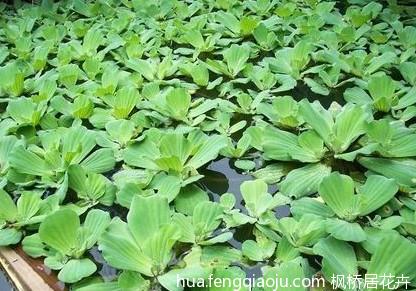
Name: Pistia stratiotes
Scientific name: PistiastratiotesL.
Alias: Pistia stratiotes, Large Duckweed, Water Lily, Fat Pig Grass, Water Hibiscus
Family and Genus: Araceae Pistia Genus
Category: Perennial floating herb
Morphological characteristics
Perennial floating herb. Main stem shortened and leaves in rosette form, stolons extending in all directions from leaf axils, new plants emerging from stem tips, with white clustered fibrous roots. Leaves clustered, leaf blades obovate-cuneate, 2-8 cm long, apex obtuse and slightly wavy, both surfaces with white fine hairs. Inflorescence borne in leaf axils, with short peduncle, spathe approximately 1.2 cm long, white, hairy on the back. Fruit is a berry. Flowering period June to July
Origin and distribution
Distributed or cultivated in all provinces and regions south of the Yangtze River in China.
Growth habits
Prefers high temperature and high humidity, not tolerant of severe cold
Propagation
Reproductive capacity is very strong.
Ornamental application
In garden waterscapes, often used to accent the water surface. In courtyard small ponds, planting a few clumps of Pistia stratiotes and stocking several koi carp creates an elegant and natural environment with unique charm. It has well-developed root systems that directly absorb harmful substances and excess nutrients from sewage, and can purify water bodies.
[Alias] Sow Lotus, Water Floating Lotus
[Source] Araceae Pistia genus plant Pistia stratiotes L., leaves used as medicine. Harvested in summer and autumn, sun-dried.
[Nature, flavor and meridian tropism] Pungent, cool.
[Functions and indications] Dispels wind and induces sweating, promotes urination and detoxifies. Used for colds, edema, difficult urination, rheumatic pain, skin itching, urticaria, incomplete measles eruption; external use for tinea versicolor, eczema.
[Usage and dosage] 3-5 qian; appropriate amount for external use, fresh product pounded for juice application or decocted in water to wash affected areas.
[Caution] Contraindicated for pregnant women.
[Excerpt] "Compilation of National Chinese Herbal Medicines"
Key points for garden maintenance of aquatic plants
Aquatic plants refer to a class of plants whose bodies partially or entirely live long-term in water or moist soil, and can complete their reproductive cycle. Diverse leaves, flower colors, flower shapes, and seeds of aquatic plants can present various interesting features. According to life forms, they can be divided into:
Wetland plants - Pampas grass, Silvergrass, Japanese iris, Variegated miscanthus, Pennisetum, etc.
Emergent plants - Yellow iris, Star grass, Purple loosestrife, Lotus, etc.
Floating-leaved plants - Gorgon nut, Water lily, Water poppy, Victoria water lily, Water poppy, Nymphoides, etc.
Floating plants - Salvinia, Water rice, Ottelia, Pistia stratiotes, etc.
Submerged plants - Hydrilla, Vallisneria, Potamogeton crispus, Potamogeton malaianus, etc.
Key points for garden maintenance of aquatic plants:
1. Water depth adaptability
For aquatic plants other than floating plants, the most influential ecological factor is water depth, which directly affects the survival of aquatic plants.
Wetland plants such as wild buckwheat, Miscanthus, Pampas grass, etc., these plants can only be planted above the normal water level.
There are many species of emergent plants, and their adaptability to water depth has a certain relationship with plant height. Taller plants have stronger adaptability to water depth, and vice versa. But generally speaking, water depth should not exceed 60 cm.
Floating-leaved plants generally have stronger adaptability to water depth than emergent plants. For example, water lilies are generally at 0.8 m, and Gorgon nut can also grow at a water depth of 1.5 m. Water chestnut is also a very interesting plant; as a floating-leaved plant, its water depth adaptability can reach 3 m, and when the plant grows to a certain extent, it can break its roots and become a floating plant, not limited by water depth.
The water depth adaptability of submerged plants is affected by light and water visibility. The better the water visibility and the stronger the light, the deeper the submerged plants can be distributed. Generally, the planting depth of submerged plants is twice the visibility.
2. Planting density
The design density of aquatic plants is discussed based on complete coverage of the ground (water surface) after aquatic plants recover. The construction density is a planting density determined based on plant tillering and branching characteristics, planting season, soil fertility conditions, combined with completion acceptance time and other factors. Construction density has practical value for saving construction costs.
3. Planting season
Aquatic plants are mostly herbaceous plants. During the growing period, especially in high-temperature seasons, new shoots sprout and grow very quickly, root activity is vigorous, and recovery is extremely easy. Generally, after aquatic plant roots are damaged, new roots can sprout after 1-2 days. After planting during the growing period, plant morphology can generally be effectively restored after 10-30 days.
Species with strong cold tolerance can be planted during the dormant period, such as Scirpus tabernaemontani, Thalia dealbata, Reed, Water lily, Arundo donax, Yellow iris, Purple loosestrife, etc. The damaged roots of these plants can withstand long-term low temperatures and have physiological characteristics of low-temperature resistance.
Species with poor cold tolerance must be planted during the growing period; planting these plants during the dormant period can easily cause frost damage. Such as Pontederia cordata, Variegated Scirpus, Papyrus, Umbrella plant, Egyptian papyrus, Aquatic canna, etc. If these plants are planted during the growing period, the root soil temperature is high, root activity is vigorous, and plants recover quickly.
In low-temperature areas relative to the plants, they must be planted during the growing period. For example, Papyrus native to tropical Africa and Ginger lily native to South China and Southwest China can only be planted during the growing period in Hangzhou and areas further north, otherwise they are susceptible to frost damage and death.
4. Normal water level
Many aquatic plants die over large areas after planting, and a very important reason for failing to achieve expected results is the problem of water level control. It can be seen that the normal water level line is the lifeline of aquatic plants. In actual construction operations, sufficient attention must be given to the normal water level line. It is recommended to use a level instrument to determine the normal water level line on site before planting construction layout. When configuring plants, consider the water depth adaptability of various plants as a hard indicator.
5. Wave impact
Small water systems generally have a small range and slow water flow, with little impact on the planting and growth of aquatic plants. Water bodies such as rivers and lakes bring great difficulties to the planting and survival of aquatic plants due to wind waves, ship waves, or rapid water flow erosion. According to wave characteristics, corresponding technical measures for wave dissipation and bank reinforcement should be taken during planting. For lake shorelines and river channel shorelines with small lake surfaces and small waves, pine wood piles and bamboo piles can be used; they both dissipate waves and stabilize banks, making them a better choice. Shoreline rock stacking treatment combined with landscape can also be used; the rocks are arranged in a staggered manner, which not only meets garden landscape needs but also dissipates waves and stabilizes banks. After aquatic plants recover, emergent plants can play a certain role in wave dissipation, and their root systems can also play a certain role in slope protection and bank stabilization.