-
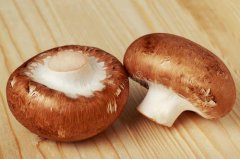
What Are the Mushroom-Processed Foods? An Introduction to Common Types of Mushroom Products
Mushrooms are now a common dish on the market, but did you know that besides being sold directly for eating, they can also be made into what kinds of goods for sale? What price range do they fall within? Let's take a look together. Shiitake stem meat floss, mushroom sauce, mushroom soy sauce
-
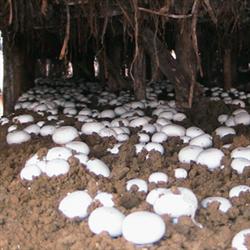
What Are the Types of Mushrooms? Introduction to Common Varieties
What types of mushrooms are there? Please introduce them. What is commonly called a mushroom is a type of fungus, namely the fruiting body of a basidiomycete. The fruiting body is the above-ground part that the basidiomycete sends up from the ground, looking much like an umbrella stuck into the soil. Below ground there is also a white, thread-like mycelium that spreads everywhere; this is the vegetative part of the basidiomycete,...
-
Introduction to a New Method for Short-Cultivation of Bailing Mushroom (Pleurotus nebrodensis)
After the Bailing mushroom (Pleurotus nebrodensis) bags are fully colonized with mycelium, they cannot fruit directly like oyster mushrooms do; they must go through a mycelial maturation period before fruiting is possible, and this maturation period often becomes a technical obstacle that many mushroom growers find hard to overcome. Depending on the mycelial characteristics, this stage generally takes about 30-60 days, with some strains even taking as long as about 80 days...
-
What to do when Pleurotus nebrodensis mushrooms grow deformed? Introduction to practical solutions
Help wanted: what methods can increase the yield of straw mushrooms? Farming Network teaches you three methods to increase straw mushroom yield: secondary inoculation - adopting a secondary inoculation measure helps increase straw mushroom yield. Straw mushroom mycelium grows too fast and ages very easily, which weakens its vitality and prevents it from effectively using the nutrients in the substrate to continue...
-
How to prevent red mushroom disease in straw mushrooms? Introduction to practical methods
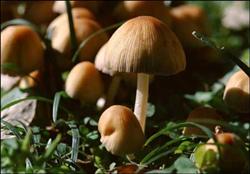
"Red mushroom disease" may be brown rot, also known as blister disease, wet bubble disease, etc. It mainly affects button mushrooms, straw mushrooms, oyster mushrooms, etc. The disease is caused by a pathogen called Mycogone perniciosa. The main symptoms are: the conidia and chlamydospores of Mycogone perniciosa only infect the fruiting bodies, not the mycelium. When the fruiting body is lightly infected, ...
-

What are the premium local mushrooms? A detailed introduction to 10 species
Eastern Fujian lies in the northeast of Fujian, backed by mountains and facing the sea, with a typical mid-subtropical maritime monsoon climate. With abundant rainfall and complex, diverse topography and landforms, it is extremely suitable for the growth of various wild mushrooms, and its fungal resources are quite rich. Here we introduce 10 species of premium mushrooms with relatively high economic value. 1. Boletus edulis (porcini) is an extremely delicious wild mushroom that is being domesticated. Its exports reach countries in Europe and America, and it is especially favored by the French and Italians. This mushroom has a thick, fleshy body and is commonly known as the big-foot mushroom. In rainy seasons in spring and autumn each year it grows under broadleaf forest, forming mycorrhizae. Artificial cultivation is very difficult, and current production relies on collecting wild resources, so efforts should be organized to tackle and develop it. It is most abundant in Pingnan County and Fu'an City of Ningde City. At present, artificial domestication mainly relies on artificial promotion techniques.
-
Introduction to the Saiwai Pleurotus cornucopiae No. 8 Variety and Its Main Characteristics
Saiwai Pleurotus cornucopiae No. 8: After 5 years of effort and joint research, the scientific and technical personnel of Luzheng Group Company have now bred a new variety of Pleurotus cornucopiae suitable for field cultivation in northern regions - Saiwai Pleurotus cornucopiae No. 8. This marks another new step forward for Luzheng Group in edible mushroom breeding. This variety is now available to the public, priced at 100 yuan per unit.
-
What to Do If Blue Mushrooms Appear? Introduction to the Correct Handling Method
The symptom of blue mushrooms is that when the mushroom body grows, a blue halo forms at the edge of the cap. In severe cases, the entire mushroom body looks as if blue ink has been splashed on it, and it does not disappear even after the mushroom body is harvested. The main causes of blue mushrooms are: (1) Heating the mushroom shed with coal, firewood and other fuels causes carbon monoxide and carbon dioxide poisoning in the mushroom body, stimulating changes in the components within the mushroom body and producing a discoloration reaction. (2) Using poor-quality new plastic film as covering material: due to the temperature difference between the inside and outside of the film and the relatively high humidity inside the film, it is very easy for the film to
-
What are the main varieties of arrowhead? Introduction to common varieties
(1) Shagu is a local variety of Guangdong. The plant height is 70-80 cm, and the spread is 60-70 cm. The corm is oval, 5 cm high, and 4 cm in transverse diameter; both skin and flesh are yellowish white. Each one weighs 40-60 g. It contains a lot of starch, has only slight bitterness, and tastes good. It does not store or transport well. From planting to first harvest is 110-120 days. In February, corms are used for raising seedlings; in July-August they are planted; from December to February of the following year they are harvested. The yield per mu is 1000 kg. (2) Bairou Cigu has a plant height of 70-75 cm and a spread of 80 cm.
-
Introduction to the New Hericium erinaceus Variety Houza 19
Houza 19 (Suhou 19) was developed by the Institute of Vegetable Crops, Jiangsu Academy of Agricultural Sciences, and passed national certification in 2007. It is suitable for cultivation in the main Hericium erinaceus production areas of China. This variety produces solitary fruiting bodies that are medium in size, 10-25 cm in diameter, round and uniform, head-shaped or clump-shaped, firm, with short spines, milky white, stemless, and densely textured. They can be stored at 4°C for 10-20 days and have a tender, smooth texture with a delicate fragrance. The optimum temperature for mycelial growth is 22-26°C, and the optimum pH is 4-5. The mycelial growth phase lasts 30 days, followed by a maturation
条件筛选