What Are the Types of Mushrooms? Introduction to Common Varieties
What types of mushrooms are there? Please introduce them. What is commonly called a mushroom is a type of fungus, namely the fruiting body of a basidiomycete. The fruiting body is the above-ground part that the basidiomycete sends up from the ground, looking much like an umbrella stuck into the soil. Below ground there is also a white, thread-like mycelium that spreads everywhere; this is the vegetative part of the basidiomycete,...
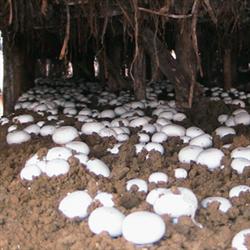
What types of mushrooms are there? Please introduce them.
What is commonly called a mushroom is a type of fungus, namely the fruiting body of a basidiomycete. The fruiting body is the above-ground part that the basidiomycete sends up from the ground, looking much like an umbrella stuck into the soil. Below ground there is also a white, thread-like mycelium that spreads everywhere; this is the vegetative part of the basidiomycete, that is, the non-reproductive organ. Under conditions of a certain temperature and humidity, once the mycelium has obtained sufficient nutrients it begins to form a fruiting body. In its early stage the fruiting body looks like an egg emerging from the ground, and it rapidly develops into a fruiting body with a cap, stipe, volva, annulus, and so on. The shape, size, height, color, and texture of mature fruiting bodies vary greatly. The largest can reach about 40 cm in diameter and about 50 cm in height; the smallest is no more than half a centimeter in diameter and no more than 1 cm in height. The traits of its various parts are described below: The cap is the most obvious part of the fruiting body, like a hat. Its shapes are highly varied; the commonly seen ones are bell-shaped, conical-hat-shaped, hemispherical, flat-spreading, funnel-shaped, and so on. Cap colors are extremely complex; although one can basically distinguish white, yellow, brown, gray, red, green, purple, and other colors, within each color category there are differences of dark, light, pale, and deep, and mixed hues are even more common. Their color can differ when young and when old and mature, and the color of the center and the margin is even more often different. The surface may be dry, moist, or sticky, smooth or rough, and some have various appendages: such as fibrils, concentric rings, various scales, and so on. The shape, size, and color of these appendages each have all sorts of variations. The shape of the cap margin also differs; the shape when young and after maturity can be completely different. After maturity it can generally be divided into incurved, reflexed, upturned, extended, and so on. The rim may be entire and regular, or wavy and irregular or torn. The cap surface has a cortex. The hyphae of the cortex contain different pigments, which cause the cap to show various different colors. Beneath the cortex is the flesh, generally composed of elongated thread-like hyphae, and in some composed of swollen vesicular hyphae. The color of the flesh and the change in color after injury often differ according to species. Generally the flesh is mostly white or dirty white, and some is pale yellow or red, etc. For example, the flesh of boletes mostly turns blue-green after injury, Russula nigricans first turns red then black, Paxillus involutus turns brown after injury, and Hygrophorus conicus turns black after injury.
The hymenophore is the part growing beneath the cap that produces the hymenium; some are leaf-like and are called gills. Some are tube-like and are called tubes. The gills are arranged radially, connecting to the top of the stipe toward the center and reaching the cap margin outward; the hymenium is arranged on both sides of the gills, or exists around the inside of the tubes.
1 Gills The color of the gills that is most often seen is generally the color of the spores. When young they are generally white, and after maturing they become various different colors. The shapes of the gills include broad, narrow, and triangular. There are equal-length, unequal-length, forked, and so on. Between the gills, some are connected by cross-veins, and some interweave into a net near the end close to the stipe. The edge of the gills is usually entire and smooth, but some are wavy or serrate, and some have a rough edge with granular matter. The way the gills connect to the stipe is one of the important bases for classification. There are usually the following types.
(1) Free: the gills do not connect to the stipe, so there is a distance between the gills and the stipe.
(2) Adnexed: the junction of the gills and the stipe bends slightly upward.
(3) Adnate: the gills connect directly to the stipe, neither extending downward nor bending upward.
(4) Decurrent: the gills extend downward along the stipe.
2 Tubes The tubes may be long or short, and the way they connect to the stipe is generally similar to the way gills connect to the stipe. There are also free, adnexed, adnate, and decurrent types, and some are easily peeled from the flesh, and the tubes are also very easily separated from one another. But those that are not arranged radially and resemble gills are not easily separated from one another. Their colors are diverse, the same as or different from the color of the tube mouths.
3. Hymenium The two sides of the gills and the inside of the tubes are covered with the hymenium. In the hymenium there are basidia, cystidia, and so on. The basidia are usually club-shaped, with four sterigmata, each bearing one basidiospore. Sometimes only two sterigmata are produced, producing two basidiospores. Basidiospores are abbreviated as spores. Their shape, color, size, and ornamentation are one of the important bases for distinguishing mushroom species. Their shapes include round, ovoid, elliptical, cylindrical, polygonal, star-shaped, and so on. Outside they have one or two layers of membrane, the membrane smooth or rough, with small warts, small spines, reticulations, ridges, and so on. Cystidia grow among the basidia, and their origin is mostly like that of the basidia; they are distributed over the entire surface of the gills, and because their positions differ they are given different names. Those growing on the two sides of the gills are called cystidia, and those growing on the edge of the gills are called cheilocystidia. They are usually colorless, but in some species they are colored inside; their shapes are various, such as club-shaped, spindle-shaped, fusiform, flask-shaped, pear-shaped, and so on. The apex may be tapering and tail-like, round-headed, horned, or bear crystals at the tip, and so on.
Edible mushrooms
Edible mushrooms are an ideal natural food or multifunctional food. At present the most widely eaten one in the world is commonly called the mushroom, with the scientific name Agaricus bisporus. There is great potential for further screening and domestication of high-quality production strains from wild species. China was the first in the world to domesticate and successfully cultivate shiitake, wood ear, golden ear, silver ear, straw mushroom, enoki mushroom, Hericium erinaceus, bamboo fungus, and so on, and has now domesticated the Mongolian Tricholoma mongolicum, while wild edible fungi such as the delicious bolete, morel, Tricholoma, Gomphidius, sticky-capped bolete, Russula vinosa, and so on can also be collected in large quantities and supplied to domestic and international markets.
Medicinal mushrooms
At present China has more than 500 species of macrofungi that are medicinal or, including those under trial, have medicinal effects. Besides the traditionally medicinal Poria cocos, Cordyceps sinensis, and Ganoderma lucidum, those newly discovered and used medicinally in recent years include Coriolus versicolor, tree flower, Cordyceps gunnii, and so on, as well as Armillariella tabescens, Marasmius androsaceus, Trametes robiniophila, Irpex lacteus, Xylaria nigripes, and so on.
The medicinal part is mainly the fruiting body, but some are processed into medicine by mass counter-production of mycelium through modern fermentation industry technology. Research and trials at home and abroad show that natural medicinal fungi have their own unique advantages. At present, in the search for drugs to treat modern civilization diseases such as hypertension, hyperlipidemia, and diabetes, screening from traditional Chinese medicines including fungi is undoubtedly promising.
Poisonous mushrooms
China has many kinds of poisonous mushrooms (toadstools), widely distributed and rich in resources. In the vast mountainous rural areas and townships, cases of poisoning from mistakenly eating poisonous mushrooms are relatively common, and there are reports of severe poisoning causing death almost every year. They have once been regarded as one of the causes of frequent food poisoning. Therefore, for a long time identifying poisonous mushrooms has been a matter of great concern. The relevant authorities have done a great deal of popular science education work, but cases of poisoning from mistaken eating still occur repeatedly. Because identifying toadstools is not easy, the only way is, in the wild, best not to lightly try mushrooms you do not recognize, and at the same time not to believe hearsay. Only after you have clearly distinguished them or consulted someone with practical experience and confirmed that they are truly non-toxic may you eat them. If after eating mushrooms you feel unwell, you should promptly go to the hospital for diagnosis and treatment, and must never be careless.
We can divide mushroom poisoning cases into 6 types:
(1) Gastrointestinal poisoning type: the usual poisoning symptoms are intense nausea, vomiting, abdominal pain, diarrhea, and so on. Poisonous mushrooms such as Entoloma sinuatum, Russula foetens and Lactarius torminosus, yellow sticky-capped bolete and Ramaria formosa can cause this type of poisoning; more than 80 species are known.
(2) Neuro-psychiatric type: more than 60 species are known. The poisoning symptoms are nervous symptoms such as mental excitement, mental confusion, or mental depression. For example, after poisoning by Amanita muscaria and Panaeolus semiovatus, hallucinatory reactions can be caused.
(3) Hemolytic type: the main symptom is hemolytic anemia occurring within 1-2 days; the symptoms are sudden chills, fever, abdominal pain and headache, pain in the lower back, back, and limbs, pale complexion, nausea, vomiting, general weakness and fatigue, restlessness, and shortness of breath. This type of poisoning symptom is mainly caused by Gyromitra esculenta.
(4) Liver-damaging type: about 20 or more species are related to causing this type of poisoning. Besides the species already mentioned that contain toxic peptides and amatoxins, there are also certain species of the genus Lepiota.
(5) Respiratory and circulatory failure type: the poisonous mushroom mainly causing this type is Russula subnigricans. The mortality rate is relatively high.
(6) Photosensitive dermatitis type: the species currently found in China to cause such symptoms is Phylloporus.
It is worth mentioning that in the development of modern high technology, people have found that Amanita toxic peptides have a specific inhibitory effect on RNA polymerase II of eukaryotic cells, while phallotoxins have a binding effect on actin. They are used in modern life science research and have played a positive role.
Wood-decay fungi
China has about 500 species relatively clearly recorded as wood-decay fungi. Those mainly causing white rot of wood include the genus Polyporus, the genus Coriolus, Fomes, and so on; those causing brown rot of wood include Fistulina hepatica, Piptoporus betulinus, and so on; in addition, common agaric-type wood-decay fungi include the genus Pleurotus, the genus Lentinus, the genus Hericium, and so on.
The decay of trees or wood caused by white-rot fungi or brown-rot fungi can be said to be harmful macrofungi, yet harmful and beneficial are often relative. Wood-decay fungi and many fungi are regarded as forest cleaners; they can decompose dead branches and fallen leaves and return them to nature, participating in the material cycle, and at the same time promote the natural metabolism of forest trees and maintain ecological balance. And white-rot fungi are currently the only organisms known to be able to completely degrade lignin into carbon dioxide and water. People are studying how to use them to degrade lignin. The laccase produced by white-rot fungi can degrade the hard-to-decompose substances in papermaking waste liquid.
Ectomycorrhizal fungi
China has extremely rich ectomycorrhizal fungi, with more than 600 species known, for example among the agarics the genus Russula, the genus Lactarius, the genus Amanita, the genus Boletus, among the gasteroid fungi the genus Scleroderma, the pea-shaped fungus, and among the ascomycetes the genus Tuber, and so on. The research and application of ectomycorrhizal fungi are of great significance for developing forestry seedling raising, promoting the growth and development of forest trees, and greening barren hills and abandoned mine and factory land.
Trials show that using ectomycorrhizae can make trees reach maturity 4-5 years earlier. In addition, research on ectomycorrhizal fungi and their mycorrhizal relationships also has practical significance for further domesticating wild edible fungi and expanding the cultivation and production of high-quality edible fungi.
[Alternative names] Agaricus bisporus, button mushroom, foreign mushroom, foreign fungus, foreign velvet, western straw mushroom
[Source] The fungus Agaricus bisporus (Lange) Sing, of the class Basidiomycetes, order Agaricales, family Agaricaceae, is used medicinally as its fruiting body.
[Habitat and distribution] It appears after autumn rain in vegetable gardens, fields, courtyards, and other places. It is distributed in various places.
[Cultivation] Indoor cultivation on a compost of horse manure and rice straw.
[Pharmacological effects] The fruiting body contains trypsin, maltase, enzyme, protease, and tyrosinase; the first three help digest food, and the latter is a blood-pressure-lowering agent.
[Flavor and meridian tropism] Sweet, neutral.
[Functions and indications] Promotes digestion, clears the spirit, and calms liver yang. Mainly treats indigestion and hypertension.
[Usage and dosage]
Daily fresh product 8 liang, can be stir-fried or boiled.
To treat hypertension: fresh product 10 liang per day, eaten in 2 servings.
Yuan mushroom is a famous wild edible fungus of Northeast China, and among mushrooms it is a top-grade mushroom second only to Hericium mushroom. It is one of the very few edible fungi that cannot be artificially cultivated. Yuan mushroom is rich in nutrients such as protein, fat, carbohydrates, calcium, and phosphorus, has a delicious taste, and has high edible value. Its taste is similar to seafood; dishes made with yuan mushroom suit both meat and vegetarian diets, with many ways to eat it such as stir-frying, stewing, braising, and simmering, and it can be called a mountain delicacy with "meat within the vegetarian." Regular consumption has effects such as strengthening body immunity, enhancing the body's resistance, benefiting the intellect and bringing joy, supplementing qi without hunger, and prolonging youth and lightening the body. As medicine, yuan mushroom has the functions of relaxing the sinews and activating the collaterals, and strengthening the sinews and bones, mainly treating soreness and pain of the lower back and legs, numbness of the hands and feet, and unsmooth meridians and collaterals.
Hazel mushroom is one of the mountain delicacies unique to Northeast China, one of the very few practical fungi that cannot be artificially cultivated, and a truly green food. Hazel mushroom is delicious; hazel mushroom dishes such as hazel mushroom stewed with chicken are an indispensable traditional delicacy for Northeast people entertaining honored guests. Hazel mushroom contains a variety of amino acids and vitamins essential to the human body; regular consumption can strengthen body immunity, benefit the intellect and bring joy, supplement qi without hunger, and prolong youth and lighten the body. Hazel mushroom can also be used medicinally, and can be used to cultivate the precious medicinal material Gastrodia elata. Straw mushroom and hazel mushroom are similar, and are the first choice for home consumption.
Hericium mushroom is also called Hericium mushroom, lion's mane, and is a precious wild edible fungus named because its shape resembles a monkey's head. Hericium mushroom has white, fine, soft flesh and a slight delicate fragrance; there are also many ways to prepare Hericium mushroom, and after cooking the taste is extremely delicious, so "Hericium, bird's nest, shark's fin" are ranked first among the delicacies of mountains and seas. Hericium mushroom contains a large amount of protein, fat, carbohydrates, amino acids, and various vitamins, and can enhance human immunity. Hericium mushroom is sweet and neutral in nature and flavor, has the effects of benefiting the five viscera and aiding digestion, contains various anti-cancer substances such as polypeptides, polysaccharides, and aliphatic amides, has a very good effect of enhancing the body's immune function, has a very good curative effect on cancers of the digestive tract, and is also beneficial to wound healing after surgery.
The living environment of mushrooms: dark and damp soil (water is required)
I. Introduction to Agaricus bisporus
Agaricus bisporus is often simply called the mushroom, and is also called white mushroom and button mushroom; it belongs to the kingdom Fungi, subphylum Basidiomycotina, order Agaricales, family Agaricaceae, genus Agaricus. Many countries cultivate it, among which our country's total output ranks second, and canned mushrooms rank first in international trade volume. At present, international mushroom production is still continuing to develop, and various provinces and cities in our country take cultivating mushrooms as one of the first-choice projects for the "vegetable basket project" and "foreign-exchange-earning agriculture," and its development prospects are very broad. Dear friends, now you should know that mushroom actually refers to Agaricus bisporus, and not that all kinds of mushrooms are called mushrooms; mushroom as a general term for many kinds of mushrooms is entirely due to people's habits, or perhaps the effect of the English "Mushroom."
II. The fruiting body morphology of Agaricus bisporus
The fruiting body is medium to somewhat large. The cap is 3-15 cm in diameter, initially hemispherical, later nearly flat-spreading, sometimes depressed in the center, white or milky white, smooth or with tufted scales in later stages, and the margin cracks when dry. The flesh is white and thick. The gills are pink then brown, black, relatively dense, free, unequal in length. The stipe is thick and short, cylindrical, slightly curved, 1-9 x 0.5-2 cm, nearly smooth or slightly fibrillose, white, solid inside. The annulus is single-layered, white, membranous, born at the middle of the stipe, easily falling off. The basidia bear two basidiospores, hence the name Agaricus bisporus; the spore print is dark brown. The spores are brown, elliptical, smooth, 6.5-10 x 5-6.5 micrometers.
III. The nutrition and taste of Agaricus bisporus (partly excerpted from Mr. Zhang Guangya's Illustrated Guide to Chinese Edible Fungi)
The flesh of Agaricus bisporus is thick and tender, rich in nutrition, and has always been called "plant meat." According to analysis, every 100 grams of dried Agaricus bisporus contains 36.1-40 g of protein, 3.6 g of fat, 31.2 g of carbohydrates, 718 mg of phosphorus, 188.5 mg of iron, 131 mg of calcium, 14.2 g of ash, 6.0 g of crude fiber, and 302 kcal of calories. Agaricus bisporus also contains 18 kinds of amino acids, of which eight are essential amino acids for the human body. Modern medicine shows that Agaricus bisporus has a certain immune effect on viral diseases. The mushroom polysaccharides and foreign proteins it contains have certain anti-cancer activity, can inhibit the occurrence and development of tumors, and the inhibition rates on mouse sarcoma S-180 and Ehrlich carcinoma are 90% and 100% respectively. The tyrosinase it contains can dissolve a certain amount of cholesterol and lower blood pressure, and is a blood-pressure-lowering agent; the trypsin, maltase, and protease it contains help digest food. Traditional Chinese medicine holds that this fungus is sweet and neutral, and has effects such as refreshing the spirit, promoting digestion, and calming liver yang. Scientists attending the Second International Mushroom Nutrition Annual Meeting at Middlesex University in the UK said that mushrooms contain a variety of antiviral components, and these components have very good effects on treating diseases caused by viruses. According to British media reports, scientists attending this meeting said that mushrooms were used in traditional Chinese medicine very early, have analgesic effects, and also have a certain curative effect on diseases such as arthritis. Modern research has found that mushrooms contain a variety of antiviral components; some mushrooms can enhance the human body's immune function, and can even reduce the risk of rejection reactions in patients receiving organ transplant surgery. However, people are still unclear about the mechanism. Scientists hope to extract the effective components from mushrooms to treat diseases caused by viruses, such as chronic fatigue syndrome, hepatitis C, and even AIDS.
IV. Overview of world Agaricus bisporus production (excerpted from Farmers' Daily)
Mushroom (including Agaricus bisporus and Agaricus bitorquis) is the largest mushroom species in world edible fungus production, with a relatively wide distribution area. The United States has the largest world mushroom output; in 1994 the U.S. mushroom output increased from 342,000 tons in 1991 to 370,000 tons, an increase of 8.2%, accounting for 20% of the world's total mushroom output of 1,846,000 tons; China's mushroom output increased sharply from 170,000 tons in 1991 to 359,000 tons, an increase of 111.2%, accounting for 19.4% of the world's total mushroom output. In addition, France, the Netherlands, the UK, Italy, Poland, Spain, Germany, Canada, Ireland, Belgium, Indonesia, Hungary, and Mexico, among others, all have relatively large-scale production.
World mushroom trade is mainly based on canned mushrooms, with less trade in fresh mushrooms, salted mushrooms, and dried mushrooms. According to the Japan Canned Food Association, in 1997 the output of canned mushrooms in major world countries was 219,300 tons. Among them, China's canned mushroom output reached 142,800 tons, accounting for about 65% of the world's total canned mushroom output, ranking first in the world; while the canned mushroom production of countries such as France, the Netherlands, and Belgium showed a trend of decreasing year after year, and Japan's canned mushroom output was only 5,000 tons, accounting for 2.3% of the world's total output.
The imports of world canned mushrooms are mostly by the United States and the countries of the European Community. From 1988 to 1993, the total imports of canned mushrooms by major world countries were 300,000 to 360,000 tons, and the main importing countries were Germany, the United States, France, Canada, Belgium, Japan, and Sweden, among others. According to reports: in 1997, the total imports of canned mushrooms by major world countries were 216,300 tons. Among them, Germany's imports reached 90,300 tons, accounting for 41.8% of the world's total canned mushroom imports; the United States' imports were 61,200 tons, accounting for 28.3% of total imports; France's imports were 24,400 tons, accounting for 11.3% of total imports; Japan's imports were 12,200 tons, accounting for 5.7% of total imports. The total exports of canned mushrooms by major world countries are roughly equal to total imports.
In recent years, the import volume of canned mushrooms in the EU has shown an upward trend. According to International Agricultural Products (8.64, -0.47, -5.16%) Trade, in 1998 the EU's import quota for canned mushrooms increased from 62,660 tons in 1997 to 68,215 tons, an increase of 8.87%; in 1999 the EU's import quota for canned mushrooms increased to 70,045 tons, an increase of 2.68%; in 2000 it increased to 71,875 tons, an increase of 2.61%; from 2001 onward it will increase to 72,790 tons each year, an increase of 1.27%, reaching a record level. By convention, 85% of import licenses go to "old customers" and 15% to "new customers." So-called "old customers" refer to importers that had import licenses every year from 1994 to 1996 and actually imported canned mushrooms in at least two of those three years; importers not meeting the above conditions are "new customers."
VI. Do not pick wild mushrooms by the roadside, and do not eat them even if picked
Wild mushrooms should be eaten with caution; poisonous mushrooms harm people and cause many regrets (China Youth Daily Green Net - Health)
With the arrival of late summer and early autumn, wild mushrooms in mountain hollows and forests become more numerous. Villagers begin to gather them for food and dry them for storage, and city people also cannot resist the temptation to taste the deliciousness of wild mushrooms.
Somewhere a family of four ate delicious mushrooms to satiety at noon, and for dinner again used mushrooms as a dish. At nightfall, the son first developed abdominal pain, then all four members of the family fell ill one after another, with continuous vomiting and diarrhea. On the third day, the wife and son successively developed yellowing of the skin, coma, and bloody stools, and died despite rescue efforts. Mr. Sun and his daughter passed through the critical period after active treatment in the hospital, but the liver damage was still relatively severe, with transaminase above 1,000 units.
In our country there are major poisoning incidents caused by poisonous mushrooms every year, such as in 1997 in a certain southern province when more than 200 people were poisoned at one time and 73 died.
Mushroom is the common name for fungi of the subphylum Basidiomycotina, class Hymenomycetes, order Agaricales, and about 3,250 species are now known. Because most individuals look like small umbrellas they are called agarics. The growth environments of mushrooms are diverse, and certain kinds of mushrooms can be found almost anywhere green plants can grow. Mushrooms grow relatively concentrated in grasslands and forests. Throughout the four seasons, except early spring and winter, corresponding kinds of mushrooms appear in the other seasons, and they are most commonly seen in August and September.
Many peoples in the world have the habit of picking wild mushrooms to eat, because of the joy of picking mushrooms and the tempting deliciousness. More than 80 species of poisonous mushrooms have been reported in our country; although some simple identification methods have been summarized among the people, because poisonous mushrooms and edible mushrooms are similar in morphology, these methods are hard to be effective. The only currently recognized identification method is classification and identification based on morphological characteristics.
One of the mushrooms often causing poisoning in northern regions is Lepiota helveola, whose characteristics are ochre-yellow with pink, initially convex-round, later flat, with the surface showing red-brown or brown leopard-print-like scales, and the margin incurved with cotton-like fibrils. The flesh is white, the gills initially white, later slightly yellowish, with fibrils on the margin. The stipe is white, hollow, slightly enlarged at the base, the annulus white, easily falling off. It has a faint mushroom fragrance. The poisoning incident that occurred in Hebei this year was caused by Lepiota brunneoincarnata.
Amanita virosa is another mushroom that often causes poisoning in our country; its body is white, oval or bell-shaped when young, flat-spreading when old, with a smooth surface. The stipe is smooth, enlarged at the base. The annulus is born on the upper part of the stipe, and the volva is thick and sack-shaped. Two large-scale mushroom poisonings in Henan and Yunnan in recent years were both caused by Amanita virosa. Other poisonous mushrooms that often cause poisoning include: Amanita virosa with scaly stipe, Amanita phalloides, Amanita vaginata with black gills, Amanita angustilamellata, Russula emetica, and so on.
The substances in poisonous mushrooms that cause poisoning are the toxins they contain; mushrooms that often cause poisoning contain the following toxins: (1) Toxic peptides, mainly liver toxins, highly toxic, with slow action. (2) Amatoxins, liver and kidney toxicity, strong action. (3) Muscarine, with action similar to acetylcholine. (4) Psilocybin, causing hallucinations and mental symptoms. (5) Gyromitrin, causing destruction of red blood cells.
Different poisonous fungi contain different toxins, and the clinical manifestations they cause also differ; they are generally divided into four types:
1. Gastroenteritis type, incubation period half an hour to 6 hours, clinical manifestations mainly gastroenteritis symptoms. After symptomatic treatment it can recover quickly. 2. Neuro-psychiatric type, incubation period 1-6 hours; besides gastroenteritis symptoms there are also sympathetic nerve excitation symptoms and mental symptoms. Atropine has a relatively good effect on controlling sympathetic nerve excitation symptoms. 3. Hemolytic type, incubation period 6-12 hours; besides gastroenteritis symptoms there are hemolytic manifestations, and signs such as anemia and liver enlargement can appear. This type mostly recovers after treatment with adrenal cortical hormones and blood transfusion. 4. Liver disease type, with an incubation period of 10-30 hours depending on the mushroom; initially mostly gastroenteritis symptoms, and some patients may have a false recovery period, after which manifestations of damage to organs such as liver, brain, heart, and kidney appear, but liver damage is the most severe. Some patients may have mental symptoms. The general course of disease is 2-3 weeks. Mortality is high. Patients of this type can be treated on a trial basis with sodium dimercaptopropanesulfonate.
The most important point in preventing mushroom poisoning is not to eat mushrooms when it is unknown whether they are poisonous. Experts suggest: wild mushrooms are not easy to identify, and wild mushrooms should not be gathered for food. If adverse reactions occur, go to the hospital for treatment in time.
Click to get more mushroom cultivation techniques
Click to get more edible fungus cultivation techniques