-
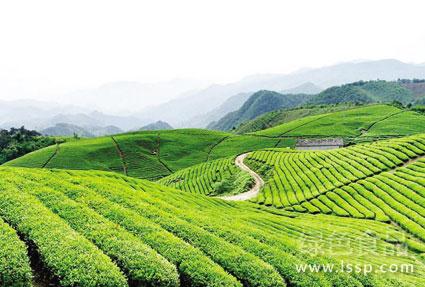
Introduction to Pollution-Free Pure Natural Organic Tea Planting and Cultivation Techniques
Introduction to Pollution-Free Pure Natural Organic Tea Planting and Cultivation Techniques
-
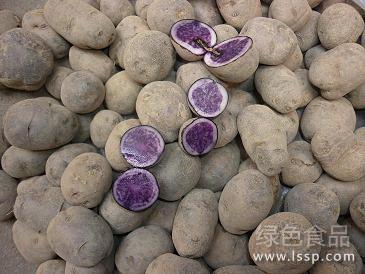
Introduction to the Cultivation Techniques of Purple Potato / Black Potato
Purple Potato - Introduction to Black Potato Cultivation Techniques
-

How to Propagate Hyacinths? Detailed Introduction to Propagation Methods
Propagation Methods of Hyacinth. Hyacinths are mainly propagated by dividing bulbs; seed propagation is used in breeding, and bulb propagation can also be used. The mother bulb produces 1-2 daughter bulbs after 1 year of planting, and some varieties can produce more than ten daughter bulbs. It can be used for bulb division propagation; daughter bulb propagation requires 3 years to bloom. Seed propagation, sown in autumn
-
How to Propagate the Boston Fern? Detailed Introduction to Propagation Methods
Propagation Methods of the Boston Fern The Boston fern can be propagated by division. The Boston fern is commonly propagated by division; in summer, cut off the small rooted plantlets growing from the stolons of vigorous plants and plant them separately. Cut off the small rooted plantlets growing from the stolons of vigorous plants and plant them separately.
-
How to sow Podocarpus macrophyllus? Introduction to common varieties
Podocarpus macrophyllus, also known as Luohanshan and Tushan, belongs to the genus Podocarpus in the family Podocarpaceae. It is evergreen year-round, vigorous and elegant, and is a relatively precious landscaping tree species. What is magical and interesting about Podocarpus macrophyllus is that in summer, in the leaf axils of female trees, seed-like structures resembling little arhats are produced. The bald head part on top of the seed is a lateral ovule
-
Introduction to the Planting Methods and Cultivation Management Techniques of Deutzia parviflora
Deutzia parviflora is a deciduous shrub in the genus Deutzia, family Saxifragaceae. It is distributed in Northeast and North China, and also in Russia and Korea. It mostly grows at the edges of broad-leaved forests or in thickets. The flowers of Deutzia parviflora are elegant in color, small but densely packed. Its blooming period coincides with the flower-scarce summer season, making it an excellent material for landscaping.
-
An Introduction to the Characteristics of Lingnan Penjing: Style and Shaping Features
China has a vast territory, rich in land and resources. Because each region has a different geographical environment and greatly differing climates, the plants grown in each place have their own characteristics, the tree species vary, and the subjects and techniques of penjing creation are likewise not the same. Since the art of penjing is a reflection of the author's subjective thinking and emotions, the penjing created in each region
-
Purple Pitcher Plant Pictures and Name Introduction: A Strange Carnivorous Plant
Chinese name: Purple Pitcher Plant Alternative name: Purple Pitcher Plant Latin scientific name: Sarracenia purpurea Family and genus: Sarraceniaceae, Sarracenia Origin and distribution: United States and Canada The purple pitcher plant is a perennial herbaceous plant and the shortest variety among the carnivorous plants in the genus Sarracenia
-
Introduction to the Shanghai School of Penjing: One of the Schools of Chinese Penjing
Shanghai sits on the south bank of the Yangtze River estuary. Its entire territory is an alluvial plain, with only volcanic rock hills such as Sheshan in the southwestern part. Rivers and ports are densely distributed across the suburbs, and the Huangpu River and Wusong River (also known as Suzhou Creek) flow through the city; these serve as the main drainage channels and shipping routes of Taihu Lake. During the Tang Dynasty it belonged to Huating County, and in the Song Dynasty the town of Shanghai was first established.
-
Introduction to the Suzhou School of Penjing: One of the schools of Chinese penjing
Suzhou, a city with 2,500 years of history, is located on the lower reaches of the Yangtze River, on the shores of Taihu Lake, with rolling hills and a dense network of rivers and waterways. Its humid climate and abundant rainfall are ideal for the cultivation and growth of plants, providing an extremely favorable regional environment and natural conditions for the development of tree-stump penjing. Suzhou is not only a unique water city
条件筛选