-
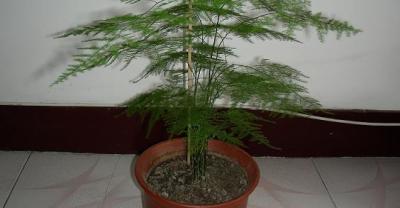
How to grow Hymenocallis? Growing methods and flower language introduction
Hymenocallis likes to grow in a humid environment. It does not have high requirements for soil, but it prefers sandy soil. If grown in a pot, you can choose leaf mold...
-
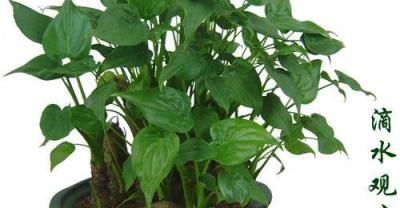
How to Grow Cyclamen? Growing Methods and Flower Language Introduction
Many friends who grow cyclamen may have been attracted by its floral fragrance; it has a rich floral scent and, placed indoors, is a natural air freshener. Cyclamen...
-

Introduction to special poultry farming methods - do you know all these types of special poultry?
As people's living standards gradually improve, and the catering industry's demand for game food continues to increase, developing the special breeding industry to fill market gaps is a...
-

How to do disinfection for rural farming? Detailed introduction to common disinfection methods
Nowadays, in rural chicken farms in our country, old diseases have not been eliminated, new diseases keep occurring and spreading, the proportion of mixed infections among diseases has increased, and the proportion of bacterial diseases has ris...
-
Introduction to the Breeding Methods and Techniques of the Yellow Mud Turtle
1. Introduction to the Yellow Mud Turtle Breed The yellow mud turtle, also known as the yellow marsh turtle or yellow mud egg turtle, is one of the common breeds among mud turtles. The carapace is yellow, with relatively large, flat scutes, ...
-

Detailed Introduction to the Preparation Methods of Medicated Fish Bait
Treatment and prevention of fish diseases generally use pond spraying of drugs and mixing drugs into feed for feeding, which is what we usually call the oral method. The effectiveness of the oral method in treating and preventing fish diseases depends on the preparation of the medicated bait. Several commonly used preparation methods of medicated bait in production practice and precautions are introduced as follows: 1. Preparation methods of several medicated baits 1. Preparation of pellet feed medicated bait: Calculate the required feed and drugs, spread the feed evenly on a plastic film (the thickness should be uniform, not
-
What are the green and eco-friendly fishery drugs? Introduction to several commonly used varieties
Quicklime, table salt, and the like, although not specialized fishery drugs, are effective for preventing and treating aquatic diseases, and they pose no threat to the environment, with no drug residue problems. Quicklime: regularly splashing quicklime into the aquaculture water body can not only reduce the occurrence of many diseases, but also provide the calcium element essential for aquaculture organisms, which is especially important for crustacean aquaculture. Method of use: choose quicklime that has not weathered; for pond clearing and disinfection use 150-200 kg per mu; for disease prevention and treatment, generally 5-9, use once about every 20 days, for a water depth of 1
-
Introduction to the Sichuan Ma Duck Breed and Its Main Characteristics
The Sichuan Ma Duck is a dual-purpose breed of relatively small body size. Its central production area is located in Mianyang, Wenjiang, Leshan County and other areas of Sichuan Province, and it is widely distributed across the rice paddy production regions of Sichuan Province. The Sichuan Ma Duck is early-maturing, has strong grazing ability, and a relatively high breast and leg ratio, making it the main breed for producing meat-type ducklings in Sichuan Province. I. Appearance Characteristics The Sichuan Ma Duck has a relatively small physique, a firm and compact constitution, tight feathers, a long neck and an elegant head. The bill is orange-yellow, the bill bean is mostly black, and the breast is well developed and prominent. The shanks and webbed feet are orange-red. The plumage color of female ducks is rather mixed, with hemp-brown being the majority. The body of the hemp-brown female duck
-
Detailed Explanation of Canine Disease Diagnostic Techniques: Introduction to Palpation Methods
This involves using fingers, the palm, or the back of the hand to touch the corresponding parts of the dog's body to determine whether there is any lesion, as well as the location, size, shape, hardness, humidity, temperature, and sensitivity of the lesion. In addition, diagnostic instruments (such as various probes) can also be used for palpation. Palpation with instruments requires certain equipment, medical knowledge, and technical skill, which is generally difficult for ordinary households to manage; therefore, we focus on introducing the method of using the hands to touch the dog's body to examine and discover abnormal signs. Palpation is usually based on inspection, with key touching of suspicious areas and organs. Palpation can be divided into superficial palpation
-
Detailed Introduction to Common Beekeeping Tools and Their Uses
1. Foundation Foundation is the base installed inside the frame for bees to build comb; it is a man-made sheet of beeswax pressed by a foundation mill, with a base plate having cells and cell walls. There is Italian bee foundation for keeping European honey bees; drone foundation for producing drone pupae; and Chinese bee foundation for keeping Chinese bees. Combs built with foundation are neat, flat, and sturdy, with few drone cells. 2. Veil The veil is a tool used when managing colonies to protect the operator's head and neck from bee stings. 3. Hive tool A special tool for beekeeping. One end is a curved blade, the other end
条件筛选