-
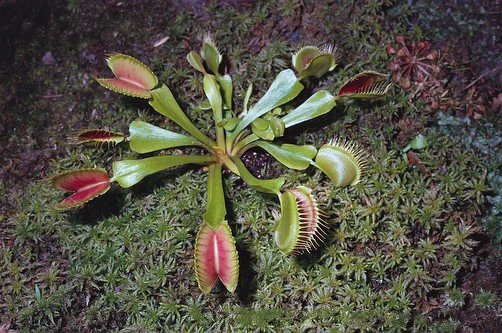
Do carnivorous plants that can eat insects really exist?
There are about 300 species of insect-eating plants in the world, and more than 30 species in our country. Insect-eating plants all seem to be very sensitive. Take the pitcher plant (Nepenthes): at the tip of its leaf there is a pouch shaped like a jar, and from the bottom of the jar flows sweet, fragrant nectar, while the mouth of the jar has a lid. When a greedy little insect crawls into the jar,
-
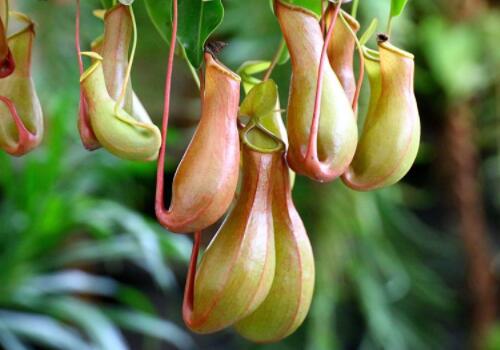
Can Nepenthes be kept at home? Toxicity, why it eats insects, and how to sow seeds
Nepenthes is the collective name for all species in the genus Nepenthes. Also called pitcher plant, monkey cup, monkey jar, piglet cage, and Leigong pot, it is a tropical insectivorous plant. So can Nepenthes be kept at home? Is it toxic? Why does it eat insects? How do you plant the seeds? From Nepenthesaceae information we learn
-
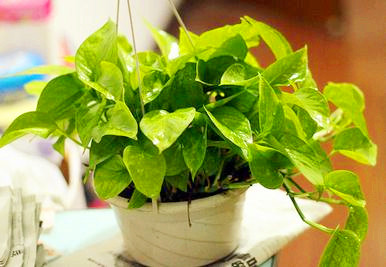
Can Pothos be placed in the bedroom? What to do if small flying insects and black bugs appear
Pothos plants are currently selling very well on the market. So can Pothos be placed in the bedroom? Will it attract small flying insects and black bugs? What should you do if they appear? Pothos itself does not attract insects, but many people who buy Pothos do find lots of bugs crawling out of it. In most cases, this problem is caused by the soil-culture method.
-

Control Methods and Application Tips for Mango Scale Insects
Control Methods for Mango Scale Insects
-

Rural farming of small insects can also make big money
Rural farming has broad prospects, and "small insects" can also make big money
-
What are the control methods for scale insects on privet hedges?
In recent years, with the widespread use of golden privet (Ligustrum sinense 'Variegatum') and small-leaf privet (Ligustrum quihoui) in urban landscaping, pests and diseases on privet have become a major problem in garden maintenance and management. The scale insect occurring on Ligustrum landscaping plants is mainly the white wax scale (Ericerus pela). It has been reported that comstock mealybug (Pseudococcus comstocki) has occurred on privet hedges in Hebei. The identification characteristics and control measures of the white wax scale are described below: Distribution and damage. The white wax scale Ericerus pela (Chavannes) belongs to the order Homoptera, family Coccidae. It is widely distributed in China. It damages
-
How to kill insects and disinfect the production environment for edible fungi
With the development of edible fungus cultivation, diseases occur frequently in edible fungus production, accompanied by cross-infection, making continuous production increasingly difficult and causing great losses to mushroom farmers. Therefore, doing a good job of disinfecting the production environment is crucial to the success of edible fungus cultivation. 1. Take disinfection and sterilization measures in the production area: clean up the sanitation outside the cultivation shed, including around the work site; strictly clean up stables and latrines, garbage, etc., especially thoroughly clean up contaminated fungus bags and spent mushroom substrate waste, and spray a mixed solution of high-concentration carbendazim and phoxim, etc.
-
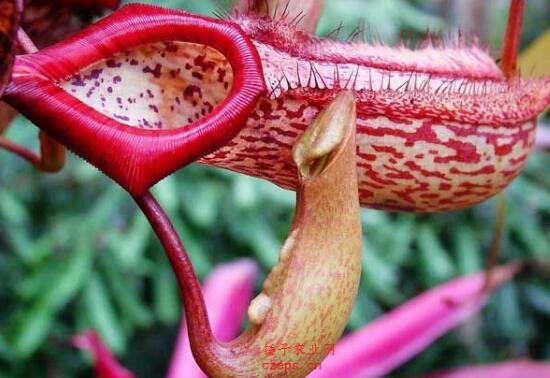
Why does the pitcher plant eat insects? Watch this video of it catching mosquitoes as nutrients
In many people's minds, animals eat plants, but amazing nature overturns all of this, because there exist plants that eat animals, and that is the pitcher plant. As a mosquito-repelling plant, the pitcher plant can prey on mosquitoes, flies and other small insects, which many people probably know. So why does the pitcher plant eat insects?
-
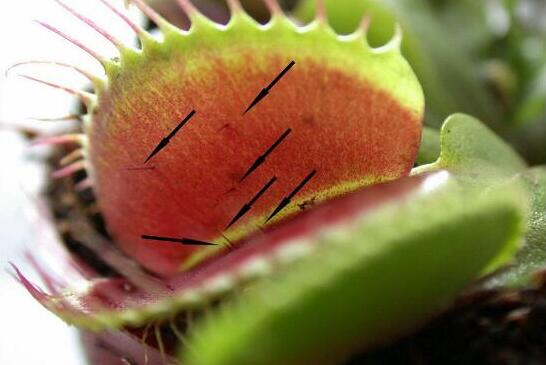
How to fertilize a Venus flytrap? Once every 15 days during the growing season, and feed it only live insects
As a plant that can repel mosquitoes, when kept indoors, the Venus flytrap eats insects to supplement its nutrients. However, the carcasses left after the Venus flytrap finishes eating insects inevitably hurt its appearance and can also cause hygiene problems, so it is better to provide nutrients to the Venus flytrap through fertilization. So how do you fertilize a Venus flytrap?
-
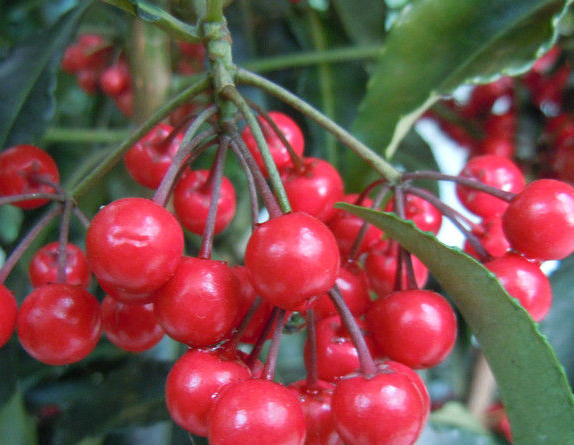
How do you treat insects with waxy hard shells on the leaves of coral ardisia (Ardisia crenata)?
This is an infestation by scale insects. The main control measure should be chemical treatment; you can use specific insecticides such as methidathion, chlorpyrifos, Guoguang Jie Bisi, etc., which are highly effective, as ordinary insecticides struggle to penetrate their waxy layer to take effect. If the infestation is heavy, spray 2 times to completely eliminate them. You can also scrape or brush them off manually.
条件筛选