Why does the pitcher plant eat insects? Watch this video of it catching mosquitoes as nutrients
In many people's minds, animals eat plants, but amazing nature overturns all of this, because there exist plants that eat animals, and that is the pitcher plant. As a mosquito-repelling plant, the pitcher plant can prey on mosquitoes, flies and other small insects, which many people probably know. So why does the pitcher plant eat insects? Follow along with a video of the pitcher plant eating insects, and let's find out together with the editor.
I. Video of the pitcher plant eating insects
II. How the pitcher plant eats insects, natural digestion
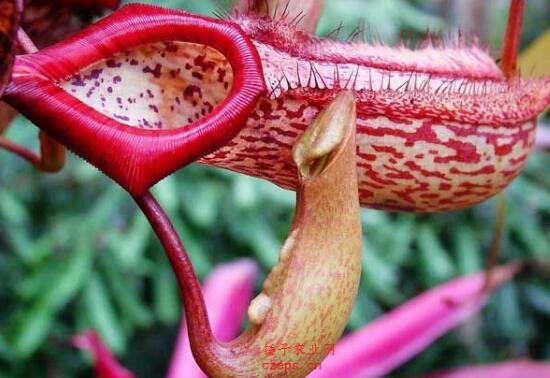
The pitcher plant's characteristics are very obvious. It has a unique organ——the pitfall trap, which is cylindrical in shape, slightly swollen in the lower part, and has a lid on top of the opening. It gets its name because its shape resembles a pig cage. As for how the pitcher plant eats insects, it is very simple: once an insect crawls in, it cannot get out, gradually perishes at the bottom of the pitcher, and becomes the nutrients needed for the pitcher plant's growth.
III. Why the pitcher plant eats insects, instinct
Regarding this question, it is actually very simple: this is an instinct. When the roots cannot absorb nutrients from the soil, the pitcher plant, in order to survive, can only extract nutrients from the outside. Over time, it developed the ability to eat insects. Why the pitcher plant eats insects, everyone already knows, so why can it eat insects?
IV. Why the pitcher plant can eat insects, coordinated cooperation
Actually, the pitcher plant can eat insects because of its unique pitfall trap. It is understood that this pitfall trap has a rather special structure. Its body emits a peculiar fragrance that attracts mosquitoes and flies. Insects are drawn in by the scent and thus land on the rim of the pitcher, but they do not know that death is approaching.
The rim of the pitcher plant's trap can secrete fluid that is quite wet and slippery. Once mosquitoes, flies and other insects touch it, they slide directly into the pitcher. Inside the trap, the inner wall has a lot of wax and is very smooth; on the inner wall from the middle down to the bottom there are about 1,000,000 digestive glands, which after the pitcher plant catches an insect can secrete a large amount of colorless, transparent, slightly fragrant acidic digestive fluid. This digestive fluid contains amines and coniine that can paralyze and poison insects.
Normally, the pitfall trap always holds about half a pitcher of this digestive fluid. At the same time, on the inner side of the lid and the edge of the pitcher there are many nectar glands that can secrete fragrant, sweet nectar to lure insects. When the pitcher opens this honey-pot lid, it attracts many greedy small insects. Once a small insect falls into the pitcher, the lid immediately closes automatically, and the insect quickly dies from poisoning.
Before long, all the body parts are digested and turned into nutrients that are absorbed by the pitcher plant. Then the lid of the pitcher opens again, waiting to catch the next prey. Why the pitcher plant can eat insects, everyone should know by now: the fragrance attracts, the rim is slippery, the body digests. With such a combination, it truly strikes fear into insects!
As far as insects are concerned, the pitcher plant is a devil, attracting batch after batch of companions to perish in its pitfall trap; but as far as humans are concerned, in summer the pitcher plant helps us repel mosquitoes and insects, making it a truly rare plant. So what are you waiting for? Hurry and get a pot of pitcher plant to grow and see. If you do not know how to grow it, you can also look at the cultivation methods for pitcher plants, which will be helpful to you~
The counterattack path of carnivorous plants
Abstract: When comparing plants and animals, people usually tend to think that animals are the stronger and more intelligent side: because plants are rooted in the earth, cannot move freely, and can also be eaten by animals. But is this really the case? Can the little guy regarded as the weaker side——plants——successfully stage a counterattack?
I like carnivorous plants, not only because they have cool hunting skills and brilliant appearances, but also because these plants are always performing the story of the little guy's counterattack. When the roles of predator and prey are reversed, and animals become food for plants, the dramatic conflict is extremely striking. The ones that can perform this plot brilliantly on the stage of nature are the carnivorous plants, the most star-like members of the plant kingdom.
Carving out a path in difficult circumstances
Carnivorous plants refer to the group of plants that can hunt and digest some insects and arthropods, about 600 to 750 species. Interestingly, although they all share the common skill of catching insects, they are very far apart in kinship, coming respectively from 10 different families and 17 genera in the plant kingdom.
Driven by their respective survival pressures, carnivorous plants, each in their own way, coincidentally set out on the path of carnivorous counterattack. On the vast land, not every inch is fertile soil. Many places are sandy and rocky wastelands, high-cold slopes, and waters long deficient in nutrient elements. Various harsh and barren environments set up obstacle after obstacle for plant survival. For example, some seemingly lush swamps, because they remain acidic for a long time, have soil that is rich in organic matter but is difficult to break down through bacteria into nutrients available for plant growth; even in tropical rainforests known as "paradise for animals and plants," although nature is never stingy with sunshine and rain, under the competition of tall trees and layer upon layer of dense vines for limited space and resources, various plants still face harsh survival competition.
The long-term situation of resource scarcity has taught some plants to treat delicious, protein-rich small animals such as insects as a new source of nutrition. However, although animals are tasty, they are not lambs waiting to be slaughtered. Without strategy and tactics, the insects will not just let themselves be dealt with! Fortunately, the stage of nature is quite fair. She gave these plants under strong survival pressure the opportunity to evolve freely. On the long road of evolution, these plants in different environments and regions coincidentally developed the best static-to-mobile insect-hunting tools——traps. These traps differ in form but each is exquisite, thus fascinating countless scientists and plant lovers and inspiring endless exploration.
One false step and it is a bottomless abyss——pitfall trap insect catcher
There is a type of carnivorous plant that can catch and eat insects "without moving its body or lifting a shoulder." Its insect-catching wonder is a "trap" that lets little creatures fall in and prevents them from crawling out. This "trap" can be formed by all the leaves of the plant, such as some carnivorous plants in the Bromeliaceae family. They use the shape of the plant itself to enclose all the leaves into a bucket-like structure. The leaves at the top of the trap are extremely smooth. If an insect accidentally falls in while testing it, it will be killed by the liquid with acid and digestive enzymes at the bottom, and then decomposed and absorbed. There are also some more exquisite pitfall-trap carnivorous plants, such as Cephalotus, Sarracenia and Nepenthes, whose single leaf is specialized into a pitcher-like trap structure. In order to improve the trapping efficiency of the trap, these carnivorous plants are constantly perfecting the trap, making the entire trap system a complex and highly efficient insect-hunting machine.
In order to attract more insects, the pitcher-shaped trap formed by the specialized leaves of this type of plant secretes sweet nectar at the mouth of the pitcher. In addition, mimicry is also a commonly used method. For example, many Sarracenia can imitate the shape of flowers through the bright and varied colors at the top of the trap, increasing the frequency of insect visits. Many species of Nepenthes are also masters of scent, able to mimic the scent of flowers and release substances similar to floral fragrance to attract insects. Although the mechanisms and forms of mimicry in carnivorous plants have always been a hot topic of debate among scientists, there is no doubt that this "dressing up" greatly improves the trapping efficiency of the trap. But successful attraction is only the first step; successfully capturing and confining prey is also crucial. This type of carnivorous plant often leaves a platform that makes it easy for flying insects to land. When visiting insects land on the platform and begin to suck the nectar provided by the trap, they move step by step toward the smooth edge of the trap. Dense fine hairs pointing downward are distributed below the edge. Once the greedy little creatures lose their footing, what awaits them is a road of no return. Eventually, in the highly efficient digestive fluid full of digestive enzymes and the remains of companions, the insects are gradually decomposed and become the carnivorous plant's "nutritional special meal."
The pitcher-shaped trap of Nepenthes 'Rebecca' (Photo by Qiuxi)
A fatal kiss——adhesive-type insect catcher
As the name suggests, an adhesive-type insect catcher is when the plant relies on secreting glue to trap prey. This is also one of the most common hunting forms among carnivorous plants. Examples include Pinguicula, Roridula, Drosophyllum and Triphyophyllum. This type of plant often secretes a large amount of thick glue or glue- or resin-like droplets on its surface, which can firmly stick to and capture insects that touch it. Because this type of trap often covers the entire plant, and many species also have scent mimicry mechanisms that can release scents that fascinate insects, they have very high predation efficiency.
The pitfall trap has a relatively enclosed water pool, which can protect its prey from being easily stolen. Plants with adhesive-type insect catchers are completely different, and thus face the risk of food being stolen by other large insects or animals. Rain washing and strong wind will also affect their gradual decomposition and absorption of insects. Do not worry: many species of adhesive-trap carnivorous plants have learned the skill of curling their leaves and tendrils after successfully catching an insect to tightly wrap and absorb the prey. This process usually takes from a few minutes to several days. Some species, such as Drosera glanduligera, have tentacles for catching insects that are like nimble switches, able to curl inward toward the center of the leaf in an instant, thereby tightly wrapping the prey.
Pinguicula 'Aphrodite' (Photo by Qiuxi) Drosera mirabilis (Photo by Qiuxi)
A unique shape——lobster-pot-type insect catcher
Some of these insect catchers are similar to pitfall traps, such as Darlingtonia and Sarracenia psittacina, but they adopt an even more exquisite trap device. Unlike the spacious entrance of pitfall traps, the tip of the specialized modified leaf is almost closed, forming a nearly spherical cavity, leaving only a small entrance. The exquisiteness of this type of trap lies in its use of the instincts and weaknesses of insects, and it works in a way similar to how people catch lobsters with lobster pots.
Like many Sarracenia, the lobster-pot-type insect catcher also uses colorful and highly variable leaves and sweet nectar to lure insects. When attracted insects climb along the nectar to that small entrance, they are guided by the gluttonous instinct to drill into holes in search of food and unknowingly crawl inside. The interior is like a colorful little room. In this dazzling, hallucination-like world, the insects cannot find the exit and can only follow the walkway provided by the Sarracenia, so escape is impossible.
Darlingtonia californica, cited from
A rare use of qi——suction-type insect catcher
This is the patented insect-catching technique of the aquatic carnivorous plant Utricularia. Utricularia plants are usually small and can form tiny bladder-like vacuum chambers no more than 10 mm in water. When food touches a specific trigger, it is instantly sucked into the chamber by air pressure and slowly absorbed by the Utricularia. Utricularia is a type of aquatic plant widely distributed in most regions of the world, and it is also a carnivorous plant very close to our daily lives. Unfortunately, its individuals are usually very small, and the predation process in water often ends within a few tenths of a second. If we slow down this process and look carefully, we can see the extremely wonderful predatory skills of this type of insect catcher.
Utricularia vulgaris, cited from http://www.uni-graz.at/
A wonderful and intelligent trap——snap-trap-type insect catcher
Carnivorous plants with snap traps are probably closest to the carnivorous plants people imagine. Many man-eating flowers in films and comics mostly have similar abilities. Once an animal touches a specific trigger, a big mouth or a clamp full of spikes suddenly closes, clamping the careless animal inside and quickly eating it. The source of this imagination is very likely related to the real Venus flytrap.
Through long-term evolution, the Venus flytrap has acquired a structure similar to a snap trap——the insect catcher: the insect catcher is a clamp-like structure made of two half-moon-shaped lobes with spikes along the edges. Inside the clamp are distributed 3 slender and sensitive trigger hairs. Once prey continuously touches two of these trigger hairs within a certain period of time, the snap-trap-like leaves can close rapidly within one third of a second, and the spiky structures at the leaf margins interlock tightly, forming a structure like an iron cage that firmly locks the prey inside. Gradually, the two leaf lobes completely bond because the insect in the "prison" keeps moving and stimulating the leaves, finally killing the insect and digesting and absorbing it.
The predation process of the snap trap is not only spectacular but also highly intelligent. The trap-opening and closing method based on the three trigger hairs can cleverly distinguish whether it is interference from wind and rain or whether an insect has truly fallen into the trap. When closing, the spikes at the leaf margins can screen suitable prey. If the insect that falls in is too small and can provide too little nutrition, making it not worth closing the leaves for, then the insect can squeeze out of the cage formed by the spikes, and the snap trap will open again, waiting for a larger prey.
Venus flytrap (Photo by Qiuxi)
Semi-carnivorous plants
Nature is magical. Besides the carnivorous plants people know of, there are also many plants on the road toward becoming carnivorous plants; and some carnivorous plants seem to have already reached the end of carnivory, only to turn back halfway.
There are quite a few plants that can catch insects, such as Passiflora foetida in the Passifloraceae family. During the fruit-growing period of Passiflora foetida, a sticky web-like structure similar to that of Drosera forms around the fruit to catch small insects. In recent years, scientists have confirmed that this structure can not only catch insects, but can also secrete digestive enzymes to digest and absorb prey. However, Passiflora foetida is still not a carnivorous plant in the traditional sense. Research has found that the greater significance of this predatory mechanism and structure is to protect the fruit from being gnawed by insects. Scientists speculate that during the evolution of Passiflora foetida, if the environment it inhabited was poor in nutrient elements, then this insect-catching trap mechanism might have been further strengthened, thereby evolving a more exquisite and efficient predatory trap and taking a further step toward the carnivorous path.
There are quite a few other plants that can catch insects, such as Plumbago, Paepalanthus, some Bromeliaceae, and Dipsacus, all of which have more or less insect-catching ability. However, perhaps because they cannot secrete digestive enzymes, or because the degree of specialization of their insect catchers is insufficient, or because the behavior of catching insects carries low weight in their growth and reproduction process, this type of plant has not been included in the traditional list of carnivorous plants. They seem to be walking on roads of varying distance toward becoming carnivorous plants.
Passiflora foetida (Photo by Qiuxi)
Interestingly, even after reaching the end of the carnivorous path, some carnivorous plants seem to have "regretted" it, finding that eating meat is not necessarily the best choice. Although some carnivorous plants already possess excellent predatory organs, in the long process of evolution they have chosen a path that seems to turn back. For example, Nepenthes ampullaria, in the famous carnivorous plant family Nepenthaceae, has chosen the path of "vegetarianism." Although it still has a pitcher-like trap, its interior no longer secretes protein digestive enzymes. Instead, it opens wide to the sky and relies on digesting and absorbing fallen leaves to supplement nutrients.
Other famous large Nepenthes, such as Nepenthes lowii and Nepenthes rajah, have very likely chosen the path of "coprophagy." Their traps can secrete nectar to attract small animals such as tree shrews to come and lick it. With an ulterior motive, Nepenthes lowii and Nepenthes rajah take the opportunity to provide a natural "toilet" and use the feces dropped by the animals as their own nutrients.
Nepenthes rajah, cited from
One trap, one world——symbiosis
On the road toward carnivory, plants are often not alone. Choosing suitable animal partners can bring unexpected benefits to both sides. In the long process of evolution, many carnivorous plants have found quite a few such partners, making their carnivorous life even more powerful and wonderful beyond description. This mutually beneficial symbiotic relationship is widespread among carnivorous plants.
Symbiotic relationships are especially prominent in Sarraceniaceae, Nepenthaceae, Cephalotaceae and Bromeliaceae. The private pitcher-like traps provide many animals with a convenient environment and an opportunity for mutual benefit with the carnivorous plants. Some Sarracenia plants themselves cannot secrete digestive enzymes or secrete very few, and cannot directly decompose prey, but with the help of benthic organisms living in the water pool, they can solve this problem very well. Some chironomid larvae and larvae of Wyeomyia smithii will eat the captured prey and break it down into small particles, which are ultimately decomposed by bacteria in the pitcher into nutrients that Sarracenia can directly absorb. Both landlord and tenant benefit. The "pitcher" of the vegetarian Nepenthes ampullaria is even more of a mini-world. Fallen leaves become food for some bacteria and herbivorous insect larvae, and these larvae in turn become food for tadpoles and larvae of giant mosquitoes and other insect larvae. Nepenthes ampullaria also absorbs the corresponding nutrients in the process. The small world in the pitcher becomes a self-contained ecological chain, even forming quite a few species that exist only in this biological chain.
Ants are among the insects most commonly preyed on by some Nepenthes. They are often attracted by the nectar secreted by the pitfall trap and thus become prey. However, one species of Camponotus ant has cleverly chosen to establish a mutually beneficial understanding with Nepenthes bicalcarata in Borneo: the hollow tendrils of the Nepenthes provide shelter for this ant, and the ant feeds on large insects or mosquito larvae trapped by the plant. On the surface, the ants seem to plunder part of the plant's prey, but both sides profit, thus achieving a dynamic balance. If the pitfall trap catches larger prey, the oversized corpse may exceed the pitcher's digestive capacity, and the Camponotus ants can help carry away the extra prey, thereby ensuring that the pitcher's digestive system remains intact. The ants can also clean the pitfall trap for the Nepenthes, keeping the rim smooth and defending the Nepenthes from disturbance by other animals; in return, the ants also gain a relatively comfortable home.
Roridula (a carnivorous plant) is a great partner that cooperates with assassin bugs in predation. Roridula can reach several meters in height, and its branches are covered with powerful resin-like mucilage, giving it extremely high insect-catching efficiency. However, it cannot secrete digestive enzymes itself and cannot digest the prey it catches. Do not worry: in the long process of evolution, Roridula and assassin bugs have cooperated deeply to solve this problem perfectly. This assassin bug has evolved a unique wax on its body to ensure that it will not be stuck by Roridula's resin. In this way, it can move unimpeded through the terrifying forest of mucilage, while other insects caught by Roridula become an easy feast for the assassin bug. In return, the assassin bug's digestive tract digests the prey and excretes easily absorbed, highly efficient organic fertilizer onto the branches and leaves of Roridula for it to absorb.
Roridula, cited from
In fact, the relationship between carnivorous plants and the insects they prey on is often quite complex. Much of it still awaits study, and there are many fascinating phenomena that rigorous scientists find captivating and endlessly debate. For example, regarding some Sarracenia, many scientists believe they actually have a mutually beneficial relationship with the insects they catch: Sarracenia provides some insects over the long term with a rare and highly efficient energy drink in the swamp——nectar——while the entire insect population pays only the price of sacrificing a small number of individuals to provide Sarracenia with a source of nitrogen. But both sides provide each other with the scarce goods they need. This seemingly dangerous killing is actually a win-win!
Of course, not all plant-animal relationships on the road to carnivory are harmonious. There are also many seemingly one-sided, commensal relationships: for example, many ants will unceremoniously and quietly steal the prey caught by Pinguicula, leaving not a bit of nutrition; the green lynx spider can directly drag out and eat some insects that fall into Sarracenia; and the crab spider of Nepenthes has even learned to lurk near the Nepenthes trap to catch insects attracted by the trap. According to current research, these behaviors seem unable to bring any substantial return to the plants.
The road ahead
The carnivorous evolution of carnivorous plants is extremely interesting. Plants from four different orders—Bromeliaceae, Nepenthaceae, Sarraceniaceae and Cephalotaceae—have all evolved trap structures with similar appearances and similar functions in different environments and under different backgrounds of origin. Meanwhile, Aldrovanda and Dionaea, both belonging to the family Droseraceae, have gradually drifted apart from Drosera in the same family, evolving in different directions and developing huge differences in appearance and predation methods. The mucilage-secreting insect catcher most favored by plants comes from the very different families Droseraceae, Roridulaceae, Drosophyllaceae and Triphyophyllaceae, yet because they have similar predation methods, many morphological features also tend to be similar. As for the future, the evolution of carnivorous plants still has a long road ahead, and more hunting methods and mechanisms remain for them to explore.
At present, human knowledge of carnivorous plants is still very limited, and many species may go extinct before we can fully understand them. According to the International Union for Conservation of Nature, more than half of carnivorous plants are threatened with extinction. These threats come from many aspects. In addition to factors of natural ecosystem change, they are also closely related to human activities. For example, as the population increases, land reclamation continuously encroaches on carnivorous plant habitats; environmental pollution can also damage the living environment of carnivorous plants; and the hobby of some plant enthusiasts in cultivating carnivorous plants can also lead to large numbers of wild carnivorous plants being dug up or damaged. All of these may put carnivorous plant populations at risk of extinction.
(The text of this article was also published in Nature magazine, Issue 3, 2015)
[Editor's summary]The editor of First Agricultural Economics above introduced to you the little guy——the counterattack path of carnivorous plants. We hope this article is helpful to you. Thank you for your attention to and support of our website.
What are mosquito-repelling plants?
[Common question] Which plants have a mosquito-repelling effect?
[Expert answer]
1. Night-blooming jasmine
Night-blooming jasmine, also known as night-scented jasmine, is native to tropical America and the West Indies, in the Solanaceae family, genus Cestrum. It is an evergreen semi-climbing soft small shrub, 2 m to 3 m tall, with a grayish-brown main trunk that is relatively smooth and many side branches that are soft and drooping. Leaves are alternate, slightly narrow and long, heart-shaped, with relatively pointed tips, entire margins, thin and soft, with fine hairs along the edges. The corymbose cyme is axillary or terminal.
Night-blooming jasmine is elegant and fresh, easy to grow, and not expensive. In addition, when it blooms in summer, the green and white contrast makes people easily feel a sense of coolness. The fragrance of flowers such as night-blooming jasmine often refreshes people at first, but after smelling it for a long time, the overly strong scent may cause discomfort. At night it gives off a rich fragrance, mellow and intoxicating, and this fragrance frightens mosquitoes, making it an excellent mosquito repellent.
2. Lavender
Lavender is a richly fragrant small purple flower, also known as the "tranquil perfume plant," and has long enjoyed the reputation of "the beauty of aromatic herbs." Lavender is native to the Mediterranean region, such as Provence in France, and is widely cultivated in the United Kingdom and Yugoslavia.
The flower language of lavender means "fragrance." When you arrive at a lavender field, you often unconsciously become attracted by its special aroma, so lavender is also called the "queen of herbs."
Lavender itself has an insecticidal effect. People often make sachets from lavender and place them in cupboards, and some also put it in the bedroom to repel mosquitoes.
3. Pitcher plant
The pitcher plant is a famous tropical carnivorous plant, mainly native to tropical regions of Asia. The pitcher plant has a unique organ for absorbing nutrients——the pitfall trap. The pitfall trap is cylindrical, slightly swollen in the lower part, and has a lid on the pitcher opening. Because its shape resembles a pig cage, it is called the pitcher plant. In Hainan, China, it is also called the thunder god pot, meaning that it resembles a wine pot. Because the soil in its native habitat is barren, the pitcher plant supplements nutrients by catching insects and other small animals, so it is a member of the carnivorous plants.
There are several dozen species of pitcher plants, and different species have different shapes, sizes and colors of pitfall traps. The pitcher plant can be used medicinally and has certain therapeutic effects on diseases such as hepatitis, stomach pain, high blood pressure and colds. It is also an expert at catching mosquitoes.
4. Geranium
Geranium, also known as zonal geranium, fish geranium, horseshoe geranium and pelargonium, is a genus of flowering plants including about 230 species of perennial succulent, subshrub or shrub plants. Geranium is native to southern Africa and is widely cultivated around the world. Young geranium plants are succulent herbs, while older plants become semi-woody; the leaves are opposite, and the leaf blades are round, kidney-shaped or fan-shaped; flower colors include white, red, purple, pink, orange and many others. The inflorescence is umbel-like and can bloom in all four seasons, with the most abundant bloom in spring. In the West, geranium is a very good flower for decorating windowsills, and on the European continent, such as in Germany and Austria, it is especially common.
In hot seasons, place it outdoors in a lightly shaded environment; in cold seasons, enjoy it indoors in a bright place. Geranium has a distinctive scent, and this scent makes mosquitoes and flies flee when they smell it.
5. Orange jasmine
Orange jasmine, a plant whose leaves are extremely fragrant, with leaf shapes like peas. The ancients used it to store books and prevent bookworms, and placing it under mats could remove fleas and lice. If you touch its leaves, you will feel a rich sweet fragrance, and its mosquito-repelling effect is very good.
6. Carnivorous grass
Carnivorous grass is a herbaceous plant in the Asteraceae family. It can grow to about 1 m tall, with small yellow flowers, and a single plant can have hundreds of flower heads, with mucilage around the outside of each flower head. As long as a small mosquito or insect lands on it, it will be stuck, and the insect's corpse will be slowly digested by it as nutrition for its growth. If dust sticks to it, it will also be digested after a few days. Placing one pot at home can catch mosquitoes and absorb dust.
Carnivorous grass is a plant that grows in the swamps of North America and has long suffered from a lack of nutrients. Because this extremely humid territory has been occupied by a plant called "peat moss," it can only obtain water from rain and snow that fall directly on its stems and leaves. The carnivorous habit of the carnivorous grass gradually formed under such survival conditions.
7. Mosquito-repelling geranium
Mosquito-repelling geranium has a lemon fragrance. Grown indoors, mosquitoes and insects will flee. The reason is that mosquito-repelling geranium contains a special "small ingredient." It uses transgenic technology to implant the mosquito-repelling gene——the citronellal gene structure——into "vanilla," using its own unique release system as a carrier to continuously release citronellal substances into the air. At the same time, it also implants a plant DNA (gene) structure containing a fresh scent and an air-purifying effect, forming a "natural evaporator," and thus filling the air with fragrance. Especially in hot summer, it makes people feel refreshed and relaxed. According to tests, its mosquito-repelling effect is good, it is harmless to humans and livestock, and it can repel hundreds of species of mosquitoes and insects. Mosquito-repelling geranium is a perennial herbaceous plant. Its survival temperature is above minus 3 degrees Celsius, and it can be cultivated both indoors and outdoors. Generally, the higher the temperature, the stronger the fragrance, and the better the mosquito-repelling effect.
8. Lantana
Its branches, leaves and flowers emit a scent that mosquitoes and flies are sensitive to, giving it a strong effect in driving away mosquitoes and flies, while causing no harm to the human body. It not only has a good effect in driving away mosquitoes and flies, but its flower colors are also gorgeous, including red, yellow, white and others. The flowers are often yellow or pink when they first open, then gradually turn orange-yellow or orange-red, and finally red, so it also enjoys the reputation of "mosquito-repelling seven-change flower."
9. Mosquito-clearing scented geranium
Mosquito-clearing scented geranium is an aromatic plant in the Geraniaceae family whose genetic structure has been changed, introduced from Australia. This plant is drought-tolerant and can grow to maturity within half a year. With proper care, it can live for 10 years to 15 years, and the shape of its branches and leaves can be changed at will, giving it high ornamental value. Mosquito-clearing scented geranium gives off a fresh and elegant lemon fragrance, has a very good mosquito-repelling effect indoors, and has no toxic side effects on the human body. The higher the temperature, the more fragrance it releases, and the better the mosquito-repelling effect. According to tests, one pot of mosquito-clearing scented geranium with a crown width of more than 30 cm can drive mosquitoes and insects out of a room with an area of more than 10 sq m. In addition, a plant called pyrethrum contains pyrethrin and can also effectively repel mosquitoes and insects.
10. Marigold
Marigold is an annual herbaceous plant and an ideal raw material for extracting pure natural yellow pigment. In Africa it is called kajibuxu, and it is commonly seen hanging under the thatched huts of indigenous people to drive away swarms of flies. Marigold has a pungent smell, and mosquitoes and insects dare not approach it. It is a special, excellent natural insect repellent.
11. New mosquito-repelling tree
The new mosquito-repelling tree is a deciduous tree in the "Rutaceae" family and is a new variety of mosquito-repelling tree discovered and introduced in recent years. It uses the citronellal substance unique to its leaf surface, which evaporates at high temperatures and spreads into the air, achieving a mosquito-repelling effect.
12. Chinese parasol tree
During the growth of the Chinese parasol tree, its bark slowly falls off, and the fallen dry bark is a very good mosquito-repelling material. You can collect some dry bark that has fallen from the Chinese parasol tree, pile it together and light it. The smoke produced during burning has a faint fragrance, and this smoke can drive away mosquitoes. In the past, the production of old-style mosquito coils in rural areas included Chinese parasol tree bark. Note that it should not be used in enclosed indoor spaces.
13. Other mosquito-repelling plants
In additionMugwort leaves and jasmine can both repel mosquitoes.Burning mugwort once is called "one moxa cone." Qiai not only treats many diseases, but also has a distinctive fragrance and can be used as a raw material for flavor blending. Burning its branches and leaves produces smoke that can drive away mosquitoes and flies, and has the effects of averting evil and sterilizing. Ping An Ji Ai Xiang mosquito-repelling lotion extracts its essence to repel mosquitoes and relieve itching.
Editor's conclusion:Above, the editor introduced more than 10 kinds of mosquito-repelling plants that are harmless to the human body but can also drive away insects. Summer has the most mosquitoes, so growing a pot of mosquito-repelling plants means you no longer need to be afraid.