Can Nepenthes be kept at home? Toxicity, why it eats insects, and how to sow seeds
Nepenthes is the collective name for all species in the genus Nepenthes. Also called pitcher plant, monkey cup, monkey jar, piglet cage, and Leigong pot, it is a tropical insectivorous plant. So can Nepenthes be kept at home? Is it toxic? Why does it eat insects? How do you plant the seeds? From Nepenthesaceae information we learn that Nepenthes is a toxic plant; in terms of medicinal use, its toxicity is dangerous, so it must be used with caution and must not be used casually on your own.
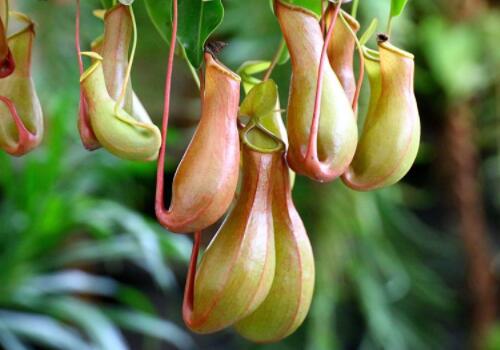
Can Nepenthes be kept at home?
1. The sap of the Nepenthes plant itself is toxic, so if there are young children at home, they might accidentally eat it, so it is still rather dangerous; it is best not to keep it indoors;
2. If Nepenthes does not bloom, it is fine; even if you have children, you can place it in a high spot for care, so keeping it indoors will not have much impact and will not cause danger;
3. If Nepenthes blooms, its flowers will give off a not-unpleasant scent while you sleep, so for healthy, good sleep it is still better not to grow it indoors; if you like growing Nepenthes, you can grow it on a courtyard balcony or in a courtyard, which is very safe, as it will neither cause poisoning nor affect sleep and rest;
4. Nepenthes is a plant that needs to grow attached to something; it must have support beside the plant to be able to stand up, so when growing Nepenthes it is best to set up a support for it so it can stand up and also look attractive.
Why does Nepenthes eat insects?
1. Nepenthes originally lived in places with extremely harsh environments and could only survive by preying on insects.
2. The pitcher of Nepenthes is composed of the pitcher body and the lid. The pitcher body has structures such as the pitcher mouth, lip, wings, digestive glands, and waxy zone; the lid has structures such as nectar glands and lid keel. In addition, some Nepenthes pitchers also have appendages. The tendril tail appears at the junction between the pitcher body and the lid. At the same time, the same species of Nepenthes will produce two different forms of pitchers.
How do you plant Nepenthes seeds?
The germination of Nepenthes seeds requires a moist but not wet environment; generally live sphagnum moss is chopped up and used as the substrate. Taking lowland Nepenthes as an example:
1. Evenly scatter the seeds on the surface of the live sphagnum moss, then spray with pure water to increase the air's moisture content. After that, cover it with a plastic bag to maintain air humidity.
2. Place it in a warm, bright place and wait for the seeds to germinate. Adjust the temperature of the room it is in; around 26°C is enough, and the light must not be too strong; bright indirect light is enough.
3. Usually observe the seeds and do not let them become moldy. Generally speaking, as long as the seeds are fresh enough, they will not become moldy. But if they unfortunately do become moldy, you can spray them with pure water to promote germination.
4. The germination time of seeds varies depending on the specific variety, ranging from 1 month to 1 year. If the seeds still cannot germinate after a very long time, it may mean your seeds have already lost viability.
5. Growing Nepenthes from seeds is a relatively challenging task, because from the quality of the seeds themselves to the environmental conditions, many factors can have a major effect on seed germination. This requires us to carefully handle every detail and strive to cover all aspects, so that we can cultivate it well.