How to fertilize a Venus flytrap? Once every 15 days during the growing season, and feed it only live insects
As a plant that can repel mosquitoes, when kept indoors, the Venus flytrap eats insects to supplement its nutrients. However, the carcasses left after the Venus flytrap finishes eating insects inevitably hurt its appearance and can also cause hygiene problems, so it is better to provide nutrients to the Venus flytrap through fertilization. So how do you fertilize a Venus flytrap? Below, the editor will introduce it in detail.
1. How to fertilize a Venus flytrap, feeding and fertilizer
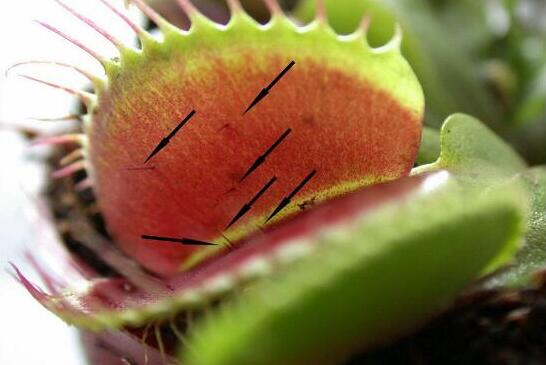
The Venus flytrap can quickly snap shut on small insects that stray in, and then slowly digest them. This is the source of its nutrients. So for how to fertilize a Venus flytrap, we can do it by feeding. However, after eating insects, the carcasses left behind hurt its appearance and are unhygienic, so it is still better to fertilize. Next, the editor will introduce the fertilization methods for the Venus flytrap and the fertilizers used.
1. Fertilization method
Actually, the Venus flytrap does not need much fertilizer. You only need to fertilize it once about every 15 days during its growing season. However, the Venus flytrap's root system is very fragile, so when fertilizing, stay as far away from the roots as possible. You can slowly pour it along the edge of the flowerpot, or you can dilute the fertilizer and then spray it on the plant surface.
In winter, the Venus flytrap enters dormancy. At this time, we must not fertilize, otherwise it will harm the plant. If it is not kept indoors but outdoors, the fertilization method is the same as for potted Venus flytraps, but you can also skip fertilizing, because outdoors the Venus flytrap will trap insects on its own to solve its nutritional needs.
2. Fertilizers used
For how to fertilize a Venus flytrap, the choice of fertilizer is also very important. It is understood that the Venus flytrap mainly absorbs nutrients through its leaves, so the fertilizer should also be absorbed by the leaves. Fertilizers suitable for foliar absorption are called topdressing. Most of these fertilizers are chemical fertilizers, which must be dissolved in water and then sprayed onto the plant, and the fertilizer will penetrate into the plant body.
As for topdressing brands, you can just buy them at a flower shop. The principle for applying fertilizer is to spray the entire plant wet. If a small amount of fertilizer flows into the soil, it is not a big problem. In addition, when the Venus flytrap's growth stalls due to a poor cultivation environment, you must not fertilize either. You must improve the cultivation conditions and wait until the Venus flytrap starts growing before fertilizing.
3. Precautions
When keeping a Venus flytrap indoors, you will certainly feed it, since watching a plant eat animals is very interesting. However, this "fertilizing" method requires one point of caution: the insects you feed must be alive, because the Venus flytrap only treats living insects as food, and dead insects are usually not treated as food by the Venus flytrap.
In addition, there is one more thing to note when feeding a Venus flytrap: do not overfeed. When overfed, the traps will prematurely become damaged, and at this time the traps will start to turn black from the edges. So overfeeding is also one of the reasons why Venus flytrap traps turn black.
4. What to do if a Venus flytrap is overfertilized, repot with fresh soil
When you encounter overfertilization of a Venus flytrap, you can water appropriately to dilute the fertilizer concentration, or directly repot with fresh soil. According to the Venus flytrap's cultivation method, when repotting with fresh soil, you can choose a soil mixed from 2 parts fertilizer-free peat and 1 part perlite.
How to plant Venus flytrap seeds, and is the Venus flytrap easy to grow?
Growing some Venus flytraps at home is very beneficial. It can not only trap small insects in the home and reduce the harm from flies and mosquitoes in the house, but it is also a very small and cute plant in appearance, with strong ornamental value, so interested friends may as well grow some.
How to plant Venus flytrap seeds
Because Venus flytrap seeds are very small, generally 1mm, you need to be very careful. Generally, Venus flytrap seeds do not store for long, so it is best to buy ones collected in the same year and no more than three months old.
Before planting, soak the seeds in soft water for about 48 hours to increase the germination rate. If the purchased sphagnum moss is dry, you can first soak it in water. Stuff the soaked sphagnum moss into a disposable takeout bowl, then sprinkle the seeds directly on the clean surface of the medium. Be sure to maintain high humidity.
If the north is relatively dry, you can directly use the tray watering method for planting, supplying water at the bottom of the pot, or directly keep it enclosed to maintain 100% humidity, placed under bright diffused light, and it generally germinates in about 1 month.
Is the Venus flytrap easy to grow?
1. Light requirements
Sufficient light can make the Venus flytrap grow stronger. It needs at least 4 hours of direct sunlight every day. If the light duration is insufficient, in mild cases the inner traps will grow smaller and the leaf stalks will become slender, and in severe cases it may cause the plant to die. If sunlight is really lacking in winter, you can use a grow light.
2. Water requirements
Use soft water such as purified water or rainwater as much as possible. Use the tray watering method (also called the "waist water" method) to create a small environment similar to its native habitat.
3. Humidity requirements
Humidity should be high, because the Venus flytrap's native environment is swampy grassland, so if grown at home, you also need to create a similar environment for it.
4. Soil requirements
The Venus flytrap likes an acidic environment. So the medium is best kept acidic at pH 3.5-5.
Fertilizer-free peat and perlite (2:1) or pure sphagnum moss are both very good medium choices, and the medium is best replaced once every spring.
5. Temperature requirements
The growing temperature is 15°C to 35°C, and the most suitable temperature is 21 to 35°C. If you want it to go dormant, you can control the temperature at around 5°C (0 to 8°C).
6. Feeding
The Venus flytrap's growth energy comes from organic matter produced by photosynthesis during the day and a very small amount of inorganic salts. Eating insects is like fertilizing. It can make them grow faster, but really do not give too much or too often. And foods humans like, such as chicken and beef, are very hard for them to digest.
7. Fertilization
Directly applying fertilizer into the medium will cause the plant to die, because the root system of carnivorous plants is extremely intolerant of salt. So if you want to fertilize, you should choose a low-concentration liquid fertilizer and spray it on the leaf surface.
Fertilization methods for the Venus flytrap
Actually, it does not need much in this respect. You only need to fertilize it once about every 15 days during its growing season, and you can buy fertilizer specially made for it.
Its root system is relatively fragile. When fertilizing, stay as far away from the roots as possible. You can slowly pour it along the edge of the flowerpot, or you can dilute the fertilizer and then spray it on the plant surface. In winter it stops growing, so you must not fertilize, otherwise it will harm it. If planted outdoors, the fertilization method can be the same as for potted plants, but you can also skip fertilizing.
Because when planted outdoors it can trap insects to solve its own nutritional needs. It decomposes and digests the insects it catches and absorbs all the fluids in the insects' bodies. Some friends also place some fish or shrimp with a fishy smell in front of it, which can attract some flying insects to gather there and then let it trap them, so fertilization is not needed.
The flowering period of the Venus flytrap
The Venus flytrap blooms in summer. Strictly speaking, it actually blooms not long after new leaves grow out in spring, and continues blooming into midsummer.
When the Venus flytrap blooms, it generally grows many flower buds on the flower stalk, and one flower opens every other day. If the flower is not pollinated, it can stay open for several days, but after successful pollination, the flower will wither the next day.
The Venus flytrap itself is magical, which determines that its flowers are also very magical. The Venus flytrap's flowering period is very long, and at the same time, under the two different situations of successful pollination and unsuccessful pollination, the duration of the flowers being open will also differ. However, the Venus flytrap itself is still a very easy plant to grow.
Introduction to the Venus flytrap, and how to grow the Venus flytrap
Introduction to the Venus flytrap, and how to grow the Venus flytrap
Plant declaration: Venus's flytrap
The Venus flytrap (Dionaea muscipula), with the English name Venus Flytrap, is a perennial herbaceous plant native to North America. It is a very interesting carnivorous plant. Its stem is very short, and at the tip of the leaf grows a trap that closely resembles a "shell" and can secrete nectar. When a small insect intrudes, it can clamp it shut at extremely fast speed and digest and absorb it. It is said that because the leaf edges have regular bristles, the feeling is like Venus's eyelashes, meaning "Venus's flytrap." In Chinese and Japanese, the Venus flytrap also has the alias "hell of flies" (ハエジゴク). Its main feature is being able to close its leaves very quickly to prey on insects. This is a carnivorous plant like its distant relative the pitcher plant. In the family Droseraceae, genus Dionaea, there is only this one species, and it belongs to the vascular plants. Potted plants can be suitable for viewing on sunny windowsills and balconies, and can also be grown specifically in planting troughs; the Venus flytrap is hailed as the carnivorous plant of the natural world. The Venus flytrap's unique insect-catching ability and cool appearance have made it the most favored carnivorous plant in China.
This is a plant specially designed to trick insects into being eaten. The leaf margins of the Venus flytrap contain nectar glands, which secrete nectar to lure insects closer.
When an insect touches the trigger hairs of the sensory organ twice, yes twice~ its leaves will close, and it will secrete digestive glands, eat the insect, and supplement the nutrients it needs. It is a natural little insect-catching expert.
If you want to eliminate small pests in the home, why not grow a pot of it at home! Then you will not have to personally deport those annoying insects!
Let us look at how to plant the Venus flytrap. The Venus flytrap is commonly propagated by leaf cuttings.
The Venus flytrap likes sunlight. When cultivated at home, it can receive full sun in spring, autumn, and winter, and in the summer in the south it should be given 50% shade to avoid sunburn.
In addition, the Venus flytrap is a swamp plant, so at home we can use the tray watering method to create a small environment similar to its native habitat.
Planting requirements
Light: swamp plant. Its native environment has no tall plants for shade, and it likes sunlight. When cultivated at home, it can receive full sun in spring, autumn, and winter. In summer in the south, it should be given 50% shade or placed on an indoor sunny windowsill. Alternatively, use a plant grow light (red-to-blue ratio 2:1) at 15-30cm above the plant for artificial lighting cultivation, with an irradiation time of 4 hours/day.
Water: use soft water such as purified water or rainwater as much as possible (tap water can be used in southern China). Use the tray watering method (called the "waist water" method in Hong Kong, China and Taiwan, China) to create a small environment similar to its native habitat. The specific method is: place the Venus flytrap's pot in a tray or glass tank, add water to a depth of 1-2cm, and replenish water regularly. (Note: waist water in summer can easily cause root rot)
Humidity: greater than 50%. The Venus flytrap's native environment is swampy grassland, with relatively high humidity. If you can use a large water tray for waist water, the nearby humidity will be a bit higher. You can also add a layer of sphagnum moss on the surface soil of the pot, which also helps maintain air humidity.
Medium: keep the medium acidic at pH 3.5-5. Fertilizer-free peat and perlite at 2:1 or pure sphagnum moss. The medium is best replaced once every spring.
Temperature: growing temperature 15°C~35°C, suitable temperature: 21~35°C. In winter, if you want it to go dormant, it must be controlled at around 5°C (0~8°C). However, according to many years of cultivation experience, not undergoing dormancy does not have an obvious effect on normal growth the following year.
Feeding: please do not force them to eat too much; they will catch food on their own. At most, you can feed arthropods (insects, spiders, etc.) on only 2 leaves. Their digestive fluids have a hard time digesting the fat in meats people commonly eat, such as beef and chicken.
Fertilization: the root system of carnivorous plants is extremely intolerant of salt. Directly applying fertilizer into the medium will cause the plant to die. A low-concentration liquid fertilizer should be sprayed on the leaves. If using commercially sold foliage plant fertilizer, apply it at 1/5 of the recommended concentration (1:5000), spraying once every 2 weeks during the growing season.
Cultivation medium
Venus flytrap
Venus flytrap
1. The Venus flytrap prefers a cultivation medium with good water retention that is acidic. You can directly use peat soil or sphagnum moss for cultivation, that is, you can use only a single cultivation medium. However, sphagnum moss is more expensive and has a shorter service life, but it is cleaner than other cultivation media, so sphagnum moss is more suitable as a cultivation medium for leaf cuttings or small seedlings. Larger Venus flytraps are more suitable for using lower-cost peat soil. Some peat soil has a finer texture, so using only peat soil may cause poor drainage and easily lead to water accumulation. We can add a small amount of perlite or granular soil to the peat soil, or mix peat soil and sand in a 1:1 ratio. In fact, in its place of origin, the Venus flytrap grows on sandy land, so a cultivation medium mixed from sand and peat soil may be the best choice. Since the Venus flytrap likes an acidic cultivation medium, for sand, choose quartz sand, silica sand, or river sand; do not use sand containing calcium, such as coral sand or shell sand.
2. The fresher the seeds, the higher the germination rate. It is best to sow in spring, place them in a sealed transparent container with sphagnum moss inside; sprinkle the seeds on the surface of the sphagnum moss (remember not too densely). Humidity should be such that the sphagnum moss does not drip (meaning the maximum saturation of the sphagnum moss). Cover with plastic wrap, poke a few small holes in the plastic wrap with a toothpick, and place it in a place with strong light but no direct sunlight. Good-quality seeds sprout in about a week. When the plant height or diameter is about 2 cm, transplant it into an ordinary flowerpot, and after transplanting it still needs acclimatization.
Sowing steps
Prepare the flowerpot for sowing: fill the flowerpot with medium, then place it in a glass tank or water basin containing purified water, so that the medium absorbs water until the surface is moist, then use a spray bottle to moisten the surface (mist spray).
Sowing: carefully open the seed packet, evenly sprinkle the seeds on the surface of the medium, and cover with 0.3 cm of cultivation soil.
Spraying water: use a spray bottle to moisten the surface (mist spray), spraying carefully so that the seeds are not washed away.
Cultivation: place the flowerpot with the sown seeds together with the glass tank or water basin on the inner side of a sunny windowsill. If it is a water basin, add a plastic cover with an opening at the top to retain moisture. Note to replenish water in time. It generally germinates in about 10 days (20 degrees).
Seedling formation: when the seedlings grow 2~3 true leaves, they can be transplanted
Seedling stage management
Medium preparation: use clean sphagnum moss as the medium. Before transplanting, soak it for at least 24 hours (preferably using boiling water to remove pathogens and weed seeds). When transplanting, squeeze the water out of the sphagnum moss (or spin it dry in a spin dryer), and it is ready for planting.
Tissue culture seedling preparation: use clean water to wash off the culture medium on the tissue culture seedlings (during washing and transplanting, pay attention to maintaining moisture for the plants so that the leaves do not wilt). Tissue culture seedlings are not soaked in chemicals.
Transplanting: use sphagnum moss to wrap the base of the plant (not too high, just enough to wrap the roots), with a certain firmness (when pinched with fingers, it can sink and then spring back). After transplanting, water thoroughly with clean water to settle the roots.
Edit this section: propagation methods
Sexual propagation method
The Venus flytrap reproduces through seeds and belongs to the seed plants. The Venus flytrap can self-pollinate, but usually manual pollination is required for it to actually set fruit. However, manual pollination of the Venus flytrap does not necessarily succeed, because the timing of pollination may be wrong.
When the Venus flytrap's flower opens, the pistil and stamens do not mature at the same time. When the flower first opens, its stamens have already matured, but the pistil has not matured, so pollinating it at this time is useless. The Venus flytrap's pistil usually matures one day later than the stamens, so the correct approach is to wait until the second day after the flower opens before pollinating. We can also observe the shape of the pistil to judge whether it is mature. The stigma at the end of an immature pistil is round, while the stigma at the end of a mature pistil will split open, like cotton fluff; only a mature pistil can be successfully pollinated.
If pollination is successful, the flower will wither within 1~2 days, and the ovary (the base of the pistil) will swell. After another few weeks, the fruit can mature. Venus flytrap seeds are black and teardrop-shaped; one fruit usually contains more than ten seeds. The number of seeds is related to the health and size of the plant itself. Robust plants usually produce more seeds. Sometimes the pollination method is correct, but seeds still cannot form. The biggest problem is that the Venus flytrap is not robust enough, or that it did not continuously receive enough light during the flowering period. At this time, even if pollination succeeds, it is difficult to produce seeds.
Venus flytrap seeds do not store well, so it is best to sow them as soon as possible after harvesting. Sometimes, if you want to cross-pollinate different plants, but the plants to be crossed do not bloom at the same time, you can first collect the pollen and store it in the refrigerator to extend the life of the pollen.
Because flowering is an activity that consumes nutrients for the plant, if it is not necessary, do not let the Venus flytrap bloom. Especially if you want to grow a very large Venus flytrap, the flower stalk it sends up should be cut off as early as possible to prevent the Venus flytrap from consuming nutrients on flowering. Since the Venus flytrap will bloom when the season arrives, some weak plants will also force themselves to bloom, but to protect the plant, it is still better to cut off the flower stalk.
Asexual propagation method
Leaf cutting method
The commonly used propagation method for the Venus flytrap is leaf cutting, that is, inserting a section of leaf stalk into the soil and it will grow into a new plant. From late spring to early summer, during the season when the Venus flytrap grows vigorously, after digging the Venus flytrap out of the soil, we can see its white petal-like leaf stalks buried in the soil. Peel off the Venus flytrap's trap together with the leaf stalk (the part like a leaf), along with the white base of the leaf stalk, then place these leaf stalks on the cultivation medium, maintain high humidity, and give bright light. After several weeks, new buds will emerge.
The process of new bud formation is very slow, so you must be patient and wait. As long as the base of the leaf stalk has not turned black or rotted, keep waiting. Since the leaf stalk at this stage no longer has roots, maintaining humidity is very important. The moist cultivation medium must be able to cling to the leaf stalk to provide water; the light intensity at this time is also very important. It needs bright and sufficient light, but sunlight must not shine directly, otherwise the leaf stalk will become too hot and dry out. The age of the leaf stalk is also related to the success rate of propagation. Usually, leaf stalks in their prime are relatively plump and have the greatest chance of producing seedlings; old leaves and young leaves are less likely to produce new buds. Therefore, when propagating, we can use the ring of leaf stalks on the outer edge of the Venus flytrap, and the remaining center part can still be planted back; if the leaf stalk can carry roots, the chance of success will be even higher.
To reduce damage to the leaf stalks, using a clean cultivation medium is less likely to cause the leaf stalks to rot, so it is recommended to use sphagnum moss as the cultivation medium for leaf cuttings, and wait until small seedlings grow before considering transplanting them elsewhere.
Division method
The Venus flytrap often grows side shoots. As long as the side shoots grow large enough and have complete roots, they can be separated from the mother plant and cultivated separately (but some artificially cultivated varieties rarely divide throughout the year).
Flower bud method
The flower bud of the Venus flytrap sometimes turns into a plant! It is already known that this phenomenon is caused by temperature differences. If the temperature difference between day and night is very large, it will induce the Venus flytrap's flower bud to transform into a new plant. At this time, you can cut off this small plant and plant it in soil, and then it becomes another new Venus flytrap.