-
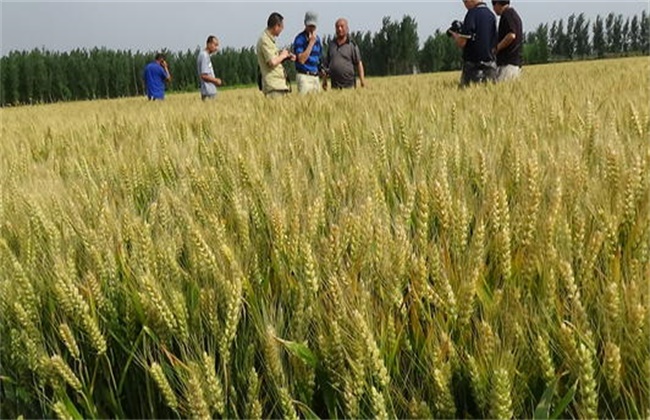
A Complete Guide to New Techniques for Increasing Wheat Yield and Income, Boosting Both Output and Profit
New Techniques for Increasing Wheat Yield and Income
-
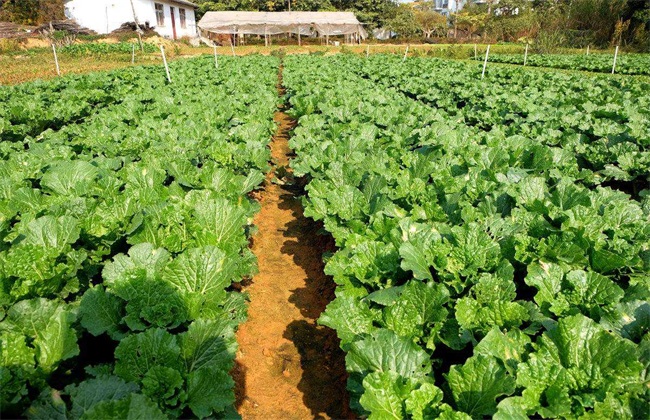
What are the methods for promoting deep roots and increasing yield in vegetables?
How to promote deep roots and increase yield in vegetables
-

Simple tips for increasing edible mushroom yields: master the methods for higher production
Simple tips for increasing edible mushroom yields
-

Sweet potatoes turn into feed, saving costs and increasing efficiency at the same time
1. Tuberous roots: each unit of fresh sweet potato is equivalent to 0.3 corn units. It is an excellent succulent feed and also a very good energy feed. All kinds of livestock like to eat it, and it is most suitable for feeding meat pigs. The method is to boil it, mix 15-20 kg of cooked sweet potato with 1 kg of concentrated feed (crude protein >= 34%), stir evenly and feed to meat pigs. The effect is the same as a complete compound feed, but the feed cost is much lower than compound feed. Feeding sweet potato alone or feeding it raw has a poor effect. Tuberous roots that are rotten or have black spot disease should be buried deep in a pit, and it is strictly forbidden for humans and livestock to eat them
-

For good quality and high yield in Welsh onions, reducing nitrogen and increasing potassium fertilization is key
In recent years, in order to increase Welsh onion yields, many vegetable growers have blindly increased the use of chemical fertilizers, especially nitrogen fertilizers. According to surveys, on average, pure nitrogen applied to Welsh onions per mu is as high as 40-50 kg, and phosphorus pentoxide 10-15 kg, while potassium fertilizer is applied very little or not at all, resulting in Welsh onion yields not increasing but decreasing, and root rot becoming more severe...
-

Detailed Explanation of Key Techniques for Increasing Yield by Grafting Multiple Pumpkin Plants Together
If too much nitrogen fertilizer is applied in the early growth stage, the plants tend to grow excessively, causing flower and fruit drop, and it becomes impossible to ensure uniform fruit set and the final product quality. Therefore, the amount of nitrogen fertilizer used should be controlled, and the proportion of phosphorus and potassium fertilizers should be appropriately increased. When needed, chemical treatments can be used, such as selecting Zucchini Fruit Set King 1...
-
Replanting autumn buckwheat for disaster relief and increasing income at the same time
Buckwheat has a short growth period, strong adaptability, moderate yield and high nutritional value. It is an excellent catch crop and disaster-relief crop, and can be planted from south to north in our province. Experts remind that in the area along the Yangtze River and south of it in our province, sowing can be done around mid-August, while in the area along the Huai River, early to mid-August is suitable. For autumn buckwheat, it is advisable to choose varieties with a growth period of 70-80 days, ...
-
What are the practical measures for increasing rice yields?
Apply "no-deep-tillage" soil conditioner to increase soil permeability, promote rice root growth and development, and improve the rice plant's fertilizer use efficiency, thereby increasing rice yield. On this basis, firmly grasping the following measures also has a huge effect on increasing rice yield. 1. Increase the number of panicles. ① Cultivate strong seedlings. To...
-
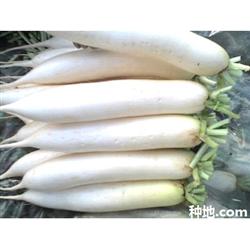
What are the key technical points for increasing the yield of white radish?
How can white radish be grown to increase yield? Please advise: coring white radish can increase yield. 40 to 50 days before the normal harvest of white radish, that is, when the white radish has grown to 0.25 to 0.5 kg in weight, choose a sunny day, use a small knife, insert the tip of the knife into the center of the radish's heart leaves, and dig out the growing point. If the heart leaves that are dug out do not fall apart, it proves that the growing point has been dug out...
-
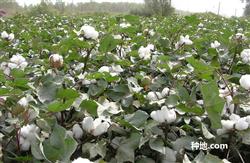
What are the effective methods for increasing cotton yield and disease resistance?
How can cotton be made to increase yield and resist disease? What are the tricks? Surveys conducted in some cotton-growing areas found that only about 45% of cotton growers apply nitrogen, phosphorus and potassium compound fertilizer; most farmers apply ammonium bicarbonate, urea and superphosphate, and about 15% of them use only phosphate fertilizer as a base dressing. This situation shows that in...
条件筛选