-

What are the key technical points for greenhouse tea cultivation and management?
1. Site selection: Choose level ground or gently sloping land with fertile soil, abundant water, and good soil permeability to establish the tea garden. It is best to choose terrain with mountains to the north and open land to the south, to help block the cold winter winds and avoid wind gaps. For flatland tea gardens, a windbreak forest should be set up on the north side of the tea garden. 2. Tree age: Give priority to mature tea gardens, which have strong tree vigor, robust growth, and high tea yields, with a tea garden coverage of over 85%. 3. Greenhouse model: Mainly winter-warm greenhouses, generally about 13 m wide, with a length not
-
What to Do When Wheat Seedlings Show Abnormal Leaf Color? A Full Analysis of Causes and Solutions
After wheat is sown and the seedlings emerge, various abnormal discolored seedlings often form due to the influence of natural conditions and cultivation practices. To make it easier to manage according to the specific seedling condition and the specific cause, they are introduced separately below: Yellow-leaf seedlings - the causes of yellowing of wheat leaves. First, soil drought. This situation mostly occurs in wheat fields with insufficient subsoil moisture or where moisture escapes through cracks. Its characteristics are: tillers emerge slowly, leaf color is grayish green, the central leaf is short and small, growth is slow or stagnant (people call this "shrunken-heart seedlings"), the middle and lower leaves gradually turn yellow and dry up, and roots are few and fine. Management
-
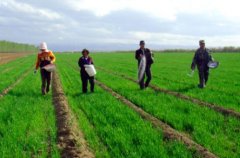
Is Laying Plastic Sheeting Useful in Field Management? Common Practices Explained in One Article
Do you know what the black plastic commonly seen in fields is for? Why do farmers lay a layer of black plastic? What are the benefits of doing so? Do you know? Let's take a look together. The presence of silver-black plastic sheeting is often seen in fields, with one plot after another completely covered to prevent
-
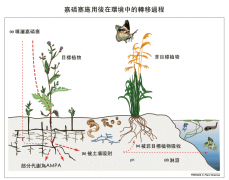
Taiwan, China's pesticide use hits a 17-year high; is China's use large?
Do you know how large pesticide use is? Taiwan, China's pesticide use has hit a 17-year high; come and see what the figures are. A US court ordered a sky-high payout over glyphosate, and chlorpyrifos was banned to protect infants; will Taiwan, China follow suit? China's pesticide use per unit area is at the
-
Building cozy foreign-style mushroom houses to achieve year-round mushroom production
Fengdu Town in Gutian County, Fujian Province, has taken breaking through the seasonal cultivation of mushrooms as a difficult problem to overcome in developing the edible fungi industry, increasing investment in science and technology, building European-style "foreign mushroom houses," changing traditional cultivation methods, and achieving off-season constant-temperature cultivation and year-round production. At the site, rows of distinctive European-style "foreign mushroom houses" can be seen; they are a newly built edible fungi production base of Gutian County "Gugu Yizu" Biotechnology Co., Ltd., covering an area of 20 mu, with a total of 24 modern specialized rooms, and each mushroom house is equipped with a large
-
Detailed explanation of the method for building a banded krait (Bungarus fasciatus) snake house
For artificial rearing of banded kraits, a snake garden or snake house can be used; for small-scale rearing, a snake box can be used. The snake garden and snake house for banded kraits should be built in a place that is sheltered from the wind and facing the sun, on high and dry ground, with dense soil, relatively close to a water source yet far from residential areas, and quiet. The snake garden should simulate the wild environmental conditions of the banded krait. The surrounding wall of the snake garden should be 2.5 m high, the inner surface of the wall should be smoothed with cement, the corners of the wall should be built into an arc shape, the wall foundation should extend 1.5 m underground, and at a depth of 1.5 m in the soil layer, lime-sand-clay mixture should be tamped solid to prevent rodents from burrowing and the snakes from escaping.
-
How was the trial on early breeding of rice field eel fry in greenhouses carried out?
At present, cage culture of rice field eels is concentrated on collecting fry in July, which gives a high survival rate and low farming risk. But concentrating purchases means few fry sources, high prices, and a low weight-gain multiple. If fry are purchased earlier, the unstable temperature leads to a high mortality rate of the fry. How can this problem be solved? We carried out a trial on early breeding of rice field eel fry in greenhouses, and a brief summary of the trial is as follows: 1. Trial conditions 1. Trial pond: a newly excavated artificial water surface, 250 m long, 4 m wide and 1.5 m deep, with an area of 1000 sq m. The water source is lake
-
Detailed Explanation of Key Management Techniques for Apricot Trees in Greenhouses
1. Fertilizer and water management. After covering with plastic film, no more fertilizer is applied as a top dressing. After fruit set and during the pit-hardening stage, spray once with 0.3% urea plus 0.2% photosynthetic micro-fertilizer and 0.3% potassium dihydrogen phosphate. Install drip irrigation pipes inside the greenhouse and water reasonably according to soil moisture. Do not water excessively, to avoid excessive vigorous growth of new shoots, which can cause physiological fruit drop. 2. Training and pruning. For "Y"-shaped training, mainly retain lateral branches, appropriately thin out or utilize upward-growing branches, leave mediocre branches unpruned, cut back drooping branches, and remove overly dense branches, diseased and pest-infested branches, and dead branches. 3.
-
What kind of fruit tree is Java plum? Characteristics and uses
Java plum, also known as Hainan Syzygium, is native to India and the Malay Archipelago. The fruit is dark purple to black, 1.0-2.0 cm long; improved varieties have fruit the size of a chicken egg, with thin skin, thick flesh and abundant juice, slightly sour and slightly astringent, eaten fresh or salted; unripe fruit can be made into vinegar, and ripe fruit can be brewed into wine. It is suited to tropical climates and also grows well on calcareous soils.
-
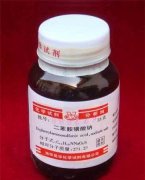
Organic Bacillus thuringiensis subsp. kurstaki found with diphenylamine pesticide contamination, traced to lubricating oil accidentally mixed into the manufacturing process
Investigation into the detection of diphenylamine pesticide contamination in the organic Bacillus thuringiensis subsp. kurstaki product Sulibao finds that lubricating oil accidentally entered the manufacturing process. What is going on here? How could lubricating oil appear in manufacturing? Let's take a look together. The Fushou Bacillus thuringiensis subsp. kurstaki product "Sulibao" was detected with the chemical agent "diphenylamine"
条件筛选