-

Producing Rhododendrons for Landscaping: Topiary Is the Direction, Don't Use Wild-Collected Rootstock
Regarding the phenomenon of some nursery growers using wild rhododendrons as rootstock to cultivate topiary rhododendrons for landscaping projects, Li Yong, secretary-general of the Rhododendron Branch of the China Flower Association, recently stated: topiary is currently an effective way to increase the added value of landscaping rhododendrons, but the practice of using wild-collected rootstock for grafting is not advocated. It is understood that although there are not many nurseries in China mainly growing rhododendrons for landscaping projects, many places in the south have already achieved year-round supply. Therefore, in the absence of disasters, the domestic supply of landscaping rhododendrons is currently basically saturated
-
Detailed Explanation of Pollution-Free High-Yield Cultivation Techniques for Goji Berry in Greenhouses
Goji berry (Lycium barbarum) is a perennial deciduous small shrub of the genus Lycium in the Solanaceae family. Its tender shoots and leaves (also known as goji tips) are eaten as a vegetable and can be stir-fried, served as a cold dish, or used in soups. They are nutritious, delicious and refreshing, and are highly favored by consumers. Lishui County, Jiangsu Province began introducing and cultivating it in 2002. The products are mainly sold to large and medium-sized cities such as Shanghai, Nanjing and Wuxi, and demand in the market exceeds supply, achieving relatively high economic returns. The pollution-free high-yield cultivation techniques for goji berry in greenhouses are introduced as follows: 1. Variety selection: Choose the large-leaf goji. This variety has large, green, oval-shaped leaves, with leaves
-
Technical Methods for Bag Cultivation of Edible Mushrooms in Mushroom Houses and Mushroom Sheds
1. Cultivation site and setup. Bag cultivation uses the shelf cultivation method in mushroom houses (sheds). Choose a clean, well-ventilated room; set up 4 to 5 tiers of bed frames indoors, with a tier spacing of 50 cm and the bottom tier 30 cm above the ground. Place the mushroom bags upright in a single layer on the shelves, with 100 bags per sq m. 2. Cultivation materials and formulas. (1) 23% mixed sawdust, 23% cottonseed hulls, 28% bean stalk powder, 19% wheat bran, 5% cornmeal, 1% sucrose, 1% calcium carbonate; (2) 36% mixed sawdust, 25% cottonseed hulls, bean
-
Detailed Explanation of Key Cultivation Techniques for Kate Apricot in Simple Plastic Greenhouses
The protected cultivation of Kate apricot in simple plastic greenhouses reaches maturity 30 to 40 days earlier than open-field cultivation, and economic benefits increase by 15 to 20 times. 1. Structure of the simple plastic greenhouse. The greenhouse built is a north-south arched greenhouse, with a span of 10 m, a length of 60 m, a ridge height of 2.5 m, and a shoulder height of 1.5 m. Reinforced concrete columns are used as uprights, and bamboo poles are used for the arches and suspension beams. There are 5 rows of uprights in total, with 2.5 m between the main upright rows. The spacing between uprights in the edge rows is 1 m, and the spacing between uprights in the middle 3 rows is 3 m. Above the middle 3 rows of uprights, a suspension beam is installed separately
-
Introduction to Amprolium Hydrochloride (Amprol), a Commonly Used Antiparasitic Drug in Ducks
Source and properties: This product is a white or off-white powder. It is odorless, easily soluble in water, and relatively stable in nature, making it suitable for combining with other ingredients such as antibiotics, vitamins, and minerals, and for adding to poultry diets. Actions and uses: Amprolium is an anticoccidial drug launched in the 1960s. This product is highly effective, safe, and not prone to inducing drug resistance, and it is still widely used today. The structure of this product is similar to thiamine, so it can inhibit the thiamine metabolism of coccidia and thereby exert an anticoccidial effect. This product can not only inhibit the growth
-
Forced Molting Technique for Ducks Can Shorten the Pause in Laying
After laying a certain number of eggs, laying ducks stop laying and go into molt. Under natural conditions, it takes 2-3 months from molting to resuming egg production. However, when you notice that a laying duck has stopped laying and is pecking back and forth at its own feathers, give the non-laying duck a forced molt: first pluck out the older, coarser long and short feathers from both the front and back of its two wings, then keep it in a confined pen, strengthen feeding management, and feed it high-quality feed. After about 1-5 days, the non-laying duck will begin to lay eggs again.
-
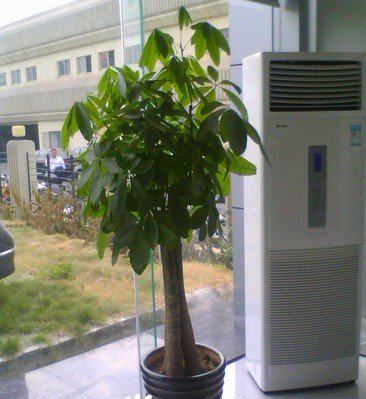
Why Is My Money Tree Losing Leaves? Analysis of 13 Main Causes
Malabar chestnut, also known as Pachira aquatica and money tree. It is an evergreen small tree of the Malvaceae family. Native to Mexico and Costa Rica. Palmate leaves with 7-11 leaflets; indoor money trees have oblong to obovate leaves. There is a horticultural variety, the variegated money tree. Because the name "money tree" is very popular with merchants and ordinary citizens
-

What to Do About Golden Privet Leaf Drop During the Growing Season? Causes and Control Methods
Causes and Control Measures for Leaf Drop of Golden Privet During the Growing Season Caused by Disease According to expert research, this leaf spot disease is caused by the pathogenic fungus Alternaria (afternaria) of the order Moniliales, class Hyphomycetes, subdivision Deuteromycotina. In the early stage, small brown spots appear on the leaves, surrounded by purplish-red halos, and black mold-like growth is visible on the spots.
-
Winter is the idle season, and it is the right time to plant scallions in the greenhouse
Using a fixed greenhouse to grow a crop of scallions during the winter idle season can improve the greenhouse's utilization rate and economic benefits, and also allows crop rotation, which not only creates a good preceding crop for the next crop but also does not affect the planting of early spring fruits and vegetables. Planting method: when the late autumn vegetable production in the greenhouse has ended, along with careful land preparation, apply 3000-4000 kg of high-quality organic fertilizer per mu, then open furrows and plant the scallions. Row spacing 25-30 cm, plant spacing no more than 1 cm, planting depth about 3 cm. The scallions to be planted can be selected from smaller plants among the autumn scallions.
-
For high yield and quality of chili peppers, three key points must be focused on
Gong Zhichang, known as the "Chili Pepper King" in Shouguang City, Shandong Province, believes that yield and quality are the key to achieving high efficiency in chili pepper production, especially when market prices are low. In chili pepper production, Gong Zhichang focused on the following three aspects of management. Prevent plant death and cultivate a well-developed root system. Chili peppers are shallow-rooted plants with an underdeveloped taproot and poor root regeneration capacity. They are susceptible to waterlogging and cannot tolerate drought. They require soil with strong air permeability and are best cultivated on high ridges. High ridge cultivation not only enhances soil air permeability and ensures
条件筛选