-

How to prevent fruit russeting in Huangjin pear? Causes and measures
Huangjin pear was introduced to our city in 2000. Through top-grafting and variety replacement, it has now expanded to 2567 hectares, and began bearing fruit in 2001. However, in production it was found that the fruit surface of Huangjin pear is prone to forming fruit russeting, with the rate of good fruit at 30%-50%, seriously affecting the economic benefits of fruit growers. For this reason, we conducted investigation and analysis, identified the causes and proposed corresponding countermeasures. 1. Causes Internal factors: The occurrence of Huangjin pear fruit russeting is closely related to its peel structure. The fruit of Huangjin pear
-
What to Do If Silkworms Don't Spin Cocoons? Causes and Solutions
In silkworm rearing, the phenomenon of silkworms not spinning cocoons occurs from time to time, causing certain losses to sericulture production. First, the causes of silkworms not spinning cocoons must be identified, and then measures taken for prevention and control. The main causes are: 1. Pathological factors. For example, flacherie and soft rot infect and develop before mounting, destroying the secretory function of the silkworm's silk glands; or pathogens produce large amounts of toxic metabolites in the silkworm body, paralyzing the nerves so that the silkworm cannot spin silk and form a cocoon. 2. Physiological factors. Abnormal middle silk glands, mainly due to excessively high rearing temperature,
-
Potato tubers infected with Phytophthora cause cellar rot
Symptoms: Slightly sunken dark or purple lesions appear in patches on the surface of the tubers, extending less than 1cm into the tuber. White mold is generally not easy to see, but when humidity in the cellar is high, white mold grows on the diseased area, which is the pathogen's sporangiophores and sporangia. This causes cellar rot. For the pathogen, transmission routes and disease conditions, see Potato Diseases - Potato Late Blight. For control methods, see Potato Dry Rot.
-
What are the disinfection methods for sand used in turtle and soft-shelled turtle incubation
In recent years, with the rise of artificial turtle and soft-shelled turtle farming, how to increase the hatching rate of turtle and soft-shelled turtle eggs and hatchlings has become an urgent matter. Because some turtle and soft-shelled turtle farms still use the traditional old method, using untreated sand as the carrier for incubating eggs, they do not realize that untreated sand contains a large number of pathogens and pests, which often contaminates and ruins the eggs during incubation, and some farms fail because of this. In my 21 years of turtle and soft-shelled turtle farming practice, I have worked out methods for disinfecting sand and improved the hatching rate. Now I will introduce several very practical disinfection methods
-
Sharing Experience and Key Techniques for Greenhouse Potato Cultivation
Mr. Diao Jinzhu of Diaosha Village, Longyang Town, Tengzhou City, Shandong, grows potatoes yielding over 5,000 jin per mu, with an output value reaching 10,000 yuan. His cultivation experience is as follows. 1. Use virus-free seed potatoes, the virus-free potato variety Holland No. 7 introduced from Northeast China. 2. Seed potato treatment: prepare about 200 kg of seed per mu. In mid-January, choose a sunny and warm midday to sun-dry the seed potatoes for 1 day, and remove diseased, rotten and deformed potatoes. Then place the seed potatoes indoors at 20-25°C for 15 days for pre-sprouting; once the buds begin to sprout, pre-sprouting is complete. Then cut them into pieces, each 20-25 g. For large potatoes
-
What medicine is used for swine mange? Phoxim can treat it
Swine mange is a chronic parasitic disease caused by Sarcoptes scabiei mites, characterized by intense itching. Pigs of all sizes can be infected, which seriously affects the growth and development of pigs and brings huge economic losses to the pig farming industry. 1. Patterns of onset: After the female Sarcoptes scabiei mite burrows into the skin, it lays eggs in tunnels in the epidermis, and the larvae hatch and parasitize within the burrows in the epidermal layer. The irritation from the mite's saliva and metabolic products causes inflammatory itching and rash. 2. Symptoms and diagnosis: It begins at the extremities of the limbs, the ears, and the abdomen,
-
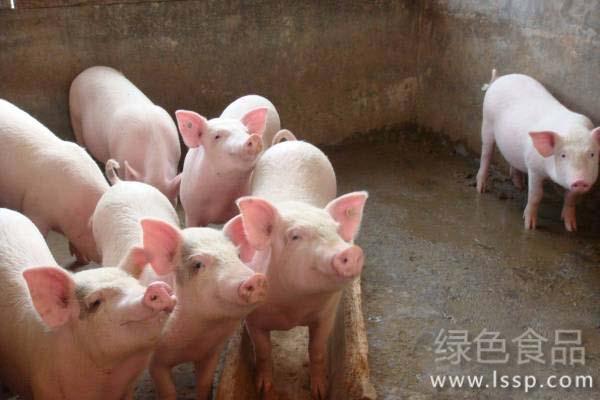
How to treat nutritional anemia in piglets? Detailed explanation of causes and treatment methods
Causes and treatment methods of nutritional anemia in piglets
-
How to treat spleen deficiency diarrhea in cattle and horses? The clever use of Shenling Baizhu Tang
Shenling Baizhu San comes from the Taiping Huimin Hejiju Fang (Prescriptions of the Bureau of Taiping People's Welfare Pharmacy), and mainly treats weakness of the spleen and stomach, indigestion, emaciation, weakness of the limbs, diarrhea, and other conditions. In many years of veterinary clinical practice, this formula has been modified and adapted to treat spleen deficiency diarrhea in cattle and horses (including indigestion and gastrointestinal catarrh) as well as constipation, enteritis, and secondary complications of conditions such as ruminal atony, achieving good therapeutic results. It is introduced below. 1. Exploration of causes: The causes leading to spleen deficiency diarrhea are mainly dysfunction of the spleen and stomach. The stomach is the sea of water and grain, and the spleen governs the transportation and transformation of essential substances; if
-
What are the five main causes of low yields in Gastrodia elata (tianma)
Recently, the editor has often received consultation calls from people saying that the Gastrodia elata they cultivate does not yield much, with some even below 3 kg/sq m. The reporter specifically consulted Cao Debing, a Gastrodia elata expert at the Provincial Academy of Agricultural Sciences, about these issues. According to him, based on the growth principles of Gastrodia elata, there are many causes of low yields. He listed the following five causes, and farmers can check their own production conditions to see whether any of the following situations apply: 1. Armillaria mellea has been subcultured many times, becoming aged and degenerated. Armillaria mellea is the only source of nutrition for Gastrodia elata, so the quality of Armillaria mellea directly has an irreversible impact on Gastrodia elata. In general production, it is required to use detoxified, isolated pure strains, or to use such strains to cultivate fungal material before planting, so as to ensure results; however, in order to reduce costs, some farmers either use ordinary strains, or use old fungal material as "starter", mixing in some new linden wood to let it "transfer the fungus". If a pure strain was used the first time, this method can be used the next year, but it must not exceed three years. Unlimited continuous "fungus transfer" will inevitably lead to strain degeneration and reduced vigor, causing reduced Gastrodia elata yields.
-
Causes and Control Methods of Deformed Mushrooms in Greenhouses
1. Hollow white-stem mushrooms. The mushroom stems become loose and white, and in severe cases shrink to form a hollow center. Causes: during the fruiting body growth stage, it is caused by dry air and high temperatures. When the relative air humidity is below 85%, the water content of the casing soil layer is relatively low, and the temperature inside the mushroom house is above 18°C, the mushrooms grow quickly and evaporate water quickly, causing the water absorbed by the mushroom body to be less than the water lost through transpiration. Control methods: spray water promptly during the day to keep the relative air humidity at 90%, and ventilate promptly after spraying water in the morning and evening to lower the greenhouse temperature, keeping it at 14-
条件筛选