-

Nine Practical Methods to Prevent Summer Decline in Bees
"Summer decline" is generally caused by high temperatures. To avoid and reduce "summer decline," the key is to do a good job of heat prevention and cooling for the colony, creating a suitable microclimate for the bees. The specific measures are as follows: 1. The summering apiary should be set under large trees or in a bamboo grove, in a ventilated and shady place, avoiding direct sunlight. The hive entrances should face south with the backs to the north. 2. Build a shade shed over the hives and cover it with straw, and plant crops such as pumpkins, hyacinth beans, and loofahs to let their vines climb onto the shed, increasing the shading layer. 3. Place a water-soaked sponge between the inner cover and the outer cover of each hive, which can
-
What to do about fruit drop in jujube trees in summer? Growers need to prevent it in advance
Regulate the distribution of nutrients so that they flow more concentratedly to the jujube fruits. Measures: 1. Bend branches to open the angle. For relatively upright branches, change their direction by propping, pulling and other methods to disperse apical dominance; doing so can enhance ventilation and light penetration in the tree canopy, so that branches can also set fruit evenly in summer. 2. Remove sprouts and pinch the growing tips. For newly sprouted jujube shoots, when there is no room for development, remove them from the base or cut back to the rosette, keeping only 2-3 jujube fruiting spurs at the base. This can effectively reduce nutrient consumption, so that nutrients accumulate
-
Key Technical Points and Care Methods for Keeping Phalaenopsis (Moth Orchid) Through the Summer
1. Measures: Getting Phalaenopsis through the summer is mainly a matter of cooling, and the following measures should be taken: ① Add a double layer of shade netting to reduce light, which achieves a good cooling effect (a drop of 2°C to 4°C). ② Sprinkle or flood the ground with water. Summer temperatures are very high, but the water just drawn from a well is actually very cold, around 16°C. Therefore, sprinkling or flooding with water can produce an obvious cooling effect. ③ Misting the leaves cools fastest, but the effect lasts the shortest time. ④ Ventilation. On the wall every 5
-
Detailed Key Points for Home Care of Phalaenopsis (Moth Orchid) in Spring and Summer
When you buy a flowering plant in spring (March-May), the rising spring temperatures make it a good time to grow the plant. However, the plants sold on the market during this period have been cultivated all winter in production greenhouses with a minimum temperature above 20°C, so the plants are not very cold-tolerant. After purchasing the plant, it should be acclimated: place the pot in a spot where the minimum temperature at dawn is above 10°C; if you have a hotbed or an air-conditioned room, place the pot in the center, apply slight heating, and protect it. During the 1-month adaptation period
-
How to treat pig eczema, which occurs frequently in summer
Eczema is a skin disease that occurs frequently in pigs in summer. The main symptoms of acute and chronic eczema are red patches, papules and itching on the skin, and a few cases are accompanied by pustules, oozing, erosion and scabbing. It is especially harmful to suckling piglets. According to practical experience in production, treatment with mirabilite has a special effect. Method: according to the size of the pig and the area of the affected part, take 50-200 grams of mirabilite respectively, add 200-500 milliliters of cooled boiled water, and after it dissolves, apply it to the affected part, 4-5 times a day, or use a clean towel to dip the liquid and wet the affected area,
-
Duck disease prevention and control requires attention during the transition between summer and autumn
Currently we are in the transition between summer and autumn, with large temperature fluctuations, and various pathogens easily breed and multiply. This is a season when livestock, poultry, fish and other animals are prone to disease. Neglecting prevention at this time can easily trigger disease outbreaks, causing death of livestock, poultry and fish from mass and epidemic diseases, resulting in relatively large losses. Therefore, the symptoms and prevention and treatment methods of common duck diseases during this period are introduced below. 1. Duck plague. It occurs frequently in spring, summer and autumn, with high morbidity and mortality. Prevention: inject duck plague vaccine at 10 to 15 days of age.
-
Key Feeding and Management Points for Raising Pregnant Sows Well in Summer
Pregnant sows are extremely sensitive to external stimuli. The heat stress brought by high temperatures can easily cause miscarriage and stillbirth in sows. The first 20 days of pregnancy and the 30 days before farrowing are the danger periods for stillbirth and miscarriage, so feeding and management must be strengthened to ensure the safe farrowing of pregnant sows. Create a cool environment by thickening the roof with materials such as straw curtains that have good insulation performance, so as to block the sun's heat radiation, which can reduce radiant heat by more than 40%. At noon when the temperature is above 30°C, water can be sprayed on the roof to cool it down. In addition to opening the north and south
-
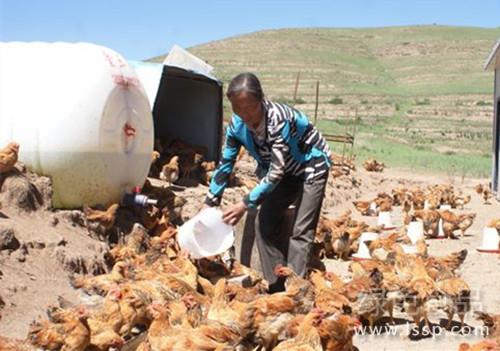
Laying hens have high water requirements during peak laying periods; they drink more in summer and no less in winter
They drink more in summer and no less in winter: water requirements of laying hens during peak laying
-
How to grow Phalaenopsis orchids so they bloom again in summer
The normal flowering period of Phalaenopsis orchids is generally from February to May. Based on the author's experience, with proper care they can be made to bloom all year round. I have a new variety of "Big Red Flower Phalaenopsis" at home. After the Spring Festival I cut off the flower spikes and repotted it, and before "May Day" it began to send out new flower spikes again. On July 1 the first flower opened, and now they are blooming one after another. This is the second blooming in 2000. The cultivation method is summarized as follows: 1. Use an ordinary clay pot with an enlarged drainage hole at the bottom; it is best to make the drainage hole area reach one third of the pot bottom area. For clay pots, a medium
-
How do you make jujube paste popsicles that are both delicious and refreshing in summer?
Ingredients: 500 g red dates, 1400 g white sugar, 100 g starch, 50 g osmanthus, 7000 ml water. Method: 1. Wash the red dates, boil them in water until soft and cooked, peel and remove the pits, and make them into jujube paste. 2. Put the starch in a bowl, pour in a little cold boiled water and mix evenly into wet starch. 3. Pour the water into a pot, bring to a boil over high heat, then add the white sugar, wet starch, and jujube paste and mix well, adjust the taste, sprinkle in the osmanthus, and after it cools, pour it into popsicle
条件筛选