-

Points to note when raising pigs in summer: do not throw cold water on the pigs
In summer, when the temperature is high, pigs often pant loudly from the heat. Some farmers, worried that the pigs will fall ill from the heat, throw cold water on the pigs, hoping to cool them down and make them feel more comfortable, not realizing that this is harmful and does no good. Pigs pant from the heat because their sweating is poor, so the heat in their bodies cannot be released for the time being. If cold water is thrown on a pig at this time, the strong cold stimulation makes the sweat pores all over the pig's body contract sharply, the release of body heat is blocked, and the body temperature instead rises abruptly; in mild cases the pig develops a high fever and inflammation of the lungs, and in severe cases it
-
How can you distinguish spring tea, summer tea, autumn tea and winter tea after brewing?
Spring tea: when brewed, the tea leaves sink relatively quickly, the aroma is strong and lasting, the taste is mellow, the liquor is clear and bright, the brewed leaves are soft and thick, there are many normal buds and leaves, and the leaf veins are fine and dense with inconspicuous serrations on the leaf margin. Summer tea: when brewed, the tea leaves sink relatively slowly, the aroma is not high enough, the taste is somewhat bitter and astringent, the brewed leaves are thin and rather hard, there are relatively many opposite leaves (with inconspicuous terminal buds), the leaf veins are coarser, and the serrations on the leaf margin are obvious. Autumn tea: the aroma is not high, the taste is light and slightly astringent, there are many opposite leaves, the serrations on the leaf margin are obvious, and the leaf blades vary in size. Winter tea: the aroma tends toward a light fragrance type, and the taste is smooth and softer than spring tea
-
How can you tell spring tea, summer tea, autumn tea and winter tea apart?
Spring tea: Because spring temperatures are moderate and rainfall is plentiful, and because the tea plant has rested and recovered through autumn and winter, spring tea's buds and leaves are plump, its color is emerald green, the leaf texture is soft, the taste is fresh and brisk, and the aroma is intense. In our country's historical documents through the ages, there are records that "spring tea is prized." Summer tea: Because the weather is hot, the tea plant's buds and leaves grow rapidly, and the extractable substances that dissolve into the tea liquor are relatively reduced, so the taste of the tea liquor is not as fresh and brisk as spring tea, the aroma is not as rich as spring tea, and the taste is rather bitter and astringent. However, summer tea contains higher levels of tea catechins and caffeine, making it suitable
-
Key Technical Points for Over-summering Management of Semi-cooked Substrate Cultivation of Nameko Mushrooms
In the Dandong area, from mid-June each year, the weather shifts from dry and muggy to the continuous rain season, with persistent drizzle and no adequate sunlight for more than 10 days, high temperatures and high humidity, resembling "sauna" weather. From mid-July until the opening of the beds, there is again scorching sun, and the spawn bags in a high-temperature, high-humidity environment are highly prone to spawn degeneration or invasion by pests and diseases, causing the spawn beds (bags) to become soft and rotten after opening or after the first watering, resulting in varying degrees of economic loss for mushroom growers. Based on our cultivation practice in recent years, we have mastered a set of over-summering management methods. The key management points are introduced as follows:1
-
How to Do a Good Job of Disinfection in Rabbit Farms in Late Spring and Summer
Late spring and early summer is the time when bacteria and viruses begin to multiply in large numbers. Therefore, disinfection work on rabbit farms should be placed in an important position. To this end, the disinfection techniques for rabbit farms in early summer are introduced as follows: 1. Rabbit house disinfection: disinfect once a week. Before disinfection, thoroughly remove leftover feed, bedding straw and other filth, scrub clean with clean water, and disinfect after drying. The disinfectant can be a 2% caustic soda solution, etc.; a blowtorch or the flame of burning firewood and grass can also be used for disinfection, which is very effective at killing insect eggs and parasites. 2. Feeding utensil disinfection: every
-
Introduction to the Over-Summer Hot Pepper Variety Baojiao No. 3
This variety is a mid-to-late maturing variety, with a medium-to-large plant shape and medium pungency. The fruit is about 20 cm long, about 3.5 cm in diameter, and weighs 60-80 g per fruit, with large fruits exceeding 90 g. The fruit color is dark green and glossy, the flesh is thick and firm, straight and not curved, and it is extremely tolerant of long-distance transport. Five days after harvest, the fruits do not soften, do not change color, do not deform, and remain as fresh as when first picked. Its fruiting capacity in the mid-to-late stage is especially strong, with a single plant able to bear about 80 large fruits at the same time, and at most more than 100. Moreover, there is no difference in fruit size among the early, middle and late stages. The average yield is 5000 kg
-
How to Tell Spring, Summer and Autumn Tea Apart? This Article Teaches You to Distinguish Them with Ease
In winter, the main growing part of the tea plant is the root, and amino acids are synthesized in the root of the tea plant and then transported to the tips. After winter dormancy, the tea plant has stored many nutrients internally; in winter and spring, sunlight is weak and the tea plant grows slowly, which is a main factor in the formation of certain aroma substances in tea. Therefore, spring tea has the advantages of a lustrous and oily color, a rich and fragrant aroma, a thick taste with a sweet aftertaste, and a soft and thick leaf base. In addition, spring tea is generally rather plump, stout and heavy, with more downy hairs, fine and dense leaf veins, and inconspicuous serrations along the leaf margin. In summer, temper
-
How are spring tea, summer tea and autumn tea divided?
The division of spring tea, summer tea and autumn tea is mainly determined by the seasonal changes and the intervals of new shoot growth of the tea plant. Under the climatic conditions of our country, except for a few areas in the South China tea region, in the vast majority of tea-producing areas, the growth of tea plants and the picking and processing of tea leaves are seasonal: in the Jiangbei tea region, the tea picking and processing period runs from early May to late September; in the Jiangnan tea region, from late March to mid-October; and in the Southwest tea region, from late January to early December. Tea regions that belong to the subtropical and temperate zones, including the Jiangbei tea region, the Jiangnan tea region and the Xiyie tea region, are usually divided by picking and processing time into the three seasonal teas: spring, summer and autumn. But the standards for dividing seasonal teas are not consistent. Some divide by solar terms: from Qingming to Xiaoman is spring tea, from Xiaoman to Xiaoshu is summer tea, and from Xiaoshu to Hanlu is autumn tea; some divide by time: tea picked and processed before the end of May is spring tea, tea picked and processed from early June to early July is summer tea, and tea picked and processed after mid-July is autumn tea. In the South China tea region of our country, because it is located in the tropics, the four seasons are not very distinct, and tea leaves can be picked and processed almost all year round; therefore, in addition to the distinction of spring tea, summer tea and autumn tea, there is also a classification by the order of new shoot growth of the tea plant and the earliness or lateness of picking and processing, divided into first-round tea, second-round tea, third-round tea and fourth-round tea.
-
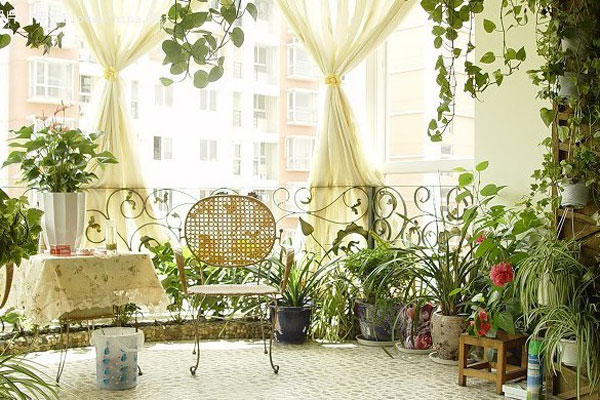
What should you pay attention to when growing flowers in summer? Master these care points
Every summer is a hard time for many flowers. High temperatures, intense heat, and the rainy season with waterlogging are all difficult hurdles for flowers to get through. First, note that plants must not be left exposed to high temperatures for long periods. Different flowers, and even the same flower at different stages, have different light requirements.
-
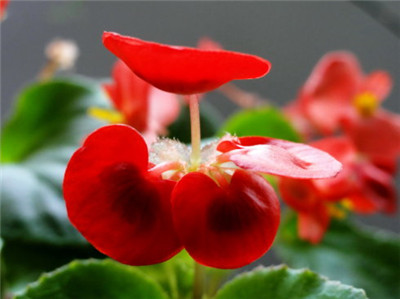
How to care for wax begonias in summer? Master these methods to grow them easily
Wax begonia is the most common and most widely cultivated species among begonia plants. Wax begonia has an elegant form, emerald green and glossy leaves, clustered flowers, and brilliant colors, gorgeous and dignified, appearing even more delicate against the green leaves. It is an excellent ornamental plant, and its flowers bloom in all four seasons with a slight fragrance, used to accent rooms
条件筛选