-

Three Major Disease Prevention and Treatment Methods for Pond Fish in Spring and Summer
1 Carp Hemorrhagic Disease 1.1 Symptoms and Causes The scales on the abdomen of the diseased fish, the fin rays and the caudal peduncle become congested and red. The diseased fish float up close to the ice layer or float on the water surface, gather in groups and swim slowly near the pond edge, and gradually die. ① Hemorrhagic septicemia. The diseased fish appear normal on the outside, or the area under the abdominal scales is congested and red. When the diseased fish is dissected, blood-tinged fluid emerges from the body cavity, and the internal organs have petechial hemorrhages. The disease is caused by Aeromonas hydrophila. ② Brown blood disease (hemorrhagic gill disease). The gill filaments of the diseased fish swell and become dark in color, and some gill filaments
-
Bovine eyeworm disease must be treated promptly during the high-temperature period in summer and autumn
Symptoms: In the early stage, there is conjunctival redness, congestion, swelling, inflammation, and tearing, with serous or purulent discharge. In the later stage, it gradually worsens and increases, the eyelids swell, and the cornea becomes cloudy or develops ulcers or perforation. Sick cattle have reduced appetite, elevated body temperature, restlessness, shake their heads and rub their eyes, and are photophobic. In severe cases, it can cause blindness in one or both eyes, and cows produce less milk. Prevention: Maintain good environmental sanitation in the cattle shed, ensure the pen is dry, remove filth and dispose of it properly, and do a good job of fly control. Feeding management should also be strengthened, nutrition increased, and the cattle's eyes protected from injury
-
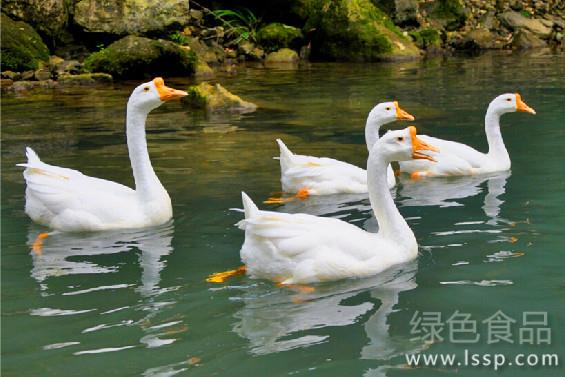
Raising geese in summer is not a losing proposition: a quick-fattening method for meat geese in midsummer
Raising geese in summer is not a losing proposition: a quick-fattening method for meat geese in midsummer
-
How to care for lilies in summer? Master these care tips
Lilies come in a wide variety of colors and varieties, with large, trumpet-shaped flowers, and are widely loved because their name carries the meaning of "a harmonious union lasting a hundred years" and "a heart in harmony with all things." Summer is the main flowering and dormancy period for lilies, and care and management during this time is very important. Cooling and sun protection. The suitable growing temperature for lilies is 15°C to 25°C, within which they can maintain good growth and flowering. When flowering, the potted plants can be moved to a shaded spot, or a screen can be placed over the plants for shade, along with enhanced ventilation and cooling, which helps extend the flowering period. Lily bulbs cannot tolerate
-
Control methods for common fish diseases in early summer
In early summer, water temperatures are suitable, and various pathogens readily breed and multiply, making it a season when fish become ill. If prevention is neglected, fish diseases are easily triggered. Grass carp in particular have a high mortality rate when they fall ill, causing great losses. The symptoms and control methods of four major fish diseases are introduced below: 1. Saprolegniasis: Symptoms: local injury to the fish body, loss of scales, mold or fuzz on the body surface. Abnormal swimming, reduced feeding, leading to emaciation and death. Cause: mainly injury to the fish body after harvesting, after which the disease invades the weakened fish and causes illness. Pre
-
Techniques for large-scale rearing of bream summer fry, suitable for triangular bream and blunt snout bream
Bream (triangular bream, blunt snout bream) are high-quality freshwater fish. They are not only excellent species for pond culture but also suitable for stocking in large water bodies, where their tendency to readily form natural populations can be used to achieve resource protection and enhancement. The techniques for large-scale rearing of bream summer fry are described below: 1. Conditions of the summer fry rearing pond. The summer fry rearing pond requires an abundant water source, unpolluted water quality, and convenient filling and drainage. The area should not be too large, generally 1-3 mu, with a water depth of 1-1.2 m being suitable. The pond must not leak,
-
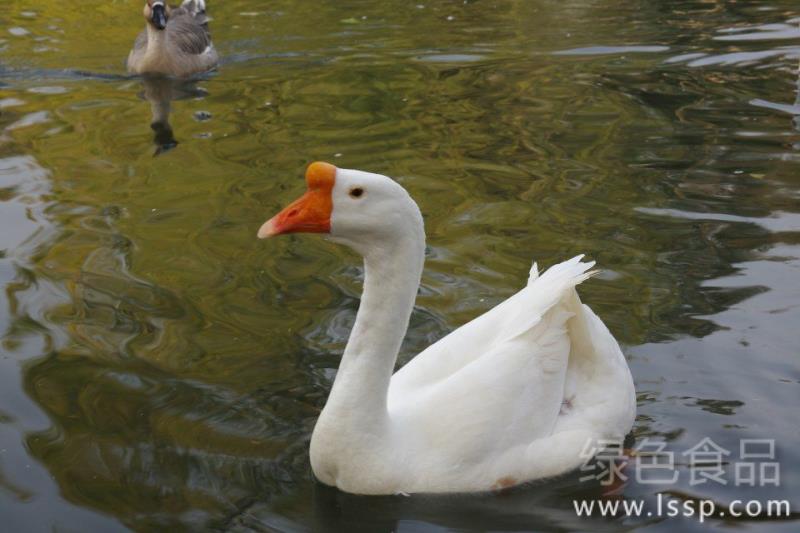
Symptoms and Prevention Methods of Heatstroke in Geese During Summer High Temperatures Due to Lack of Sweat Glands
Summer High Temperatures, Geese Lack Sweat Glands and Are Prone to Heatstroke: Symptoms and Prevention Methods of Heatstroke in Geese
-
Key Technical Points for Summer Management of Gastrodia elata in Northern Shaanxi
Gastrodia elata prefers to grow in warm, moist sandy (or leaf-mold) soil and has relatively strict requirements for temperature and humidity. However, the area along the Great Wall in northern Shaanxi lies in the mid-temperate zone, where summers are hot and dry with little rain, which is unfavorable for the growth and development of Gastrodia elata. To achieve a good harvest of Gastrodia elata, the measures that should be taken in summer management are: (1) Build a shed for shade. In summer, especially at noon during the hot dog days, due to direct sunlight, the ground temperature at 20 cm below the surface (already close to the Gastrodia elata layer) reaches as high as 30-37°C. To keep the ground temperature at 20-28°C
-
How to choose sweet potato varieties? Provincial Crop Institute experts recommend varieties for spring, summer and autumn planting
Sweet potatoes can be planted in spring, summer and autumn. Spring planting is generally done in March to April, summer planting is generally done in May, and autumn planting is done within one week after the Start of Autumn. Below are several sweet potato varieties suitable for planting in our province. Jinye: a new stem-tip vegetable sweet potato variety. This variety has tender stem tips, low crude fiber content, and good palatability after cooking, making it suitable for use as a vegetable. With open-field cultivation, the stem tips can be picked about 10 times over the whole growing period, with 250 kg of stem tips picked per 667 sq m each time, and a picking interval of 15 days. Per 667 sq m, it can yield
-
Introduction to the New Silkworm Variety for Summer and Autumn, Xiafang x Qiubai
Xiafang x Qiubai is a silkworm variety for summer and autumn use bred by Southwest Agricultural University through repeatedly setting up high-temperature environments. In 1992 and 1993, it participated in indoor variety comparison tests and rural trials in Sichuan Province, and all economic indicators reached or exceeded those of the control variety "781 x 7532". In March 1994, it passed the approval of the Sichuan Provincial Silkworm Variety Approval Committee. The Xiafang x Qiubai variety is a summer-autumn use variety bred by combining hybrid breeding and systematic segregation breeding. Due to reasonable parent selection, the breeding scheme
条件筛选