-

Key Techniques for Raising Tea Seedlings from Short Cuttings in Summer and Autumn
I. Nursery Plot Preparation 1. Site selection. A yellow soil in which tobacco, hemp or vegetables have never been grown is required; sandy loam or red soil may also be used; the soil pH should be 4.5-5.5, and the organic matter content in the 0-15 cm soil layer should be below 1.5%; watering should be convenient, and the site should be located below and near a water source. 2. Land preparation. First plow the soil deeply and thoroughly to 25-30 cm, then finely work the top 20 cm of soil repeatedly to ensure the soil is crumbled and the surface is level. 3. Bed making. In summer, make the beds oriented due east-west; in autumn, make them oriented slightly east-west. The beds should be 1.2 m wide and 8-10
-
How to grow oyster mushrooms in summer? A full analysis of key cultivation techniques
I. Site selection For summer cultivation of oyster mushrooms, the site should be chosen in a shady place. Indoor floor space can be used, or, adapting to local conditions, they can be interplanted in crop fields outdoors that have a favorable ecological microclimate, such as fields of chili peppers, eggplants, corn, and rice, and between rows of melons and beans. If under well-shaded tree shade or under a grape trellis, small plastic bed sheds can be made, covered outside with straw curtains, creating a small environment convenient for manual temperature regulation. II. Variety selection Varieties should be chosen that have strong resistance to contamination and resistance to insects and diseases, of the broad-temperature type or high-temperature type. Such as Jiangdu No. 71, Early
-
Key technical measures for oyster mushroom production in midsummer
Oyster mushrooms are usually produced in spring, autumn and winter, but now there have also been breakthroughs in the technology for producing oyster mushrooms in midsummer. The main measures are briefly described as follows: The oyster mushroom spawn used in midsummer must be able to resist high temperatures, resist contaminating microorganisms and resist pests, and must colonize quickly and mature early. Among them, Chunqiu Tekang can resist high temperatures of 35°C; 96 Tekang and oyster mushroom 601 can resist high temperatures of 32°C; Shengming No. 1 can resist high temperatures of 33°C; Huazhong Yaping can resist high temperatures of 35°C. The mushroom-growing site must have convenient drainage and irrigation, fertile soil, a shade shed, and a clean environment. You may choose 97 kg of cottonseed hulls, 1
-
Key Techniques for High-Yield Oyster Mushroom Cultivation in Summer
In recent years, oyster mushroom production in Beiyang Village, Wangdu County, Baoding City has developed rapidly. However, the summer heat and high humidity, along with the rapid spread of pests and diseases, have created great difficulties for oyster mushroom production. The author believes that summer production should focus on the following points: 1. Strain selection. Choose varieties that are heat-tolerant, have good mushroom shape, high yield, and strong disease resistance. Such as: Hainan No. 2, Chuncai No. 1, He's 200, etc. 2. Ingredient treatment. Appropriately reduce nitrogen fertilizer usage. Appropriately increase gypsum usage. 3. Pile fermentation. Minimize factors that cause poor ventilation. Well-fermented
-
How to mix nutritional formulas for silkworms in summer and autumn
The main feed for silkworms is mulberry leaves. Since the quality of mulberry leaves varies greatly between seasons, it has a considerable impact on cocoon yield and quality. If nutritional supplements are fed to silkworms raised in summer and autumn, the yield can increase by 10%-20%. The formula techniques are introduced as follows: 1. Supplement formulas and feeding methods. 1. Glucose solution additive. During the silkworm rearing period, if there is continuous rainy weather, the mulberry leaves are tender in texture due to insufficient sunlight, have a high moisture content, and lower carbohydrates. At this time, a 5% glucose solution can be sprayed on the harvested mulberry leaves. After
-
Pond fish "pond turnover" (mass fish suffocation) occurs mostly in the high-temperature seasons of summer and autumn; early prevention is key
Due to negligence in management, fish ponds often suffer from pond turnover, causing great losses to fish farmers. To prevent pond turnover, the symptoms, causes and control measures are briefly introduced below for the reference of fish farmers. 1 Symptoms: Due to severe oxygen deprivation, pond fish gasp at the surface, scattered throughout the pond, mouths opening and closing, calmly taking in oxygen directly from the air at the water surface; in severe cases they slowly turn over, struggling to keep balance, and after repeating this several times, they die belly-up. 2 Dead fish species
-
Take mosquito repellent measures in pig pens when raising pigs in summer.
1. Chinaberry (Melia azedarach) branches and leaves for mosquito repellent. Tie chinaberry branches and leaves into bundles, soak them in diesel oil, and hang them above the pig pens with galvanized wire. Soak them in diesel oil once every three days, then keep replacing the chinaberry branches, and the mosquitoes can be repelled. 2. Tomato branches and leaves for mosquito repellent. Gather fresh tomato branches and leaves, mash them and extract the juice, and rub it over the pig's whole body, generally once every 2-3 days; it can also be sprayed with a sprayer. At the same time, some tomato branches and leaves can also be placed in the pig pens, 1-2 times per week. 3. Use fresh mint leaves for mosquito repellent. Gather fresh
-
In summer, is it a big problem if pigs get bitten by mosquitoes and insects?
In spring, summer and autumn, whenever the moldy rainy season arrives, mosquitoes become unusually active. Mosquitoes like heat and fear cold; they begin biting people at 16-17°C, and 23-29°C is their suitable survival temperature. Mosquitoes like darkness and fear light, and are accustomed to being active in dimly lit environments. Mosquitoes very much like places with water, so undoubtedly farms have become the busiest places for mosquitoes. The harm of mosquitoes and insects to humans and livestock is mainly harassment, biting and stinging, and the spread of diseases, and they also have an extremely great impact on livestock sleep, etc. When infected, it follows an acute course, and livestock become emaciated.
-
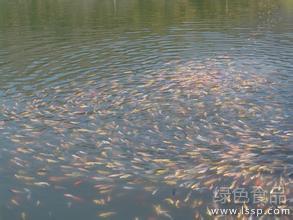
What should be noted when cultivating fish fingerlings in summer? Good-quality fingerlings are the foundation of successful fish farming
Good-quality fingerlings are the foundation of successful fish farming: precautions for cultivating fish fingerlings in summer
-
Six key points to master for summer management of lilies
1. Fertilize according to seedling growth. After lilies are planted, they begin to emerge when the soil temperature reaches 14-16°C. Because lilies take a long time to emerge and consume a lot of nutrients, seedling fertilizer should be applied heavily. Apply 1000 kg of fully decomposed human and livestock manure or 20 kg of urea as a drench per 667 sq m. In early June, when lilies enter the early flowering stage, their underground bulbs grow faster. This period is critical for lily yield formation, and the fertilizer demand is large and concentrated, so a leaf-strengthening fertilizer should be applied as a top dressing. Apply 15 kg of urea per 667 sq m. Lilies have a preference for phosphorus
条件筛选