-
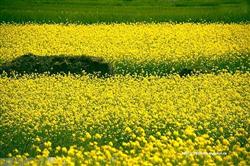
Techniques for Achieving High-Quality, High and Stable Yields in Rapeseed through Heavy Application of Boron Fertilizer
Rapeseed is a boron-demanding crop, and especially high-yield, high-quality cabbage-type "double-low" hybrid rapeseed is particularly sensitive to boron deficiency. Boron deficiency at the seedling stage causes slow rooting, dark green and wrinkled leaves, and stunted growth; boron deficiency at the bud-bolting stage causes swelling of the root crown, leaves turning purple to blue-purple, and abnormal flower bud development; boron deficiency at the flowering stage causes plant dwarfing and abnormal pollen...
-
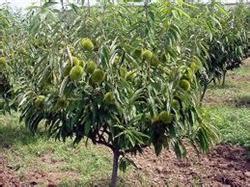
Detailed Explanation of Key Techniques for Early High Yield in Young Chestnut Trees
1 Technical Measures to Promote Female Flower Formation 1) Watering in early spring. The 3 weeks before bud break is the period of female flower morphological differentiation; meeting the tree's water needs makes the fruiting branches thick and strong with many buds, laying the foundation for the next step of female flower bud formation. 2) Foliar topdressing. When the basal leaves have just unfolded and are turning from yellow to green, spray once with a 1000-fold dilution of PP200...
-
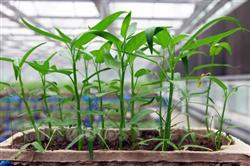
How to fertilize water spinach? Master these methods for high yield and good quality
Water spinach (Ipomoea aquatica) is not strict about soil, but soil that is rich in water and nutrients and has strong water- and fertilizer-holding capacity is more favorable. Water spinach grows vines and leaves rapidly, has a high nutrient demand and strong tolerance to fertilizer. With sufficient fertilizer and water, high quality and high yield can be achieved, but seed-production plots should have fertilizer and water controlled, otherwise the plants easily grow leggy and fail to flower. The base fertilizer for water spinach is mainly farmyard manure and dung...
-
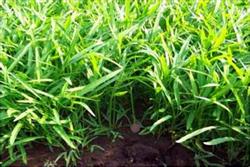
Key Cultivation and Management Techniques for High-Quality, High-Yield Water Spinach
I. Sowing. Both direct sowing in the open field and seedling transplanting are acceptable; the sowing period is generally mid-to-late April. For direct sowing in the field, drilling or hill sowing may be used, with a row spacing of 30-35 cm and a hill spacing of 15-20 cm, sowing 3-4 seeds per hill; water immediately after sowing, and seedlings will emerge in about 7 days. Dense sowing may also be used, and once the seedlings reach 17-20 cm in height...
-
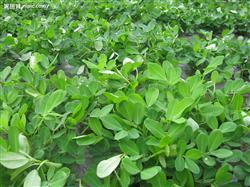
For high peanut yields, manage these four key points well in the late stage
The late growth stage of peanuts runs from when 50% of the plants show filled pods to when most pods mature and are harvested. The growth characteristics of this period are: vegetative growth gradually declines and stops, the pods gradually fill out and become plump, and the increase in pod weight generally accounts for 500%-70% of the total pod weight, making it the main period for pod yield formation. Field management technical measures for this period...
-
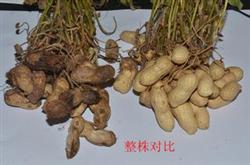
Integrated control of peanut pod rot to achieve both higher yield and better quality
Peanut pod rot, also known as "peanut rotten pod disease," has become fairly common in recent years in the major peanut-producing areas of our province, including Daming, Xinle, Dingzhou, Xingtang and Luanxian, and it becomes even more severe in fields planted continuously to peanuts for many years when the pod-setting stage coincides with a rainy year. According to surveys, affected fields suffer at least a 20% yield loss, ...
-
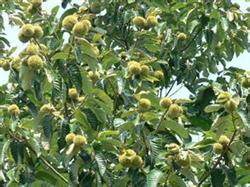
Detailed Explanation of Key Techniques for High-Yield Organic Chestnut Cultivation
Carrying out winter pruning of chestnut trees in the full-bearing period is an effective measure to extend the full-bearing period and prevent the occurrence of alternate bearing. 1. Pruning timing: The winter pruning period for chestnuts is best from half a month after leaf fall to half a month before spring bud break the following year, that is, from mid-December to early February of the next year, but when encountering ice...
-
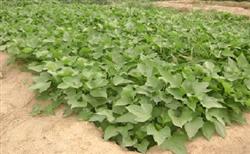
How to manage sweet potatoes for high yields? A detailed explanation of key cultivation techniques
High-yield cultivation and management techniques for sweet potatoes: 1. Apply sufficient base fertilizer and prepare the land properly. 1. Fertilization: Because sweet potatoes are generally planted on sandy, thin soil, sufficient base fertilizer must be applied to improve soil fertility and achieve high yields. Generally, about 5 cubic meters of farmyard manure per mu, 25 kg of diammonium phosphate, and 25 kg of potassium sulfate are appropriate. 2. Land preparation...
-
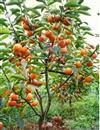
Detailed Explanation of Key Points for High-Quality and High-Yield Cultivation Techniques of Sweet Persimmon
Orchard establishment and planting. Sweet persimmon has no strict requirements for soil, but sandy soil with a pH value of 5.5-7.5 is optimal. An average annual temperature above 13°C is suitable. Most varieties of sweet persimmon have only female flowers but can set fruit parthenocarpically; however, planting pollinator varieties is more conducive to production. The main planted varieties should be selected for market suitability, large fruit size, attractive appearance, and flesh...
-
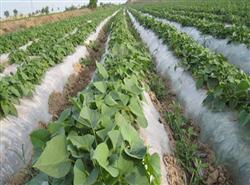
Properly controlling excessive vine growth in sweet potatoes can promote high yields
Sweet potato is a crop with high and stable yields. It has the characteristics of wide adaptability, strong stress resistance, drought and barren tolerance, and relatively few pests and diseases. When planted in places with good water and fertilizer conditions, it can generally yield 2000--3000 kg per mu. However, due to differences in natural conditions and cultivation levels, the yield per unit area is also extremely uneven. In order to fully...
条件筛选