-
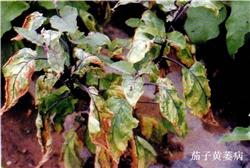
Which Diseases Can Fungicides Prevent and Control? A Detailed Guide to Their Scope of Application
Which diseases can fungicides prevent and control? What chemicals work well when mixed with fungicides? We also invite experienced readers to share their suggestions. As consumers pay more and more attention to food safety, highly toxic and high-residue chemicals in agricultural cultivation will gradually be replaced by environmentally friendly fungicides. Therefore, Zhongdi Network has compiled the diseases that fungicides can prevent and control...
-
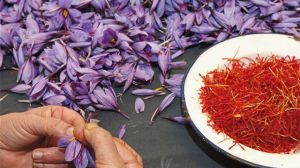
How to Eat Saffron? A Detailed Guide to the Correct Way to Consume It
Steep directly in water: take 5-8 threads and soak them in hot water, brew 3-5 times until the color fades, then swallow the threads along with the liquid; soak in alcohol: add about 1g to 500ml of baijiu and let it steep for one week to half a month; cook in porridge: add about 10 threads and cook as usual. Note that no more than 5g should be consumed per day, and it is forbidden for pregnant women and women during menstruation.
-

What Soil Is Best for Growing Phalaenopsis Orchids? A Detailed Guide to Choosing Soil
Phalaenopsis orchids can be grown in peat soil, coconut coir, or special orchid soil. Peat soil contains substances decomposed from peat moss, sphagnum moss and the like, and has strong water retention and air permeability; coconut coir is the remaining fertilizer left after coconut shells are processed, and contains fibers and other substances; in addition, beginners can directly buy special orchid soil for cultivation to improve the survival rate.
-

How to Grow Kalanchoe So It Blooms? A Full Guide to Care Tips
Re-cuttings: Carry out re-cuttings every year in summer and early autumn; if you do not re-cut, the flowers will not bloom densely. Renew the soil: Provide it with new soil that is rich in nutrients, well aerated and full of humus. Plenty of light: Meet its light requirements; with sufficient light, the flowers will bloom better.
-
How to Grow Kalanchoe So It Blooms? A Full Guide to Care Tips
Re-cuttage: Carry out re-cuttage every year in summer and early autumn; if you do not re-cut, the flowers will not bloom densely. Renew the soil: Provide it with new soil that is rich in nutrients, well aerated and full of humus. Sufficient light: Meet its light requirements; with sufficient light, the flowers will bloom better.
-

How to prune a money tree? A detailed guide to the correct pruning method
If you have not been caring for it long, some individual branches may grow longer than the canopy, and these branches that extend beyond the canopy should be cut off. Also, some trunks will sprout shoots, which should be pinched off by hand as soon as they emerge. For a plant kept for many years, the upper branches grow very long and the tree shape becomes crooked, so the branches need to be heavily shortened; when you can see 3-4 nodes of buds from the base of the branch, prune off the upper branch.
-
How to prune a money tree? A detailed guide to the correct pruning method
If it has not been grown for long, there may be individual branches longer than the canopy; cut off the branches that extend beyond the canopy. Some trunks also sprout buds; remove them by hand as soon as they emerge. For plants grown for many years, the upper branches become very long and the tree shape leans over; the branches should be heavily cut back, and if there are 3-4 nodes of buds visible from the base of the branch, prune off the upper branch.
-
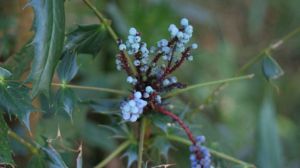
A Detailed Guide to the Cultivation Methods of Mahonia fortunei 'Anping'
Soil: a loose, well-drained, fertile substrate, with base fertilizer applied. Water: keep the soil moist but not waterlogged. Light: it is shade-tolerant, so provide shade promptly during high temperatures. Temperature: the summer temperature must not be too high, and in winter grow it indoors in a spot with ample sunlight. Fertilizing: fertilize once every 20 days during the growing season, preferably with diluted decomposed cake fertilizer water; hoe weeds 3-5 times a year.
-
A Detailed Guide to Growing Mahonia anhweiensis
Soil: a loose, well-drained, fertile medium, with base fertilizer applied. Water: keep the soil moist but not waterlogged. Light: it tolerates shade, so provide shade promptly during high temperatures. Temperature: summer temperatures must not be too high; in winter, grow it indoors in a spot with ample sunlight. Fertilizing: apply fertilizer once every 20 days during the growing season, preferably diluted decomposed cake fertilizer water; hoe weeds 3-5 times a year.
-

What is the difference between a money tree (Pachira aquatica) and a money plant (Zamioculcas zamiifolia)? A quick guide to telling them apart
Different families and genera: the money tree belongs to the family Malvaceae, genus Pachira, while the money plant belongs to the family Araceae, genus Zamioculcas. Different places of origin: the former comes from Central America, while the latter comes from East Africa. Different habits: the former prefers relatively moist growing conditions, while the latter prefers relatively dry growing conditions. Different forms: the leaves of the former are not opposite, while the leaves of the latter are opposite.
条件筛选