-
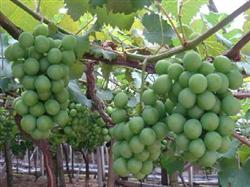
Scientific methods for using the grape ripening agent ethephon
1. Pay attention to watering for varieties prone to fruit cracking, keeping the soil from drying out before the fruit expands and grows, so that the skin will not age; then when the rainy season comes and the soil has too much moisture, fruit cracking will be reduced; 2. When conditions permit, it is recommended to bag the grapes; bagged grapes have fresh, tender skin with strong elasticity, and even if rain accelerates expansion, they are less likely to crack...
-
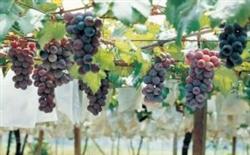
Detailed Explanation of Key Management Techniques During Grape Ripening
1. Timely picking in batches. Grape varieties differ, and their ripening periods are not the same either, so different measures should be taken according to different situations when picking. Ripe grapes have a glossy surface, transparent flesh, and a thick layer of bloom; they taste flavorful, and the seeds are brown. If picked too early, the acidity is too high; if picked too late, the fruit...
-
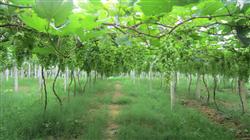
Detailed Explanation of Key Grape Summer Management Techniques
Some vineyards experience many diseases in summer, mainly: grape downy mildew, white rot, anthracnose, etc. The occurrence of downy mildew can cause grape leaf drop, withered branches, rotten fruit, and even death. Therefore, Liu Zhongtang, an agronomist and fruit tree expert at the Wei County Agriculture and Animal Husbandry Bureau, reminded the broad community of fruit growers during technical training in the township that in the rainy summer season they should...
-
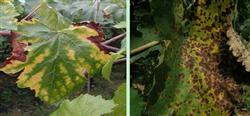
How to Prevent and Control Grape Leaf Blight? A Full Analysis of Practical Methods
Grape leaf blight starts on the lower leaves of the plant and gradually spreads upward. It can occur from June to November, with July to September being the peak period. It is severe in rainy years and in poorly managed vineyards. Prevention and control methods: 1. After autumn, thoroughly clear away fallen leaves in the vineyard to reduce or eliminate the overwintering source of the disease. During the grape growing season...
-
Detailed Introduction to the Symptoms of Grape Brown Spot Disease
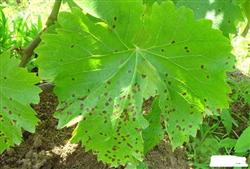
Symptom identification: This is a fungal disease that mainly affects leaves. It is divided into large-spot lesions and small-spot lesions, caused by two different pathogens. Large brown spot disease initially forms circular or polygonal lesions around the leaf veins. The lesions are brown to dark brown with red-brown edges, and a yellow-green halo surrounds the lesions. They gradually expand to form brown...
-
What are the control methods for grape black pox?
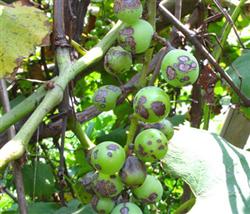
1. Eliminate the source of the pathogen. After the grapes drop their leaves in autumn, remove the fallen leaves and diseased clusters and bury them deep in a centralized pit. The old bark scraped off must be burned immediately. When the grape buds begin to swell in spring, spray with 3-5 degrees Baumé lime sulfur plus 0.3% sodium pentachlorophenate. 2. Strengthen cultivation management. In combination with summer pruning, carefully prune out diseased branches, diseased leaves and diseased fruit to reduce...
-
Detailed Explanation of the Occurrence Characteristics of Grape Black Pox (Elsinoë ampelina)
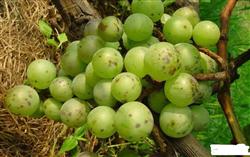
The pathogen mainly overwinters as sclerotia on the lesions of new shoots and tendrils. In the following spring, when the temperature rises above 2°C and high humidity persists for more than 24 hours, a large number of conidia are produced from the sclerotia and spread by rain to the young green parts of the grapevine. In water, the conidia produce germ tubes, quickly attach to the substrate, and after germination cause primary infection. This...
-
What are the symptoms of grape black spot disease?
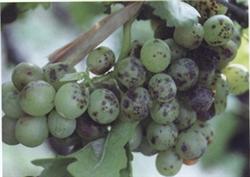
It is a fungal disease that mainly affects the green, tender parts of grapes, such as young fruit, leaves, petioles, fruit stalks, and young shoots. Black spot disease can occur from bud break to the late growth stage, and causes severe damage in spring and summer. When young fruit is infected, dark brown halos first appear, resembling a "bird's eye" pattern, and the lesions often merge into large patches. Later, the lesions harden or crack,...
-
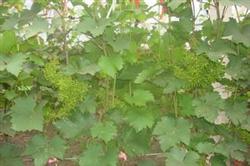
Detailed management measures for the three main periods of grapes
The main flowering-period diseases of grapes such as Summer Black and Red Globe are gray mold and rachis blight, both of which are fungal diseases. Gray mold, also known as bunch rot, has occurred rather severely in recent years; in heavily affected orchards it can destroy more than 70% of flower clusters, mainly harming the corolla, pedicels, rachis and newly set young...
-
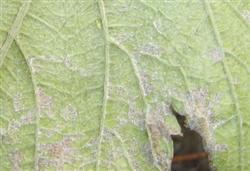
Control Methods and Technical Key Points for Grape Downy Mildew
Control methods: 1. Remove fallen leaves and diseased branches, bury them deep or burn them. 2. Timely pinch off growing tips, prune, drain and weed, and apply more phosphorus and potassium fertilizer. 3. At the early stage of the disease, that is, after July, apply chemicals as soon as slight lesions are seen on the underside of leaves. The chemicals include: Pubo, Ridomil, Sandofan, metalaxyl, Shuangmeiyitejing, etc., used alternately, spraying 4 to 5 times in a row...
条件筛选