-
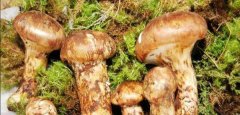
Can matsutake be cultivated artificially? Differences from wild ones and how much per jin
Can matsutake be cultivated artificially? Yes, it can, but artificially cultivated matsutake is very different from wild matsutake, so let's take a look at their differences below. Also, the prices of fresh and dried matsutake. Differences between artificial matsutake and wild matsutake: the color is different; wild matsutake
-
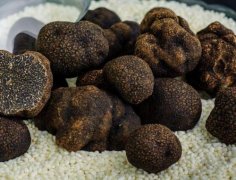
How much does a truffle cost per jin? Plus harvesting precautions and the difference from truffles
Truffle is an underground fungus, a type of mushroom with very high nutritional value. The world's best-quality truffle is the white truffle from Alba, Italy, which once fetched 35,000 USD per kilogram. Next is the truffle from Perigord, France, which costs at least
-
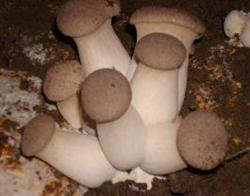
Key technical points for getting more mushrooms from king oyster mushrooms in spring
1. Grasping the best fruiting period for king oyster mushrooms. King oyster mushrooms have been cultivated in Panjin, Liaoning, for several years now, and the experience gained is that the most suitable fruiting period for producing king oyster mushrooms in local mushroom sheds is from early March to the end of April in spring, and from late September to early November in autumn. Without heating facilities, during this period...
-
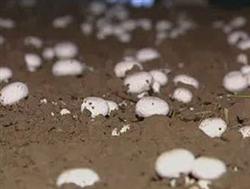
Methods for making organic fertilizer from spent mushroom substrate of button mushrooms, oyster mushrooms, and similar waste
Haidian District in Beijing has more than 80,000 mu of rice paddies. Aside from a portion of the rice straw that is used, most of it is burned, which both pollutes the environment and wastes resources. In light of this situation, we studied 9 mushroom species and ultimately determined that the straw-decomposing fungus button mushroom (Agaricus bisporus) is one of the ways to utilize rice straw. The key cultivation techniques for button mushrooms are as follows. 1. ...
-

What to do when mushrooms grow from the sides of the bag and many are deformed
During sterilization, the bags press against one another, the round bags become deformed, and gaps form between the substrate and the bag, providing air and space for the mycelium to knot together. Add low temperature, light stimulation and mechanical stimulation (such as turning the bags over), and the mycelium on the sides of the bag knots to form primordia, which develop into fruiting bodies. Because of the restriction of the plastic bag, these mushrooms are all deformed. When this happens, pinch and press the mushroom buds promptly to stop their growth, so as to avoid wasting more nutrients. The fruiting bodies are small and the marketable rate is low:
-
Processing method for health-boosting flavored oil from edible fungi
Health-boosting flavored oil from edible fungi retains the unique flavor and aroma of edible fungi. It can be used not only for stir-frying but also for cold dishes, and it stores well and is easy to carry. Processing edible fungus oil requires simple equipment and a simple method, making it a very good way to make money. Raw material selection. For the base oil used in processing, oils with a relatively high content of unsaturated fatty acids, such as rapeseed oil, cottonseed oil, and soybean oil, are better; they can be used alone or processed as a blend. For the oyster mushrooms used in processing, gray varieties are better; for shiitake mushrooms, those cultivated on linden wood or mixed hardwood sawdust are best. The oyster mushrooms should be
-
Processing Technology for Water Chestnut Products and Health-Promoting Flavored Oil from Edible Fungi
The water chestnut is a perennial herbaceous plant; its edible underground stem is flat and round, with a reddish-brown or dark brown skin and white flesh. Deep processing of water chestnut products can increase their economic value. The processing technologies for these products are described below: (1) Water chestnut flour: Select fresh water chestnuts, discard the damaged and rotten ones, wash them clean with water, cut off the tail ends, mash them, add an equal amount of water, crush them with a grinder, then filter the slurry through gauze to remove the residue. After the water chestnut flour settles, pour off the clear water on top, spread 1 to 2 layers of cotton cloth over the flour, and use clean, dry bricks or tiles to absorb the remaining
-
How to Make Shiitake Mushroom Floss from Shiitake Stems? A Detailed Guide to the Processing Method
In artificially cultivated shiitake mushrooms, the stems account for about 30% of the fruiting body weight. Eating them directly is not only tough and hard to chew, but also not conducive to digestion and absorption. However, when processed into floss, they not only have a rich shiitake flavor but also combine the texture and mouthfeel of meat floss. They can be eaten alone, used as a side dish, or used as a filling for flavored foods such as sausages, pies and steamed buns. Because shiitake mushroom floss is rich in vitamin B2, vitamin D and the dietary fiber needed by the human body, it is a fairly ideal health food and has a certain effect in preventing rickets in children. Shiitake mushrooms
-
Key Technical Points for Mushroom Production from Standing Logs in Shiitake Log Cultivation
After a summer and an autumn of careful management, the mycelium of the mushroom logs enters the mature stage, and around the Beginning of Winter (Lidong), the logs can be set up standing for fruiting management. The signs that the mycelium in the logs has matured are: the surface of the log shows no great difference from when it was felled, with no contaminating microorganisms and the bark tightly attached; when tapped with the back of a knife or with a finger, it gives a semi-dull or dull sound; the bark is soft and loose, and the wood beneath the bark is yellow or yellowish-brown and has the fragrance of shiitake; when pressed with a finger, the bark feels elastic and rough and uneven. There are also nodular protrusions, which are the prelude to fruiting, and sometimes there will be
-
How Do You Assess the Quality of Edible Mushroom Spawn? Practical Methods to Help You Tell Good from Poor
The quality of edible mushroom spawn directly affects the success or failure of production and the level of yield. Therefore, assessing the quality of edible mushroom spawn is crucial for growers. 1. Direct visual observation and assessment. In appearance, if the mycelium is dense white, thick and strong, and elastic, it has strong vitality; if the spawn mycelium has shrunk, is dry and lacking in color, or the mycelium has autolyzed and produced a large amount of reddish-brown liquid, then its vitality has already weakened and it should no longer be used; if wood-block spawn remains hard and solid, it is spawn with strong vitality, but if the wood blocks have become softened and loose, then it has aged and is not
条件筛选