-
How should field management be carried out after planting Paris polyphylla?
How should Paris polyphylla be managed after planting? What pests and diseases of Paris polyphylla need to be controlled? We also ask experienced readers to help share their knowledge. Zhongdiwang has compiled the management methods and pest and disease control measures after planting Paris polyphylla, and they are listed in detail below for readers' reference. Management after planting Paris polyphylla: Management point one, thinning of Paris polyphylla seedlings...
-
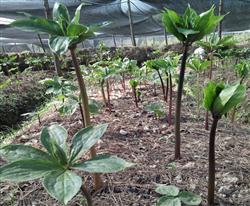
How do you carry out field management after planting Paris polyphylla?
How do you manage Paris polyphylla after planting? We would also like netizens with experience in growing Paris polyphylla to help explain. As a medicinal herb, Paris polyphylla is grown by farmers in Yunnan, Guizhou, Sichuan and other parts of China, but quite a few farmers are still unclear about how to manage it after planting, so Zhongdi Web has compiled the management methods after planting Paris polyphylla, ...
-
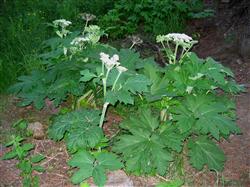
How should field management be done after planting Angelica dahurica?
How to manage Angelica dahurica well after planting? Please give guidance. The following methods can be used for management after planting Angelica dahurica: Cultivation and watering: If drought occurs after emergence, water appropriately to keep the topsoil moist; for autumn sowing, water once before freezing. Around Minor Snow, cover the bed surface with a layer of farmyard manure or horse manure, which both keeps warmth and fertilizes the field...
-
Key Field Management Techniques After Planting Dahurian Angelica
How to manage dahurian angelica after planting? What should be noted? After planting, dahurian angelica can be managed as follows: 1. Thinning and final singling Dahurian angelica seedlings grow slowly, and are generally not thinned in the year of sowing. In early spring of the second year, after the plants turn green again, the first thinning is carried out when the seedlings are about 5-7 cm tall, removing the overly dense and weak seedlings. For drilling, leave...
-
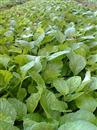
Detailed Explanation of Angelica Dahurica Planting Technology and Field Management Methods
How to plant and manage Angelica dahurica? Please introduce Angelica dahurica is one of the famous "eight great praying medicines," also known as Qi Baizhi. Angelica dahurica is suitable for growing in flat terrain with deep, loose, fertile, well-drained sandy loam and loam soil. 1. Sowing: Spring sowing of Angelica dahurica is around Qingming, and autumn sowing is between Chushu and Bailu...
-
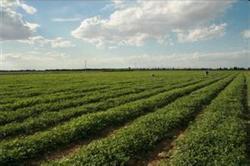
Detailed Explanation of Field Management Techniques for Licorice
Licorice is a plant in the Fabaceae family. The main types include Glycyrrhiza aspera, Glycyrrhiza glabra, and Glycyrrhiza inflata. Its dried roots and rhizomes are used as medicine, and the crude drug is called licorice. It has the effects of tonifying the spleen and boosting qi, relieving cough and reducing phlegm, clearing heat and detoxifying, easing tension and relieving pain, and harmonizing the properties of medicines. The cultivation techniques for licorice are introduced as follows. 1. Soil selection. Licorice...
-
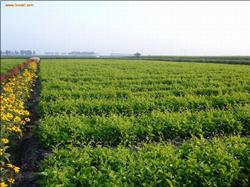
Goji berries like fertilizer but dislike excessive moisture. What should be noted in field management?
Goji berry is a deciduous small shrub in the Solanaceae family, also known as wolfberry and gounaizi root, and is a well-known ornamental fruit plant. Its flowering period is from June to September, and its fruiting period is from September to October. Its leaves, roots, and fruits can all be used as medicine. When grown in pots, the old roots can also be made into exposed-root bonsai. Goji berry has a wide range of adaptability and is not strict about soil. It is tolerant of drought, barren conditions,...
-

Detailed Explanation of Key Field Management Techniques for Luo Han Guo
Field Management of Luo Han Guo
-

Rehmannia Planting Techniques and Field Management Methods
How to manage rehmannia well? What methods are there? Please give a detailed introduction. Rehmannia planting can be managed by referring to the following methods: 1. Selection of the rehmannia planting site: For rehmannia, choose sandy loam soil with deep, fertile soil layers and good drainage. Rehmannia should not be grown continuously on the same land; in the winter of the previous year or in early spring, plow the soil deeply to more than 25 cm...
-

Detailed Explanation of Field Management Techniques for Salvia miltiorrhiza
Field Management of Salvia miltiorrhiza
条件筛选