-
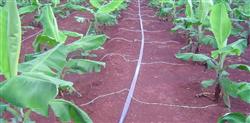
Detailed Guide to Irrigation and Fertilization Methods for Banana at Different Growth Stages
How to irrigate and fertilize bananas at each stage? Please give an introduction. For irrigation and fertilization of bananas at each stage, you can refer to the following methods: 1. Seedling stage. During the banana seedling stage, especially for tissue-cultured plantlets, the seedlings both need fertilizer and are sensitive to heavy fertilizer. Within 3 months after planting, follow the principle of "frequent application and light application." Begin fertilizing 10 days after planting when new leaves unfold, using...
-
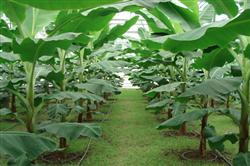
Scientific Fertilization Methods and Technical Points for Bananas
How to fertilize bananas scientifically when growing them? Please give a detailed introduction. Fertilizing bananas requires suitable fertilization according to the banana's growth stage. The following detailed analysis is for reference: (1) Growth and nutritional characteristics. Bananas have no taproot, and the root system is distributed most densely in the topsoil at a depth of 10-25 cm. Suckers begin to sprout after February each year...
-
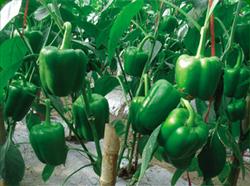
How to fertilize sweet peppers to increase yield? These fertilization methods you need to master
How should sweet peppers be fertilized to increase yield? Please give an introduction. Sweet peppers have a long growth period, an underdeveloped root system, few roots, and shallow soil penetration; they are neither drought-tolerant nor waterlogging-tolerant. Their fertilizer demand is greater than that of tomatoes and eggplants, and they have a strong tolerance for fertilizer. The fertilizer demand characteristics of sweet peppers are: the highest potassium uptake, followed by nitrogen, and the lowest phosphorus. Among vegetables, sweet peppers...
-
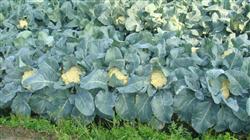
How to fertilize cauliflower planting? Master the correct fertilization method
How should cauliflower be fertilized when planting? Here is an introduction. You can refer to the following methods for fertilizing cauliflower: 1. Base fertilizer. Use farmyard manure, and the amount must be sufficient, 2000-3000 kg per mu, and at the same time, add 50 kg of compound fertilizer, applying it before the soil is plowed. 2. Topdressing. After cauliflower is planted, apply...
-
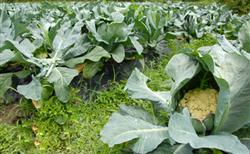
How to Fertilize Cauliflower Properly? A Detailed Guide to Scientific Fertilization Methods
How to fertilize cauliflower properly? Please give guidance. Cauliflower, also known as cauliflower (Brassica oleracea var. botrytis), has an edible portion that is a malformed flower head, and fertilization techniques differ depending on the variety. 1. Given that early-maturing varieties have a short growing season, the base fertilizer should be a quick-acting nitrogen fertilizer, applying about 8 kg of urea and about 8 kg of superphosphate per mu; for mid- and late-maturing varieties with a long growing season, the base fertilizer should be 1500 kg of barnyard manure, applied into the soil when tilling and preparing the land, followed by transplanting the seedlings. 2. Topdressing. In the early growth stage of cauliflower, frequently apply light applications of quick-acting chemical fertilizer as a 2% to 4% ammonium sulfate aqueous solution, about 700 kg per mu each time, or 10% to 30% human feces and urine, about 700 kg each time, applied around the roots. When the flower head begins to form, heavy topdressing should be applied to promote leaf and flower head growth. Apply about 800 kg of 40% human feces and urine per mu, or 10 kg of urea, about 20 kg of superphosphate, and about 8 kg of potassium sulfate, watered on.
-
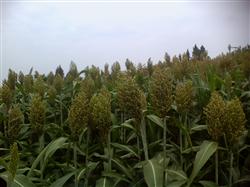
How to fertilize sorghum scientifically? Detailed explanation of key fertilization techniques
How to fertilize sorghum scientifically? Please give guidance. Sorghum has wide adaptability to soil and strong nutrient uptake capacity. When planted on sandy loam soil rich in organic matter and with relatively high fertility, it is easier to obtain high yields. On poor dry land with phosphorus deficiency and low potassium, fertilizer must be added to obtain a good harvest. Sorghum seedlings are small, and the fertilizer requirement is not...
-
Key Points and Methods of Poplar Fertilization Techniques Explained
Poplar canker (rot disease) mainly occurs on the trunk and branches of poplar trees. After the disease develops, the cortical tissue of the trunk and branches rots, loses water, sinks, and cracks, with a smell of distillers' grains. When the diseased area encircles the trunk or branch completely, the entire upper part dies. The disease occurs twice a year, and when the temperature is above 7°C, ...
-
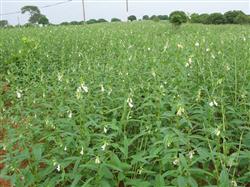
How should summer sesame be fertilized? Master the correct fertilization method
How should summer sesame be fertilized? Please provide guidance. For high-yield cultivation of summer sesame, fertilization should involve heavy and shallow application of base fertilizer, a moderate amount of seed fertilizer, heavy application of flower bud fertilizer, and supplemental spraying of phosphorus and potassium fertilizers; organic fertilizer should be the main type, combined with phosphorus and potassium fertilizers, and the amount of chemical fertilizer should be minimized as much as possible to improve sesame quality. For every 100 kg produced...
-
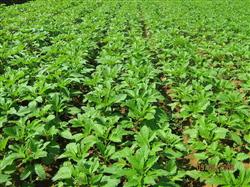
How to fertilize sesame for high yields? Detailed fertilization methods
How to fertilize sesame for high yields? Please provide guidance on the nutrient requirements of high-yielding sesame. Sesame is a fertilizer-loving crop; for every 100 kg of seed produced, it needs to absorb 8-9 kg of pure nitrogen, 3 kg of phosphorus pentoxide, and 7 kg of potassium oxide. At present, sesame yields are generally 40-60 kg per mu, while high-yielding fields generally reach 75-95 kg...
-
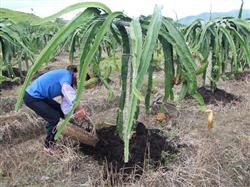
How to Fertilize Dragon Fruit? Detailed Guide to Planting and Fertilization Techniques
How do you fertilize dragon fruit when planting? Here is an introduction to fertilization methods. Fertilizing dragon fruit is an important part of comprehensive management. The full exertion of fertilizer efficiency is related to soil and water; only good soil structure and physicochemical properties can promote microbial activity, accelerate nutrient decomposition, and enhance root absorption. The decomposition of fertilizer...
条件筛选