How to Fertilize Dragon Fruit? Detailed Guide to Planting and Fertilization Techniques
How do you fertilize dragon fruit when planting? Here is an introduction to fertilization methods. Fertilizing dragon fruit is an important part of comprehensive management. The full exertion of fertilizer efficiency is related to soil and water; only good soil structure and physicochemical properties can promote microbial activity, accelerate nutrient decomposition, and enhance root absorption. The decomposition of fertilizer...
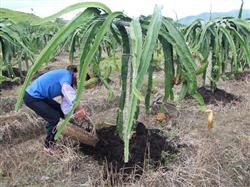
How do you fertilize dragon fruit when planting? Here is an introduction to fertilization methods
Fertilizing dragon fruit is an important part of comprehensive management. The full exertion of fertilizer efficiency is related to soil and water; only good soil structure and physicochemical properties can promote microbial activity, accelerate nutrient decomposition, and enhance root absorption. The decomposition of fertilizer and the absorption, transport, synthesis and utilization of nutrients must all take place with the participation of water, so fertilization must be combined with irrigation for fertilizer efficiency to be fully exerted. In addition, fertilization is an important measure for maintaining soil fertility and meeting the nutrient elements required for fruit tree growth and development. The type, amount, method and timing of fertilization all affect the fertilization effect. In production, fertilization should be carried out scientifically according to its nutritional characteristics and nutrient status. The flowering period of dragon fruit lasts a long time, and nutrient consumption is relatively large. Therefore, the demand for fertilizer is relatively large, especially after entering the full production period, and the management of fertilizer and water should be strengthened even more.
Determining a reasonable fertilization amount should mainly consider the consumption of the tree itself, the supply capacity of the soil, and the utilization rate of the fertilizer, so as to be more scientific; generally, leaf nutrient analysis is used to judge whether nutrients are deficient or excessive, and then fertilization is used to make adjustments. Dragon fruit fertilization is mainly based on organic fertilizer, supplemented with a small amount of chemical fertilizer. For the farmyard manure portion, according to a ratio of chicken manure, pig manure and peanut meal of 1:2:7, the usage amount per 667 sq m is about 9 cubic meters/year (determined according to soil fertility conditions and seedling growth). In addition, nitrogen fertilizer and potassium dihydrogen phosphate should be applied as a topdressing according to needs, and trace fertilizers should also be added in appropriate amounts when there is a deficiency. Experimental research results show that applying fertilizer at the most suitable time can reduce the number of fertilizations and improve fertilizer utilization rate. In areas with high temperature and abundant rain, applying thin fertilizer multiple times can improve fertilizer utilization rate. Dragon fruit can be fertilized 3 times each year in July, October and March of the following year, each time applying 1.2 kg of cow manure compost per plant and 200 grams of compound fertilizer per plant. Field trials abroad show that the application of nitrogen fertilizer generally has a continuous yield-increasing effect, the yield-increasing effect of phosphate fertilizer is shown in the first two years, and potassium fertilizer and trace elements (B, Cu, Zn, Mn) have a good effect on increasing yield in the later stage. For high-quality and high-yield cultivation, the recommended fertilization amount for dragon fruit is 80 kg of nitrogen per hectare in the first year; 20 kg of phosphorus pentoxide per hectare each year in the second and third years; and in the third year, 10 kg of potassium oxide per hectare, 5 kg of boron per hectare, and 10 kg each of copper, zinc and molybdenum per hectare.
Click to get more dragon fruit planting techniques
Click to get more fruit planting techniques