-

How to effectively prevent diseases during mushroom cultivation?
How do you prevent diseases in mushroom cultivation? What methods are there to prevent mushrooms from getting diseased? We ask knowledgeable netizens to help introduce this. Zhongdiwang has compiled seven methods for disease prevention in mushroom cultivation, listed in detail below for netizens' reference. Method one: choose excellent virus-free spawn: you should choose excellent vi...
-
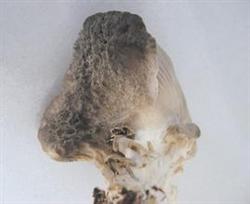
How to effectively prevent deformed mushrooms in winter oyster mushroom cultivation
In winter, temperatures are low and there are few contaminating microorganisms in the air, making it a good season for cultivating oyster mushrooms. However, the following types of deformed mushrooms easily appear during cultivation: thick-stipe mushrooms. After primordium formation, the differentiation and development speed of the cap is abnormal, manifesting as a small cap, a long stipe, and a thick, hard stipe, with relatively low commercial value. The main cause is the use of...
-
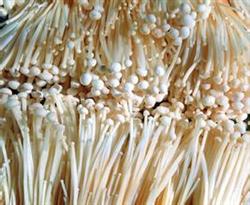
"Five Measures" for Effectively Controlling Black Head Disease in Enoki Mushrooms
Black head disease, also known as bacterial brown blotch disease, is caused by a Pseudomonas bacterium belonging to the phylum Schizomycophyta and the class Schizomycetes. The pathogen is rod-shaped, forms white colonies, and shows a negative reaction to Gram staining. 1. Conditions for occurrence: The internal cause of this disease is the variety's lack of disease resistance, while the external causes are high temperature, high humidity, or spraying unclean...
-
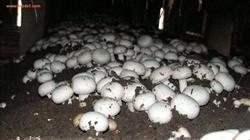
How to Control the Size of White Button Mushrooms? Detailed Explanation of Effective Measures
In recent years, the market's requirements for the quality of white button mushrooms have been continuously rising. Large mushrooms are no longer popular, and some mushroom growers, unable to keep up with market demand for commercial mushrooms of a certain specification, end up with increased production but no increased income. The following measures can be adopted to control their specifications. Replacing the strain The currently widely used strain "2796" is a large-particle type...
-
Secondary bagging of edible fungi can effectively prevent infection
In the production of shiitake mushrooms (Lentinula edodes), lion's mane mushrooms (Hericium erinaceus), wood ear mushrooms (Auricularia heimuer) and others, the secondary bagging technique is applied (that is, when the mushroom logs come out of the sterilization chamber, an extra layer of thin film bag is put on, so that the mushroom logs inside the bag do not come into direct contact with the ambient air), which effectively solves the problem of cross-infection during the log production process and keeps the strain survival rate above 97%. The technique is described below: 1. Preparation of the outer bag The outer bag should preferably be a low-density polyethylene film bag with a circumference 2 cm larger than the inner bag, a length 5 cm longer than the inner bag, and a thickness of 0.2 silk, with one end tied and sealed for later use.
-
How to treat mushroom flies? These effective control tips really work
Black fungus gnats, eye fungus gnats and other Diptera insects are collectively called "mushroom flies". The damage caused by mushroom flies can reduce shiitake mushroom yields by about 30%. Therefore, effective control of "mushroom flies" can increase shiitake cultivation yields by about 30%. 1. Living habits and outbreak patterns of mushroom flies. Mushroom flies like to reproduce in damp, dirty environments, and fungal mycelium is one of the best food sources for these insects. Their main mode of damage is biting and eating the mycelium, disrupting normal mycelium growth, causing the mycelium to weaken or die, while also creating conditions for contamination by foreign microorganisms, allowing some competitive foreign microorganisms to grow on the mushroom fly
-
How to prevent and control contaminants in oyster mushroom cultivation? Covering with burnt mud ash is effective
Bed-style cultivation of oyster mushrooms: When bed-style cultivating oyster mushrooms, if contaminants appear sporadically on the surface of the substrate, they can be eliminated by smearing or covering the affected spots with thick quicklime slurry; if contaminants appear in large amounts on the substrate surface, cover the contaminated part with 2-3 cm thick burnt mud ash, making the covered area larger than the contaminated area, and pat it slightly firm to eliminate the contaminants; if contaminant contamination on the substrate surface is severe, cover the entire substrate surface with burnt mud ash and pat it firm, and after a few days the mycelium will resume normal growth. Bag-cultivated oyster mushrooms: first pick out the bags contaminated by unwanted organisms, then in a place with relatively high
-
Salt-brining of mushrooms can effectively increase product added value.
When fresh mushrooms sell poorly, or the price is low, and they need to be preserved for a long time before sale, salt-brining is the simplest and most effective method. Mushroom salt-brining requires no large fixed capital investment, generally about 200 yuan is enough, and the processing technique is relatively easy to master. 1. Materials: washing vat, color-protecting vat, blanching pot, cooling water vat, salting vat and other containers, plus auxiliary materials such as salt and citric acid. 2. Fresh mushroom preparation: the standard is timely harvesting, removing debris and cutting stems, and sorting by grade. 3. Washing and color protection: fresh mushrooms can be directly soaked and washed in 0.6% salt water.
-
What are the effective control methods for mushroom fungus maggots
There are many kinds of maggot-like larvae that damage mushroom fruiting bodies and mycelium, collectively known as "fungus maggots." The four more common ones are mushroom gnats, gall midges, mushroom flies, and dung flies. Their larvae--maggots--look roughly similar in morphology to the naked eye, and among the adults only the gnats and flies show obvious differences. The morphology and even the living habits of gall midges, mushroom flies, and dung flies are very similar, so they are often mistaken for just one species, all called "fungus flies." Fungus maggots (larvae) bore into and eat the fruiting bodies, turning the mushrooms into waste products, and some damage the mycelium. Bored into and eaten by fungus maggots
-
Effective Methods for Edible Mushroom Cultivation and Winter Management
Effective Methods for Winter Management of Edible Mushrooms
条件筛选