-
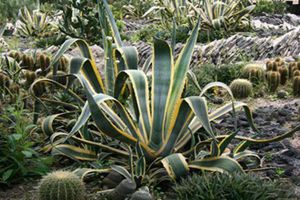
What are the propagation methods for Agave americana 'Marginata' (golden-edged century plant)?
Its propagation methods include division, sowing, or removing the small plantlets from the top after flowering and replanting them. In daily care, attention should be paid to giving it suitable soil, moving it into a greenhouse in winter, and not splashing water on the leaves when watering.
-

-
-
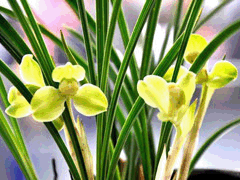
A Detailed Guide to the Jinzhang Orchid Manual: Understanding Orchid Variety Knowledge
Jinzhang Orchid Manual
-

When growing flowers, poke a hole at the edge of the pot and bury a little of this in it, and the flowers will grow like crazy with glossy green leaves
Although it is already spring now, the temperature in many places is still alternating between hot and cold, so repotting still carries a bit of risk, but without repotting, how can you get your flowers to grow vigorously? Today, Huahua is here to teach everyone a great method: just poke a hole at the edge of the pot and bury a little something in it, and even without repotting, your flowers can grow vigorously!
-
-

Council of Agriculture submits Beinong market closure review report, acknowledges failure to identify risks early, proposes 6 future response measures
Council of Agriculture submits Beinong market closure review report, acknowledges failure to identify risks early, proposes 6 future response measures
-
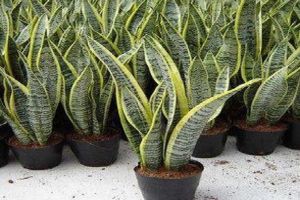
Is the golden-edged snake plant (Sansevieria trifasciata 'Laurentii') toxic? Is it suitable to keep at home?
This plant looks very delicate, comes in many varieties, and the shapes and colors it grows into vary as well. It can help clean the air and is very suitable for placing at home or in office areas, and it can be enjoyed for a long time. So does it have any toxicity? How should it normally be cared for? What uses does it have?
-
Some Understanding and Knowledge of Orchid Pests: Orchid Mealybugs
Orchid mealybugs, also known as whiteflies (TRIALEURODES VAPORARIORUM), adults and nymphs gather on host leaves, suck sap, form yellow spots at the feeding sites, and can secrete honeydew, inducing sooty mold. Morphological characteristics: adult body length about 1.1 mm, pale yellow, wings semi-transparent, both covered with white waxy powder....
-
Orchid Knowledge Introduction: A Comprehensive Guide to Orchids
Roots: The roots of terrestrial orchids form a clustered fibrous root system, fleshy, occasionally producing segmented branch roots from the fibers, and orchid roots generally have no root hairs. Generally, the roots of Cymbidium goeringii (Spring Orchid) are relatively thin, about 0.4 cm in diameter; those of Cymbidium faberi (Faber's Cymbidium) about 0.5 cm; while those of Cymbidium ensifolium (Four-season Orchid), Cymbidium qiubeiense (Autumn Orchid), Cymbidium kanran (Cold Orchid), and Cymbidium sinense (Chinese Cymbidium) are slightly thicker and longer than the above. Orchid roots store abundant water and nutrients. According to root structure...
条件筛选