What are the propagation methods for Agave americana 'Marginata' (golden-edged century plant)?
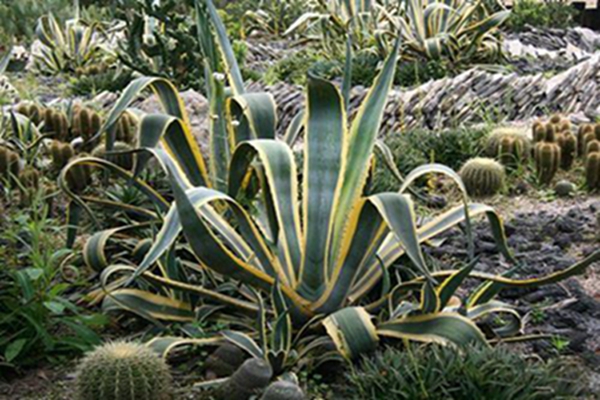
I. Propagation methods
1. Division
It easily grows small offsets at the base of the roots. Once they have grown to a certain size, they can be removed, cut off with a small knife, and then placed in soil to let them take root. This is generally done in spring, preferably in April when repotting, so that when it is dug out, the tillers on it can be removed and replanted at the same time.
2. Propagation by flowering ⟧7⟧Under normal circumstances, mature plants of this species will produce flowers, and a very tall flower stalk will grow from its growing point. After the flowers fade, many small plantlets will grow at the top of the flower stalk, and they can be peeled off directly and planted in soil. As long as roots have formed, cutting them off directly will also allow them to survive.
Under normal circumstances, once this kind of flower reaches maturity it will bloom, and a very tall flower spike will grow from its growth point. After the flowers fade, many small plantlets will grow at the top of the flower spike; you can simply peel them off and plant them directly in soil. As long as roots have formed, you can also just cut it off and it will still survive.
3. Sowing
It can only produce fruit through cross-pollination between different plants. Sow the mature fruit in April or May, and sprouts can grow in about two weeks. Its seedlings grow rather slowly, and once they become established plants, their growth speed increases. However, only old plants that have lived for more than ten years can flower and bear fruit.
II. Daily care
1. Soil
Rotten leaves mixed with coarse sand and ordinary garden soil can be used as potting nutrients for it. During its growing period, fertilize it once a month. In summer, the amount of watering can be increased to make the leaves more emerald green and more tender. If the sun is very harsh, it needs a little shading. After autumn, its growth slows down, so watering needs to be controlled to ensure a dry environment, and fertilizing should also stop. If it is grown as a potted ornamental, the offsets should be removed in time so that its form can be more beautiful.
2. Environment
In the tropics there is no need to worry too much, but in other temperature zones it needs to be moved into a greenhouse in winter to protect it through the winter safely. Wait until Qingming the following year to move it outdoors. In summer, give it appropriate shading from the sun. During its growing season, keep its potting soil moist. When watering, do not splash water on the leaves, otherwise it will develop brown spot disease. As new leaves grow, remove the old yellowed leaves below.
3. Pests and diseases
It often develops diseases such as leaf spot, which can be sprayed with Tuzet wettable powder. If there are pests such as scale insects, dichlorvos can be used to spray and kill them.