-

Precipitation in the central and eastern parts of North China this week will help alleviate drought conditions
Last week, most of northern China had good light and heat conditions, which was conducive to crop growth; most of North China received effective precipitation, and drought conditions eased in some areas; central Liaoning, western Shandong Peninsula and other places still had no effective precipitation, and drought conditions persisted. Eastern Southwest China, along the middle and lower reaches of the Yangtze River, and
-
New wheat in eastern Henan and western Shandong is poised for a bumper harvest, and a good wheat harvest is in sight
New wheat in eastern Henan and western Shandong is poised for a bumper harvest. According to the southern route wheat survey by the China Grain Network, the wheat sown area in Shangqiu, Henan, has maintained a slight upward trend in recent years, and wheat varieties are mainly high-yield wheats such as Aikang 58, Zhongmai 18, and Zhongmai 22. In terms of high-quality wheat planting, the main varieties include Zhoumai 24, Xinmai 26, and Zhengmai 7698, with an incompletely counted sown area of less than 1 million mu, and planting is relatively scattered. Judging from the current growth situation, pests and diseases are occurring rather severely, leading to mild white head symptoms, but the overall wheat growth is the best in historical years, and it can be expected that if the weather is normal later, there will still be a bumper harvest year. Wheat growth in Heze, Shandong, is relatively good, but unlike the areas surveyed earlier, local enterprises do not believe that the local wheat support price plan will be activated, because Shandong had rarely activated the plan before, and because Shandong wheat quality is relatively good, with many buyers from surrounding areas coming in past years, and at one point the saying "(wheat) rises, look to Shandong" was circulated. From our on-the-ground understanding, the mainstream local wheat price is about 1.25 yuan/jin, roughly the same as wheat prices in surrounding areas.
-
Policy grain depots in the three northeastern provinces become a key focus of National Food Administration inspections
The National Food Administration released a notice today: it will thoroughly investigate and strictly supervise the relevant enterprises in Liaoning and Jilin exposed by CCTV. This year, the policy-related grain stockpiles purchased and stored in the three northeastern provinces and one region will be made a key focus of the national grain stock inspection, and grain departments at all levels are required to severely investigate and punish
-
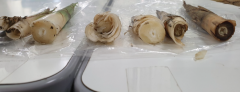
Arrow bamboo shoot yields drop due to drought, Eastern Region Branch builds water storage facilities to fight drought
This year, rainfall in January and February was less than in previous years, affecting the production of many crops. To date, the Agriculture and Food Agency has announced that crops such as plums, arrow bamboo shoots and lychees in some areas have been affected by drought and listed as items under the cash relief program for agricultural natural disasters. Chen Chang-tsen, head of the Eastern Region Branch of the Agriculture and Food Agency
-
What kind of soil is best for caring for Cotoneaster horizontalis?
Cotoneaster horizontalis is a semi-evergreen creeping shrub, now generally used as a garden landscape plant, with relatively high ornamental value. So if you grow Cotoneaster horizontalis in your own yard, what kind of soil is best? Let's take a look! 1. What kind of soil to use for Cotoneaster horizontalis
-
A Detailed Guide to the Propagation Timing, Benefits and Uses of the Easter Cactus
The Easter cactus is one of the ornamental plants, but it is not the night-blooming cereus that everyone is familiar with. It belongs to the cactus family and has extremely strong vitality, so growing it is not considered difficult. The Easter cactus has an air-purifying effect and is also suitable for growing at home, so gardening enthusiasts
-
How to Propagate the Easter Cactus? A Detailed Guide to Common Propagation Methods
The Easter cactus (Rhipsalidopsis gaertneri) is an ornamental plant suitable for indoor growing. The plant often has a trailing habit, and its flowers are very bright and beautiful, making it a common ornamental variety in people's homes. Because the Easter cactus has beautiful flowers, it is loved by many people. So what are the propagation methods for the Easter cactus?
-
The Symbolism and Cultural Meaning of Wheat Ears Explained
Wheat ears carry very important meaning in both Eastern and Western cultures, and wheat ears hold broad symbolic significance across the different cultures of all humanity, so what is the symbolic meaning of wheat ears? Let's take a look. 1. The symbolic meaning of wheat ears in our country 1. People often say
-
Cotoneaster horizontalis Fruit Edibility and Bonsai Care: Watering, Pruning, and Yellowing Leaf Treatment
Cotoneaster horizontalis, also known as Goucimu, Yanlengzi, and Shantou Guniang, grows in shrub thickets at an altitude of 2000-3500 m. The flowering period is May-June, and the fruiting period is September-December. So can the fruit of Cotoneaster horizontalis be eaten? How do you grow it as a bonsai? How do you water and prune it? What should you do if the leaves turn yellow?
-
A Detailed Guide to the Latest Cultivation Methods for the Easter Cactus
The Easter Cactus is also known as the drooping flower cactus, bright red crab cactus, jointed leaf cactus, and so on. It is an epiphytic succulent shrub of the Cactaceae family and the genus Hatiora (Easter cactus). The plant usually takes a hanging, umbrella-like form, with flat, fleshy, tender green stem segments similar to those of the crab cactus. There are bristles on the areoles, and the flowers are borne on
条件筛选