-
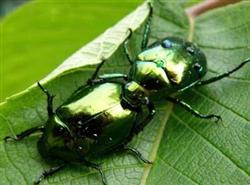
How to control scarab beetles during chrysanthemum cultivation?
How to control scarab beetles when growing chrysanthemums? Please explain the methods. Scarab beetles: They are pests. The adults bite the chrysanthemum leaves, creating net-like holes and notches, and in severe cases only the main veins remain; the damage is even worse when they gather in groups. They feed most heavily from dusk until 10 p.m. The larvae, white grubs, damage chrysanthemum seedlings and tender stems. Control methods: ...
-
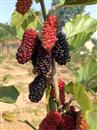
What should be noted during the cultivation of fruiting mulberry?
What should be noted when planting fruiting mulberry? Please provide guidance. When planting fruiting mulberry, note the following points: 1. Site conditions: Fruiting mulberry has strong adaptability and can be grown in the Guanzhong, southern Shaanxi, and northern Shaanxi regions. Whether planted in loessal soil, sandy loam, or loam, it can grow healthily. The better the water, fertilizer, and light, the higher the yield. General farmland...
-
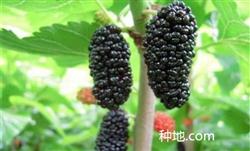
What should be noted during the cultivation of fruiting mulberry?
What issues should be noted in the cultivation of fruiting mulberry? Mulberry "is both a food and a medicine," rich in nutrients, sweet and sour and tasty, with multiple effects such as promoting fluid production and quenching thirst, and curing diseases and strengthening the body. Whenever mulberries ripen at the turn of spring and summer, it is exactly the off-season for fruit - who would not like to eat delicious fresh mulberries? Mulberries can be processed into juice drinks, jelly...
-

How to grow Sedum multiceps? Detailed guide to cultivation methods and precautions
Cultivation methods and precautions for Sedum multiceps
-

When does the Mucuna birdwoodiana bloom? Introduction to the flowering period of Mucuna birdwoodiana
When does Mucuna birdwoodiana bloom?
-

Introduction to Several Propagation Techniques for Japanese Spindle (Euonymus japonicus)
There are many propagation methods for Japanese spindle (Euonymus japonicus). Several commonly used methods are briefly introduced below: 1. Cutting method: The cutting method is further divided into hardwood and softwood cutting methods. Hardwood cuttings are carried out between October each year and the end of March of the following year. For units with sufficient source material, the cuttings can be cut slightly longer; for units lacking source material, the cuttings can be slightly shorter. The cuttings are 8 to 15 cm long, and the insertion depth is generally 3 to 5 cm. Roots can grow after 1 month. As long as cuttings are made according to the method introduced below, well-grown seedlings can be obtained quickly: 1
-
A detailed guide to cut rose production procedures, a must-read for growers
I. Propagation Cut roses are mainly propagated by grafting. The rootstocks used are wild rose, multiflora rose, or Rosa canina, with Rosa canina being the most ideal. Grafting propagation is carried out during the growing season, usually in mid-March or from early July to mid-September. At this time, the bark of the rootstock is easy to peel, making the operation convenient and resulting in a high survival rate. When grafting, first make a vertical cut on the rootstock, then make a horizontal cut to form a "T" shape. Then cut a shield-shaped bud piece from the scion and insert it into the cut. Then tie and secure it in place. After the scion survives, cut off the part above the cut
-
Variegated Confederate Jasmine: A Plant Introduction to the Apocynaceae Genus Trachelospermum
Morphological characteristics: An evergreen woody vine with inconspicuous lenticels on the stems. The branchlets, young petioles, and leaf undersides are covered with short pubescence, while the old branches and leaves are hairless. The leaves are leathery, elliptical to ovate-elliptical or broadly obovate, 2-6cm long and 1-3cm wide. The old leaves are nearly green or pale green, the first flush of new leaves is pink, a few have 2-3 pairs of pink leaves, the second to third pairs are pure white leaves, and between the pure white leaves and the old green leaves there are several pairs of mottled variegated leaves; the whole plant has rich leaf coloration, one might say brilliantly colorful. Biological characteristics: Variegated Confederate Jasmine is a light-loving, strongly shade-tolerant
条件筛选