What should be noted during the cultivation of fruiting mulberry?
What issues should be noted in the cultivation of fruiting mulberry? Mulberry "is both a food and a medicine," rich in nutrients, sweet and sour and tasty, with multiple effects such as promoting fluid production and quenching thirst, and curing diseases and strengthening the body. Whenever mulberries ripen at the turn of spring and summer, it is exactly the off-season for fruit - who would not like to eat delicious fresh mulberries? Mulberries can be processed into juice drinks, jelly...
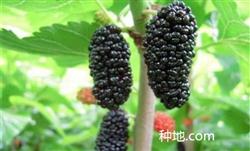
What issues should be noted in the cultivation of fruiting mulberry?
Mulberry "is both a food and a medicine," rich in nutrients, sweet and sour and tasty, with multiple effects such as promoting fluid production and quenching thirst, and curing diseases and strengthening the body. Whenever mulberries ripen at the turn of spring and summer, it is exactly the off-season for fruit - who would not like to eat delicious fresh mulberries? Mulberries can be processed into juice drinks, jelly, jam, mulberry wine and other specialty products; mulberry leaves can be used for sericulture, medicine, feed, etc., with wide uses and large market demand, and very broad prospects. As long as there is a certain scale, one can become wealthy without even leaving home. The key points of fruiting mulberry cultivation techniques are as follows:
I. Site conditions: Fruiting mulberry has strong adaptability and can be developed in Guanzhong, southern Shaanxi, and northern Shaanxi. Whether planted in loessal soil, sandy loam, or loam, it can grow healthily. The better the water, fertilizer, and light, the higher the yield. General farmland and field edges and corners can all be used.
II. Variety selection: For fresh consumption of mulberries as the main purpose, it is suitable to plant Wu Zi Da Shi and Hong Guo No. 2. The former has good fruit flavor and matures early; the latter has high yield and is relatively cold-resistant. For the purpose of processing mulberry juice, etc., it is suitable to choose Hong Guo No. 1, Hong Guo No. 2, and 8632. Hong Guo No. 1 is cold-resistant and especially high-yielding. Note that no matter which variety is planted, 5-10% male plants must be configured as pollinizer trees.
III. Planting density: The Wu Zi Da Shi variety has relatively soft branches and a loose tree shape, so use a row spacing of 150cm and plant spacing of 120cm (370 plants per mu); other varieties have upright branches and a compact tree shape, so use 130cm x 100cm or 130cm x 130cm.
IV. Cultivation key points:
1. The period from after mulberry trees shed their leaves in late autumn to before they sprout the following spring is the mulberry planting period. Level the land, dig 50cm-deep trenches according to the planned row spacing, and apply organic fertilizer (more than 10kg per plant) and phosphate fertilizer.
2. Separate the purchased mulberry seedlings by size, reasonably match and arrange the fruiting trees and pollinizer trees, then plant them one by one at equal spacing, and water thoroughly after planting. For those planted before winter in northern Shaanxi, the seedling trunks must be buried with soil to prevent freezing.
3. Before the mulberry trees sprout in early spring, cut back flat at 40cm above the ground. In early June, for robustly growing branches, cut back flat leaving 15-20cm to promote lateral buds. That year, strengthen water and fertilizer management and pest prevention to make them grow quickly.
4. In the spring of the second year there will be mulberries. After harvesting the fruit in May and June, the mulberry trees must be pruned for shape, selecting and retaining 3-4 thick strong branches per plant, cutting back flat leaving 15-20cm at the base to become scaffold branches. New branches sprouting on the scaffold branches are the fruiting branches for the next year.
5. After the third year, at the end of fruit harvest each year, cut off all branches from the base to make them regrow new branches. Promptly thin out overly dense fine branches and weak branches, and concentrate nutrients to grow good branches.
6. Apply topdressing 2-3 times each year. Apply organic fertilizer once in autumn and winter, applying barnyard manure (or cake fertilizer, chicken manure) 800-1000 kg. During the flowering and fruiting period (late March to early April), in order to make the young fruit rapidly expand and grow large, 15-20 kg of imported fertilizer must be applied per mu. After that, choose 0.3% potassium dihydrogen phosphate, etc. for foliar application, which is beneficial for increasing the sugar content and color of the mulberries. After pruning the branches in early June, apply a compound chemical fertilizer once. Covering with plastic film in early spring each year can both advance mulberry ripening and effectively prevent and control mulberry sclerotinia disease and mulberry gall midge damage; it is an important technical measure for sustained high quality and high yield of mulberries.
V. Utilization of mulberry leaves: After the third year, mulberry leaves can be reasonably utilized.
1. Sericulture. Spring silkworms are reared around May 20. During the young silkworm stage, mulberry leaves from pollinizer trees are used for feeding, and during the large silkworm stage, leaves from fruiting trees can be picked. Autumn silkworms are reared in early September. When picking leaves, pick the leaf and leave the petiole, do not damage the mulberry buds, and leave more than 5 leaves at the tip of the branch to nourish the tree.
2. Medicine. Frost mulberry leaf is a traditional Chinese medicine, harvested after frost.
Click to see more mulberry cultivation techniques