-

-
-

Flower arranging can be divided into two major categories: ceremonial flower arranging and artistic flower arranging.
Ceremonial flower arranging is used for social etiquette activities, such as weddings and funerals, visiting relatives and friends, celebration ceremonies, welcoming and seeing off guests, and so on. The purpose is to enhance friendship and cater to the festive atmosphere. Therefore, flower arranging in this case requires neat and concise shapes and bright, vivid colors, usually
-
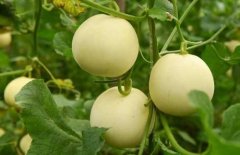
What Are the Growing Regions of Muskmelons? A Full Guide to Variety Classification and Selection Tips
Muskmelons can be roughly divided into three types: the netted muskmelon, which of course has a netted rind, with flesh that can be green, white or orange; the Hami melon, oval in shape, improved from the original Hami melon of Xinjiang, elongated oval in appearance with orange flesh, and its biggest difference from the muskmelon
-
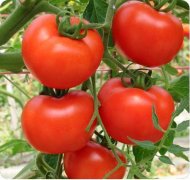
How many types of tomato fruit cracking are there? Remedies for fruit cracking in large and small tomatoes
Tomato fruit cracking: how to remedy it? Do you want to know? If so, then let's take a look together! The phenomenon of tomato fruit cracking can be divided into four types: radial cracking, concentric cracking, compound radial and concentric cracking, and irregular side cracking. A. Choose varieties
-

Plants are divided into auspicious and inauspicious, and their placement in home feng shui has its rules
Plants have auspicious and inauspicious qualities, and homes have feng shui
-
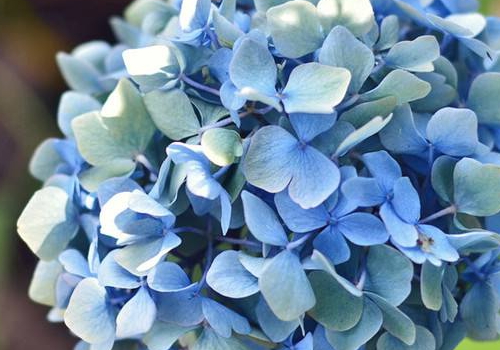
When should hydrangeas be divided, and how many times can they bloom in a year?
Hydrangea, this is also a super beautiful flower, very lovable, so when should hydrangeas be divided? How many times do they bloom in a year: When to divide hydrangeas: The division time for hydrangeas should be before budding in early spring. Separate the rooted branches from the mother plant, plant them directly in pots, do not water too much
-
A dog's growth is divided into 5 different stages
Many friends who keep dogs notice that their dogs often display some puzzling behaviors - such as frequently whining softly, relieving themselves everywhere, and constantly chewing up furniture and shoes. In fact, these are dogs' original behavioral instincts, not bad habits as we humans see them. Because their original behavioral instincts often come into conflict with our modern way of life, causing us a great deal of inconvenience, and causing many dogs to be abandoned because of these behavioral problems, which is truly a great pity. This is why we step into dog training
-
What types can dogs be divided into based on coat characteristics?
The dog's coat is an important skin derivative that protects the dog from adverse external environmental influences and maintains a constant body temperature. The form and color of the coat are important characteristics of dog breeds, and a gorgeous coat is a second life for many toy dogs. The dog's coat consists of top hair, undercoat, and decorative hair. Top hair, also called outer hair, is the main part that constitutes the dog's coat color; it is generally long and coarse, with medullated hair making up the majority, and it mainly serves to keep the dog warm. Decorative hair refers to the hair growing on the ears, tail, and lower limbs that serves a decorative function. According to coat length, dogs are generally divided into
-
How are spring tea, summer tea and autumn tea divided?
The division of spring tea, summer tea and autumn tea is mainly determined by the seasonal changes and the intervals of new shoot growth of the tea plant. Under the climatic conditions of our country, except for a few areas in the South China tea region, in the vast majority of tea-producing areas, the growth of tea plants and the picking and processing of tea leaves are seasonal: in the Jiangbei tea region, the tea picking and processing period runs from early May to late September; in the Jiangnan tea region, from late March to mid-October; and in the Southwest tea region, from late January to early December. Tea regions that belong to the subtropical and temperate zones, including the Jiangbei tea region, the Jiangnan tea region and the Xiyie tea region, are usually divided by picking and processing time into the three seasonal teas: spring, summer and autumn. But the standards for dividing seasonal teas are not consistent. Some divide by solar terms: from Qingming to Xiaoman is spring tea, from Xiaoman to Xiaoshu is summer tea, and from Xiaoshu to Hanlu is autumn tea; some divide by time: tea picked and processed before the end of May is spring tea, tea picked and processed from early June to early July is summer tea, and tea picked and processed after mid-July is autumn tea. In the South China tea region of our country, because it is located in the tropics, the four seasons are not very distinct, and tea leaves can be picked and processed almost all year round; therefore, in addition to the distinction of spring tea, summer tea and autumn tea, there is also a classification by the order of new shoot growth of the tea plant and the earliness or lateness of picking and processing, divided into first-round tea, second-round tea, third-round tea and fourth-round tea.
条件筛选