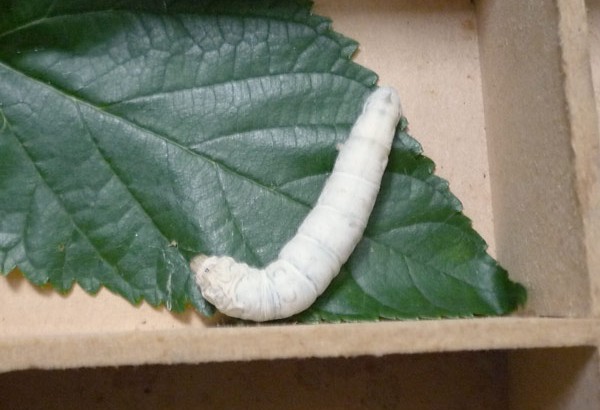
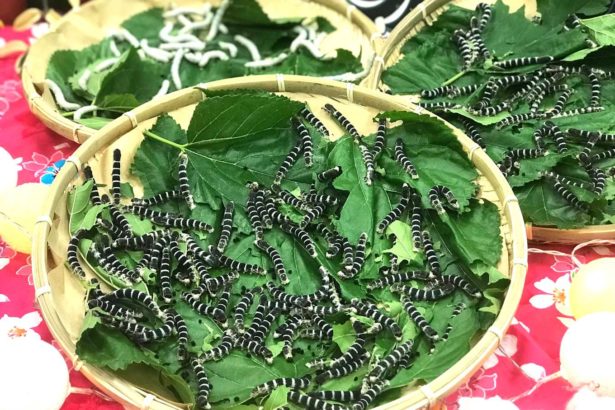
The growth process of silkworm babies is divided into four stages: egg, larva, pupa, and adult.
Silkworm baby is the common name for the larva of the domesticated silkworm (Bombyx mori), a holometabolous insect whose life goes through four stages: egg, larva, pupa, and adult. What we usually call a silkworm baby is in fact only the larval period of its entire life journey. The whole growth process usually lasts about a month or so, and the features of each stage are very distinct.
Silkworm eggs gradually hatch under suitable temperature and humidity. The newly hatched larva has a pitch-black body and a very tiny size, resembling an ant, so it is called an ant silkworm. After feeding on tender mulberry leaves, the ant silkworm grows rapidly, going through four molts during this time and correspondingly being divided into five instars, from the first instar to the fifth instar. Before each molt, the silkworm's food intake drops and its body color becomes glossy, entering what is commonly called the sleeping period.
After entering the fifth instar, the silkworm's food intake reaches its peak, and its body gradually becomes plump and translucent. When the body color turns transparent, it means it has matured and will crawl to a suitable spot to begin spinning silk and forming a cocoon. Spinning usually lasts several days. Inside the cocoon, the silkworm completes its final molt and transforms into a silkworm pupa. After developing for some time, the pupa then ecloses into a silkworm moth and breaks out of the cocoon.
The silkworm moth after eclosion has wings but is not good at flying, and it no longer feeds. After completing mating and egg-laying, its life comes to an end. If you want to raise silkworm babies well, you need to pay attention to keeping the mulberry leaves fresh and clean and the environment well ventilated, avoiding high temperature and stuffy humidity as well as pesticide residues. Observing the complete process of silkworm babies from egg to moth with children is also great material for nature education.
Related Reading