When should hydrangeas be divided, and how many times can they bloom in a year?
Hydrangea, this is also a super beautiful flower, very lovable, so when should hydrangeas be divided? How many times do they bloom in a year:
When to divide hydrangeas:
The division time for hydrangeas should be before budding in early spring. Separate the rooted branches from the mother plant, plant them directly in pots, do not water too much, and care for them in partial shade. After new buds sprout, return to normal care.
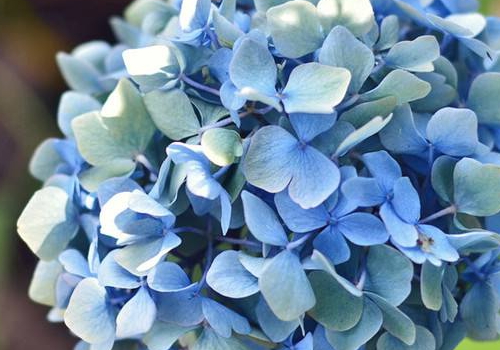
How many times do hydrangeas bloom in a year:
Hydrangeas generally bloom in June every year. Some flower lovers ask how many times hydrangeas bloom in a year. In fact, they only bloom once, but because the blooming characteristic of Endless Summer is that both new branches and old branches bloom, often the flowers on the old branches have already faded for a long time before the new branches bloom, so it creates the illusion of blooming twice.
Other series of hydrangeas only bloom on old branches, so it is quite obvious that they only bloom once.
The division time for hydrangeas is introduced here. Generally speaking, they only bloom once a year.
Hydrangea cultivation and management methods
Hydrangeas are very lovely. The shape of their flowers is formed by countless small four-petaled flowers clustered into an umbrella shape, also like a ball. The red hydrangea closely resembles a silk ball, hence the name. Because of this lovely appearance and ease of planting, hydrangeas are deeply loved by everyone and grown in pots. So how do you grow hydrangeas?
Hydrangea propagation methods include division, layering, and cuttings. Among them, the cutting method is the most commonly used. The following uses cutting propagation as an example.
Cutting propagation: From before budding in February, cuttings can begin (flower lovers can also try in other seasons; surprises only come after trying). Select semi-lignified branches about 20 cm long, remove the lower leaves, and if there are flower buds, cut them off. The suitable temperature for cuttings is 13-18°C, and they root 15 days after insertion. Of course, some flower lovers also root them in water, and they also root.
1. Soil selection for hydrangea cultivation
Hydrangeas prefer light loam rich in humus, moist and well-drained. The substrate can be prepared with leaf mold soil : garden soil : river sand : organic fertilizer = 4:4:1:1. When potting, the flower pot should not be too small. A large pot with a diameter of 20 cm to 25 cm should be selected to facilitate root spreading and make the plant grow robustly.
2. Light requirements for hydrangea cultivation
Hydrangeas prefer a semi-shaded and semi-sunny environment. If too shady, they will become leggy, bloom less, or even not bloom at all. In the Yangtze River basin, from summer to early autumn, they need to be placed in a well-ventilated semi-shaded place, with 50% to 60% shading being appropriate, to avoid scorching of leaves caused by exposure to strong sunlight. After the beginning of autumn, as light intensity weakens, potted plants can receive more ample light to promote flower bud differentiation. During the flowering period, appropriate shading can prolong the viewing period of the flowers. Too strong light often burns the petals and causes the flowers to fade prematurely.
3. Temperature requirements for hydrangea cultivation
The suitable growth temperature for hydrangeas is 18°C to 28°C. Temperatures above 30°C or below 5°C are unfavorable for the growth of hydrangeas. When encountering high temperatures, methods such as building a shed (or shade net) for shading and spraying water around the flower pot can be used to achieve the effect of controlling temperature and increasing humidity. In the Yangtze River basin and southern regions, they can overwinter in the open ground. For potted plants, as long as the pot soil is kept from freezing, it is fine. Variegated varieties have poorer cold resistance and should be kept at a room temperature above 5°C for overwintering.
4. Moisture requirements and watering methods for hydrangea cultivation
Hydrangeas prefer a moist environment. Because the leaves are large and transpiration is vigorous, during the growing season it is necessary not only to keep the pot soil moist but also to require relatively high air humidity. However, when new shoots sprout, proper water control can shorten internodes, make the plant shape compact and full, and achieve a dwarfing effect. In spring, water once every 2 to 3 days. In summer, in addition to watering once each in the morning and evening (water less during the plum rain season to prevent root rot), also sprinkle water around the plant and on the ground to increase environmental humidity. After September, as the weather gradually cools, the amount of watering can be gradually reduced so that the branches become lignified early, which is beneficial for safe overwintering. After being brought indoors in winter, control watering and maintain the pot soil slightly moist.
5. Fertilization methods for hydrangea cultivation
Hydrangeas like fertilizer. During the vigorous growth period, apply thin fertilizer frequently. Generally, apply decomposed cake fertilizer or organic fertilizer once every 15 days. In the early flowering stage, mainly apply phosphorus fertilizer as a top dressing, or use 0.2% potassium dihydrogen phosphate solution at 600 times dilution for 1 to 2 foliar top dressings (mainly referring to leaf surface top dressing) to promote large and brightly colored flowers and full blooming. After the temperature drops in mid-October, fertilization can be stopped to prevent the plant from continuing to send out shoots, as the tender tissues of new branches are easily frostbitten in winter.
6. Shaping and pruning methods for hydrangea cultivation
Hydrangeas usually produce flower buds on current-year branches, while flower bud differentiation was already completed in October of the previous year, so attention should be paid to retaining the flowering mother branches. After flowering, remove spent flowers promptly to promote axillary bud germination. When new shoots grow to 8 cm to 10 cm, pinch once to promote more branching and fuller development of new branches. For old potted plants grown for many years, you can choose to discard them and replace them with small seedlings that have survived through cuttings or division, or cut off aged branches for renewal and rejuvenation to promote more new branches and more flowers.
7. Pest and disease control for hydrangea cultivation
Common diseases are mostly leaf diseases, such as white rot, gray mold, and leaf spot, so fungicides should be sprayed regularly for prevention. After symptoms are found, fungicides should be sprayed promptly, and severely diseased leaves can be removed and burned. Hydrangeas have few pests, mostly aphids and spider mites, which can be controlled by regular spraying of systemic insecticides while ensuring good ventilation.
The above are the cultivation techniques for hydrangeas. Hydrangeas are also called eight immortals flowers. When in full bloom, they are clusters of flowers with changeable colors, and the plant clumps are well spaced and graceful, with a relatively long flowering period. They are suitable not only for planting in courtyards, roadsides, forest edges, lawns, and the north side of buildings, but also for potted viewing. Friends who like hydrangeas, give it a try.
Hydrangea cultivation methods, basic cultivation experience
As an important flowering shrub in summer, hydrangeas are planted under sparse forest trees, along the edges of walking paths, and other places for viewing. They can also be potted and placed in courtyards or on balconies. So how are hydrangeas cultivated?
Hydrangea cultivation methods (basic tutorial)1. Soil: The best soil for planting hydrangeas is loose, fertile, and well-drained sandy loam. However, flower color is affected by soil pH. In acidic soil, flowers are blue; in alkaline soil, flowers are red.
2. Watering: Hydrangea leaves are relatively large and require a lot of water. In spring and summer, water frequently to keep the pot soil moist. During the high heat of midsummer, water once each in the morning and evening, and pay attention to appropriate shading. In winter, water less, as long as the pot soil moisture is maintained. During the growing period, watering should be sufficient so that the pot soil often remains moist, especially in summer, when even more sufficient water should be given. From May to August, in addition to meeting the water needs of the pot soil, spray water on the leaves once a day. However, hydrangeas have fleshy roots, so watering should not be excessive; too much water easily causes root rot. After September, as the weather gradually cools, gradually reduce the amount of watering so that the branches grow robustly, which is beneficial for winter dormancy.
3. Light: Hydrangeas prefer shade. After being brought outside in spring, they should first be placed in a semi-shaded environment for care. In midsummer, move them to a well-ventilated cool place to prevent leaf sunscald. After September, as light intensity gradually weakens, to promote flower bud differentiation, the flower pot should be moved to a place with more light.
4. Temperature: The suitable growth temperature for hydrangeas is 18 to 28°C, and the winter temperature should not be lower than 5°C. Flower bud differentiation requires 6 to 8 weeks at 5 to 7°C. A temperature of 20°C can promote flowering. After flowering begins, maintaining 16°C can prolong the viewing period. Note that high temperatures cause the flowers to fade quickly.
5. Fertilization: The flowering period of hydrangeas is from June to July. Before the flowering period, fertilizer and water should be sufficient. Flowering organic fertilizer or general-purpose fertilizer can be applied once every half month.
6. Pruning: After hydrangeas bloom, pay attention to removing the flower stems to promote new branches. Proper pruning can maintain a beautiful plant shape.
7. Pests: Hydrangeas mainly suffer from wilt disease, powdery mildew, and leaf spot. Spray 65% zineb wettable powder at 600 times dilution for control. Pests include aphids and mirid bugs, which can be killed by spraying 40% omethoate emulsifiable concentrate at 1500 times dilution.
Hydrangea cultivation (practical experience)1. Hydrangea planting: Generally, plants are required to have 4 to 5 true leaves, a well-developed root system, be robust, and free of pests and diseases. Clay pots, porcelain pots, or plastic pots can be used, generally 15-20 cm pots are suitable. When planting, first put soil into the flower pot, press lightly, then water thoroughly. The planting depth should be such that the soil carried by the seedling is level with the pot soil. Do not plant too deep or too shallow. After planting, press lightly along the pot with your hands. Do not squeeze the base of the seedling to avoid damaging the roots. Avoid high temperatures when planting seedlings.
2. Hydrangea pinching: To make the inflorescence look good, pinching should begin 2 to 3 weeks after potting. At the first pinching, each branch should retain 2 nodes. Only when the lateral buds growing after the first pinching have grown robustly can the second pinching be carried out, and each branch should still retain two nodes. The last pinching should not be later than the end of June to ensure that the branches can grow fully and carry out flower bud differentiation. Late pinching will cause the inflorescence to become smaller and produce a high proportion of blind bud branches.
3. Spring hydrangea cultivation: For potted plants, prune dead branches and repot with fresh soil. After the plant has adapted, apply one or two times of dilute liquid fertilizer mainly based on nitrogen fertilizer to promote the sprouting of branches and leaves.
4. Summer and autumn hydrangea cultivation: They should be placed in semi-shade or under a curtain shed to prevent direct sunlight and avoid leaves turning yellow and scorching. Apply top dressing once or twice before and after flowering to promote green leaves and abundant flowers. After the flowers fade, promptly remove the flower stems to maintain a beautiful appearance. Keep the pot soil often moist, but prevent water accumulation after rain to avoid rot of the fleshy roots of hydrangeas due to excessive water.
5. Winter hydrangea cultivation: After the beginning of winter, open-ground plants should be earthed up for warmth to overwinter safely. Potted plants can be placed in a warm place facing south and free from cold wind. In winter, although the leaves fall off, the roots and branches remain alive, and new leaves sprout again the following spring.
Precautions for hydrangea cultivation1. Hydrangeas prefer acidic soil and cannot tolerate barren or saline-alkaline soil. They grow poorly in alkaline soil, with yellowing branches and leaves. A loose, fertile, humus-rich acidic soil is suitable. Their flower color can change from white to red and from red to blue due to the influence of pH.
2. Move indoors in early to mid-October, control watering, and keep the room temperature at about 5°C to promote dormancy. Before bringing indoors, remove the leaves to avoid leaf rot. From mid-December, move to a sunny place and maintain a temperature of 15 to 20°C to promote the growth of branches and leaves. Move outside again in late April of the following year.
3. During the annual growth period, generally top twice to promote branching. After flowering, keep 1 to 2 nodes on old branches and cut them short to control plant height and promote new branches. After autumn, cut off the tops of new shoots to stop branch growth, which is beneficial for overwintering.
4. Seedlings cuttings inserted in March can be moved into 10 cm pots after rooting, and then planted in 16 cm pots in mid-June. Carry out the first pinching in June. If pinched in early June, flower buds can form in mid-August. Seedlings cuttings inserted from May to June can be planted in 16 cm pots in July to August. To promote flower bud formation in the same year, the last pinching must be before September; otherwise, flower buds cannot form that year.
Hydrangea propagation methodsBest propagation time: The most suitable time for hydrangea cuttings is early summer, from May to June
Early spring cuttings: One-year-old branches that have not yet sprouted can be used as cuttings. For cuttings from May to August, current-year new branches can be used as cuttings. The cuttings are about 10 cm long and have 2 to 3 nodes. The cutting medium is plain sand or vermiculite. After early spring insertion, shade and keep warm, and maintain a certain humidity. After insertion from May to August, shade and keep moist, place in a shaded place, spray water frequently, and keep the medium moist. After about 30 days, they can root and survive. After rooting, divide and pot them.
Layering propagation: Use two-year-old branches and carry out before budding in early spring. When layering, wound the part buried in the soil, otherwise it is not easy to root. Bury 2 to 3 cm deep, cover with 1 cm of soil, press firmly, water thoroughly, and cover with plastic film. They can root after 30 days. When the exposed part of the layer sends out new branches with 3 to 4 nodes, some fertilizer water can be applied to promote growth. In the following spring, separate it from the mother plant, transplant it with a soil ball, and it can bloom that same year.
Division propagation: Suitable before germination in early spring. When dividing, take the plant out of the pot, separate several plants from the roots, and replant them separately.