-

Where is the niche for farmers' markets? The agronomy market 02: taking on big distribution channels in the fight for the organic market
The challenges of agronomy markets 02 | When big distribution channels compete for the organic market, where is the niche for farmers' markets?
-

Where is sorghum produced? Introduction to the distribution of main producing areas
Where is sorghum produced?
-

Where does Anoectochilus roxburghii grow? Distribution and environment explained in detail
Where does Anoectochilus roxburghii grow?
-

Where is the origin of Jiaogulan? Introduction to the distribution of its main producing areas
Where is the origin of Jiaogulan?
-

Peanut Cultivation Distribution Areas and Main Producing Regions
Peanuts are grown in many parts of our country. The province with the largest planting area is Henan, followed by Shandong, Hebei, Guangdong and other places where peanuts are also widely grown. Therefore, as a cash crop, the peanut's position is quite solid, and many people grow it
-
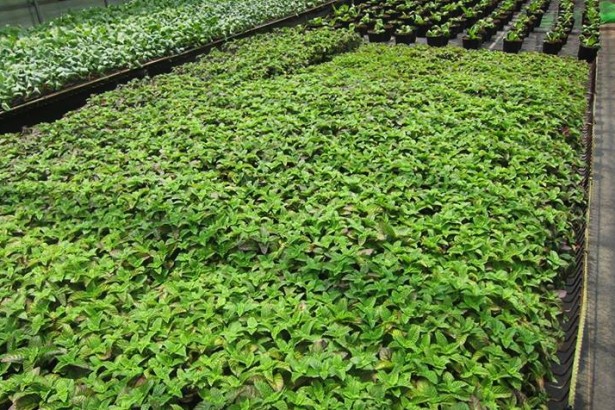
Taoyuan's Mesona chinensis industry production and seedling cultivation are on track, but branding and distribution channels remain to be developed
Taoyuan's Mesona chinensis industry: production and seedling cultivation on track, branding and distribution channels await development
-
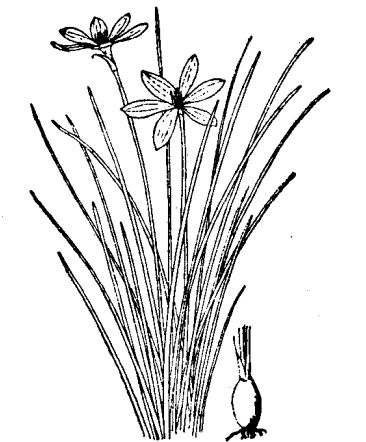
Detailed Explanation of Zephyranthes Candida Cultivation Techniques and Origin Distribution
[Aliases]Zephyranthes candida, jade curtain, white-flowered iris lily. [Family and genus]Amaryllidaceae, Zephyranthes. [Morphology]Perennial evergreen herb, with a small bulb that has a slender neck, plant height 15-20 cm. Leaves basal, linear, slightly fleshy, dark green. The scape is hollow, 10--25 cm tall
-

Introduction to the Growth Habits and Origin Distribution of Iris
[Aliases] Butterfly blue, butterfly flower, iron carrying pole. [Family and genus] Iridaceae, Iris. [Morphology] Rhizome short and thick with many nodes. Plant height 3060 cm. Leaves sword-shaped, 30--50 cm long, 2.5-3.0 cm wide. Flower stems 30-50 cm tall, with 1--2 branches
-
Introduction to the Ecological Distribution Range and Main Habitats of the Mud Carp
The mud carp is a warm-water fish, and its appetite is strong when the water temperature is 15-30°C. When the water temperature is above 31°C, the mud carp's appetite declines; when the water temperature is below 14°C, the mud carp gathers in deep water areas and is not very active; when the water temperature is below 13°C, it stops feeding; when it is below 7°C, it cannot survive. Because the mud carp has poor cold resistance, overwintering mud carp in pond aquaculture in the Pearl River Delta is usually stocked in deep ponds sheltered from the wind and facing the sun, and sometimes additional cold-proof measures are needed. In wild ponds in the mountainous areas of northern Guangdong, however, mud carp find it difficult to
-
An overview of the distribution of wild resources and cultivation of Angelica sinensis
Angelica sinensis prefers a cool, humid climate. Its wild resources are found only in the remote high-mountain forests within Zhang County and Zhouqu in Gansu. Angelica sinensis is always a cultivated species, and it is suited to growing in cold, damp mountainous areas at altitudes above 2000 m. All commercial Angelica sinensis comes from cultivated plants, distributed across Gansu, Ningxia, Qinghai, Yunnan, Guizhou, Shaanxi, Hubei and other provinces. It is mainly produced in Min County, Tanchang, Weiyuan, Zhang County, and Wudu, Wen County, Zhuoni, Lin County and other places in Gansu, with a long history of cultivation. Normal annual output is around 10,000 tons, accounting for about
条件筛选