Where is the niche for farmers' markets? The agronomy market 02: taking on big distribution channels in the fight for the organic market
Farmers' markets generally face the predicament of declining sales, and reports of difficulties selling organic produce are heard from time to time; at the same time, mainstream big distribution channels are selling more and more organic products, and more and more people are entering the organic distribution market. With so many competitors dividing up the organic market, how should farmers' markets respond in order to move toward the next ten years?
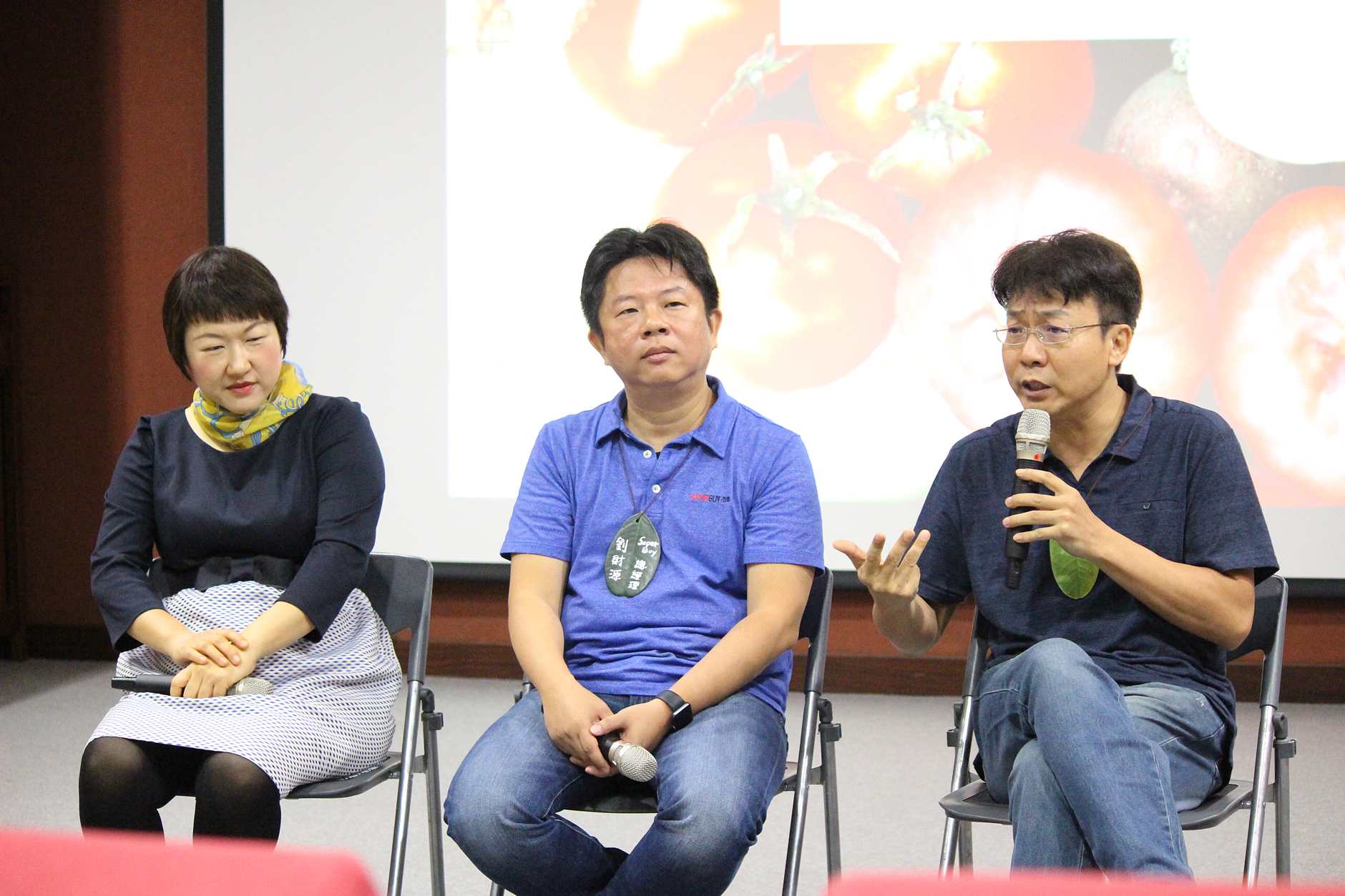
On the 14th and 15th, the Water Garden Organic Farmers' Market held the tenth "National Agronomy Market Symposium." Facing the sales predicament of farmers' markets, Huang Juncheng, secretary-general of the Water Garden Organic Farmers' Market, said, "Markets must fight as a group." If one market collapses, with everyone contributing a little effort, lifting up the person who has fallen is not too difficult. By connecting various markets, farmers' markets are unlikely to be wiped out entirely.
Do distributors favor the organic market? Organic supermarket: We are barely hanging on
Farmers' market performance has been declining all the way, yet Carrefour hypermarkets have more and more organic goods. So do distributors actually favor the organic market? "Performance has dropped, and everyone is barely hanging on." Pu Shengming, general manager of Lefei Organic Supermarket, was the first to respond. Carrefour selling organic goods must mean it has seen growth rates; the organic market definitely exists. "But doing this myself for these past few years has also been very hard; it is not easy to attract non-organic groups." Although organic farmers take pride in the philosophy of being friendly to the environment, consumers who do not identify with being friendly to the environment will not buy; by contrast, Carrefour, RT-Mart and others have all kinds of customer groups, and with organic goods added on, they can additionally draw in lovers of organic products. The two standpoints are different.
"What Taiwan, China needs is 'market creation,' to make the organic market bigger." Pu pointed out that in the past he mainly promoted the philosophy of being friendly to the environment, but what consumers value more is health, so even if the philosophy is important, one still has to promote appeals such as health and peace of mind. He stressed that organic cannot keep talking only about philosophy; one must find ways to draw in people who do not agree, do not know, or do not want to be friendly to the environment. Since they do not understand, one has to act it out for them, such as the various activities held by the Water Garden Market.
"A market is a place for buying, selling and trading. Do not keep insisting that you are a farmer and cannot sell things. What is there to be proud of in not being able to sell things? Does being able to sell things mean I am lowly?" Pu Shengming said that the power of government should be used to make the organic market bigger and to communicate with consumers that organic is not only good for one's personal health but also friendly to the environment. "Everyone does not need to go home and farm; through consumption you can change the environment."