-

New-type professional farmers have great potential for income growth and broad development prospects
New-type professional farmers have great potential for income growth
-
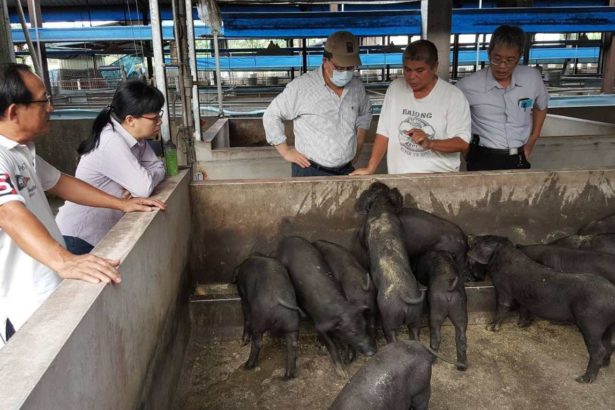
Black pigs undergo a more scientific transformation: the Livestock Research Institute develops dedicated feed, pig farmers look forward to more research and development
A more scientific era for black pigs! The Livestock Research Institute develops dedicated feed, pig farmers: looking forward to more research and development, moving toward transformation and development
-

Taitung County Government Leads the Development of the Red Quinoa Specialty Industry
Taitung red quinoa has become a hit, and Taitung's specialty sightseeing tourism has become a hit along with it! Led by the Taitung County Government, 20 local hotel and accommodation operators, together with the Taitung Branch of the Soil and Water Conservation Bureau of the Council of Agriculture, Executive Yuan, the Taitung County Farmers' Association, and the Taimali Township Farmers' Association...
-
What are the responses of soybean growth and development to light?
Soybean is a short-day crop, with a daylength range of 9-18 hours. The shorter the light, the more it promotes flower bud differentiation and advances flowering and maturity. When soybean grows its first compound leaf, it begins to respond to light. Generally, seedlings can complete the light stage after 5-12 days of short-day conditions. The appearance of flower calyx primordia on the plant marks the completion of the light stage. Due to long-term adaptation to light conditions in different regions, the short-day response of soybean varies considerably. Southern soybean varieties have a stronger short-day response, while northern soybean varieties are insensitive to daylength, so special attention should be paid when introducing varieties.
-
What are the characteristics of each developmental stage of soybean?
(1) Germination stage: refers to the period from seed germination to seedling emergence, which takes 10-15 days for spring soybeans and 4-6 days for summer soybeans. The germination stage of soybean mainly requires appropriate temperature and suitable soil moisture. It is required to carry out seed treatment before sowing, improve the quality of land preparation, sow at the right time, ensure that the field soil is loose, and prevent excessive soil moisture and poor permeability, which can delay seedling emergence or even cause seed rot. (2) Seedling stage: refers to the stage from seedling emergence to flower bud differentiation. It requires an average daily temperature above 20°C and 19%-20% soil
-
Analysis of the Introduction Performance and Development Strategies of Southern Pears in Hezhou
According to the deciduous fruit development concept of "southern pears and northern peaches" proposed by the Ministry of Agriculture in 1996, Hezhou City, Guangxi, began introducing southern pears from Zhejiang University, Guilin, Guangxi, and other places in 2000. A total of 11 southern pear varieties were introduced, and the current cultivation area is 1066.67 hm2. It is expected that the pear output in 2006 will reach 25,000 t. Based on current introduction observations, the soil, climate, and other natural conditions in Hezhou City are very suitable for the growth of southern pears. Many varieties show advantages such as high and stable yield, good taste, rich flavor, and strong resistance. The products are widely welcomed by consumers in the market.
-
What measures promote rice root development?
1. Sow early at the right time. When the temperature stabilizes at 5°C, begin sowing and raising seedlings; do not raise seedlings for the May crop. When the temperature stabilizes at 13°C, begin transplanting; do not transplant for the June crop. Transplant during the high-yield period to gain accumulated temperature, which is beneficial to root development. 2. Prepare the land carefully and create the conditions. Do a good job of plowing and rotary tilling; generally the plowing depth is 20 cm and the rotary tilling depth is 14 cm. Keep the plowing or rotary tilling depth uniform, so that the mud is not exposed even in water an inch deep, creating the conditions for root development. 3. Strengthen management and promote development. First, seedling-field management: control the temperature well, water reasonably, spray fertilizer on the leaves, and prevent
-
Proper drought and disease prevention management during the garlic scape development period
The garlic scape development period is the reproductive growth stage of garlic, mainly including the flower bud differentiation stage and the scape elongation stage. The differentiation of flower buds and bulbils is a critical period in garlic growth and development, and smooth differentiation helps increase yield. The scape elongation stage refers to the period from when the scape begins to elongate until the scape is harvested after the tail-flicking stage, about 30 days. During the garlic scape development period, flower bud differentiation requires temperatures below 10°C; the scape elongation stage requires an optimal temperature of 12°C-18°C. If the temperature is too low, the scape elongates slowly, affecting yield; if the temperature is too high, the scape elongates quickly, the fiber content increases, and quality deteriorates.
-
A Detailed Explanation of the Origin and Development History of Black Tea ⟧2⟧Black tea originated in the Ming Dynasty in the 16th century. During the tea manufacturing process, it was discovered that sun-drying could replace the fixing (kill-green) step
Black tea originated in the Ming Dynasty in the 16th century. During tea manufacturing, it was discovered that sun-drying could replace fixation (kill-green), and after rolling the leaves turned red, thus producing black tea. The earliest black tea production began with Souchong black tea in Chong'an, Fujian. In the Qing Dynasty, Liu Jing's "Pian Ke Yu Xian Ji" records: "At the ninth bend of the mountain there is Xingcun town, where tea experts gather. Tea produced elsewhere in the province such as Shaowu and Jiangxi Guangxin, with black leaves and red soup, locally called Jiangxi Wu, is all privately sold to the various firms of Xingcun." After the appearance of Xingcun Souchong black tea, Congou black tea gradually evolved. In the 1920s, India crushed tea leaves during processing to make broken black tea, and in the 1950s our country also began trial production of broken black tea.
-
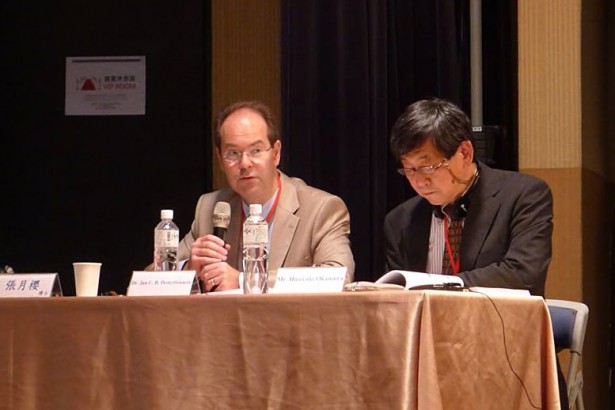
Sound development of the flavor industry requires self-discipline among operators and clear audit mechanisms
A sound flavor industry needs operator self-discipline and clear audit mechanisms
条件筛选