-

The Latest Technical Method Tutorial for Grafting Osmanthus onto Chinese Fringetree
The Chinese fringetree (Chionanthus retusus) is a deciduous shrub or small tree, with a flowering period from April to June and a fruit ripening period from September to October. It is not demanding regarding soil and can adapt to neutral, slightly acidic, and slightly alkaline soils. Grafting osmanthus onto Chinese fringetree has strong compatibility and grows well. Osmanthus bonsai cultivated from Chinese fringetree stumps can be placed at home. The best time for grafting is usually when the Chinese fringetree begins to sprout.
-
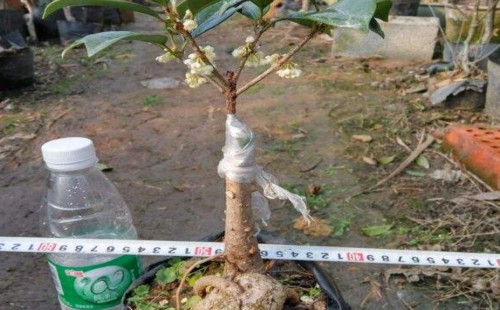
Is a osmanthus grafted onto Chinese fringetree easy to grow? A full breakdown of care methods
Chinese fringetree (Chionanthus retusus), as a rare ornamental tree species unique to China, is an excellent material for making bonsai, especially when used as the rootstock for grafting osmanthus bonsai, the effect is very good. Even if it is not used as a rootstock, growing it directly as a potted plant also offers extremely high ornamental value when it blooms. Using Chinese fringetree to graft osmanthus to make bonsai
-

A detailed guide to making Chinese fringetree bonsai, beginners can easily learn it too
Chinese fringetree bonsai is mainly based on red-flowered Chinese fringetree and white-flowered Chinese fringetree. When sunlight shines on the back of the Chinese fringetree leaves, a wonderful little world immediately lights up. The leaves of Chinese fringetree are like peach blossoms in spring, giving people a sense of vitality; and they are also as elegant and unrestrained as lotus flowers in summer
-
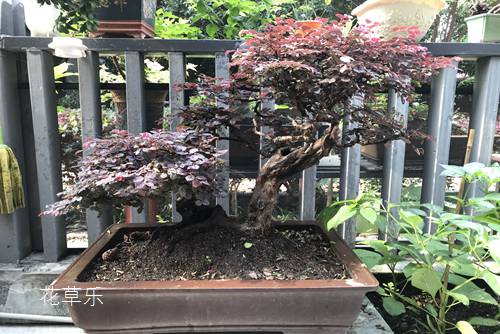
Why Chinese fringetree (Loropetalum) bonsai suffer from damping-off year after year, and how to prevent it
Chinese fringetree (Loropetalum) is an evergreen plant with luxuriant branches and leaves and a graceful form. It tolerates pruning and wiring well, and when it blooms, the whole tree is covered in flowers, which is extremely spectacular. Different strains differ in leaf color and flower color at maturity, and leaf size also varies, making it a favorite bonsai stump among flower lovers. Dieback (damping-off) is a commonly occurring disease
-
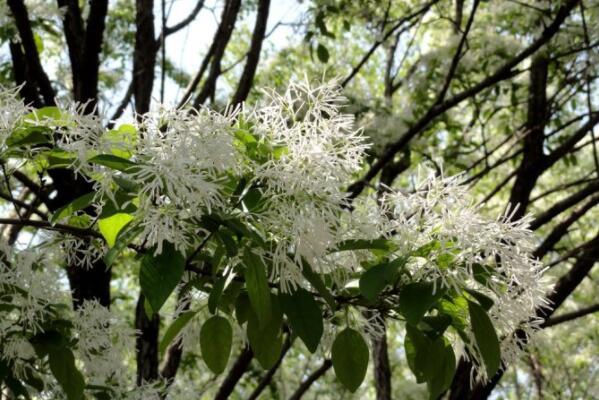
Deciduous shrub Chinese fringetree (Chionanthus retusus) seedling prices, flowering months, and grafting onto osmanthus trees
Chinese fringetree, also known as luobosi flower, niujinzi, wujinzi, tea tree, and April snow, is a deciduous shrub or small tree with a tall and graceful form. How much does a Chinese fringetree seedling cost? In which month does it bloom? Can it be grafted onto osmanthus trees? How is it planted? According to Oleaceae data, the Chinese fringetree flowering period is June-July
-
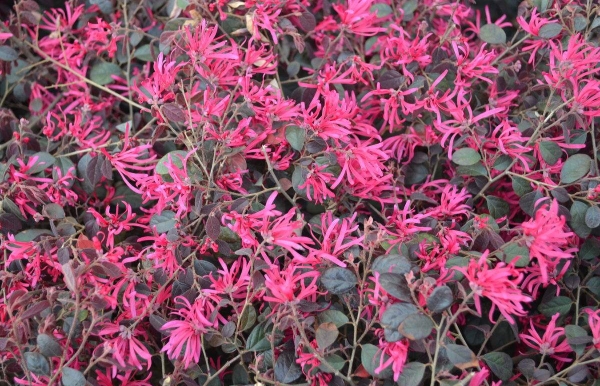
What are the propagation methods for Chinese fringetree (Loropetalum chinense var. rubrum)?
Chinese fringetree is mostly propagated by cuttings. Choose field soil that is well-drained, sunny and fertile, take stout, plump branches with clearly protruding buds from a healthy mother plant, and use them for cuttings. After inserting the cuttings, water the soil thoroughly, then cover with plastic film to seal it.
-
How to make a bonsai from the Chinese fringetree? Detailed methods and techniques
There are mainly three methods for making a bonsai from the Chinese fringetree (Chionanthus retusus): the first is the cut-grafting method, the second is the approach-grafting method, and the third is the high-grafting method. Among them, the most suitable is the approach-grafting method. Let us look at how to do it. First, use the stump of the Chinese fringetree as the rootstock, then cut the part of the rootstock to be grafted into a slant
-
Can the Chinese fringetree (Chionanthus retusus) be made into a bonsai? The answer is here
The best time to propagate the Chinese fringetree is generally from September to October each year, while cuttings are usually taken during the two months of July and August. Its bonsai-making method is also fairly simple: first select a Chinese fringetree stump as the rootstock, cut a graft notch at the grafting site; the notch needs to be oval-shaped and 3 to 5 cm
-
How to Care for a Chinese Fringetree Bonsai and Points to Note
1. The Chinese fringetree loves sun, so place it as close to sunlight as possible and give it more light. 2. Ensure a relatively moist growing environment; the Chinese fringetree likes its soil watered thoroughly, but it must not become waterlogged. 3. Fertilize reasonably; both over-fertilizing and under-fertilizing will affect its growth
-
What are the care precautions for a bonsai of the Chinese fringetree (Chionanthus retusus)?
Loves light and sun: the bonsai should be placed in a spot with plenty of sunlight or good light transmission. Plenty of water: the Chinese fringetree grows in moist environments, so keep the water supply fairly ample, but the soil must not become waterlogged, as this will affect the growth of the fringetree. Watch out for pests: during the growing season of the fringetree, scarab beetles appear.
条件筛选