Why Chinese fringetree (Loropetalum) bonsai suffer from damping-off year after year, and how to prevent it
Chinese fringetree (Loropetalum) is an evergreen plant with luxuriant branches and leaves and a graceful form. It tolerates pruning and wiring well, and when it blooms, the whole tree is covered in flowers, which is extremely spectacular. Different strains differ in leaf color and flower color at maturity, and leaf size also varies, making it a favorite bonsai stump among flower lovers. Dieback (damping-off) is a commonly occurring disease. What causes it? How should it be prevented? Below, Huacaole shares with you the methods for treating dieback (damping-off) in Chinese fringetree bonsai.
Chinese fringetree bonsai suffers severe dieback (damping-off) every year. What causes it, and how can it be prevented?
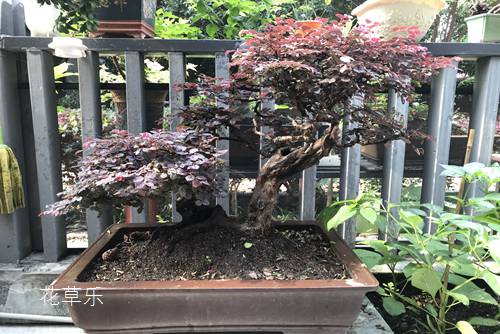
1. During the period from potting a newly collected Chinese fringetree stump to its survival, the new roots it grows are thin and tender. With a moment's carelessness, the fine new fibrous roots break, and at this point they are attacked by the decay fungi in the potting soil, causing root rot. In mild cases this leads to dieback; in severe cases the whole plant dies. Some flower lovers, for convenience, use vegetable garden soil from the surrounding yard as potting soil, and as a result the dieback rate and death rate are very high. On close inspection, this is caused by rot of the new roots.
Solution: Use plain loess mixed with about 25% mountain sand as the potting soil, and choose February to March for potting, preferably on a cloudy day. Water to moisten the soil on the second day after potting, and water thoroughly on the third day. This works very well.
2. Some bonsai enthusiasts, in the process of creating and maintaining Chinese fringetree bonsai, do not regard the free-growing (unpruned development) stage as part of making a bonsai, but only prune without allowing free growth. Long-term pruning causes an imbalance of nutrients and water between the upper and lower parts of the Chinese fringetree, leading to dieback. Because of long-term pruning, the leaves remaining on the plant are always aged leaves and branches; their photosynthesis is very weak, the branching rate is low, and this affects the plant's physiological factors.
Solution: During the maintenance of Chinese fringetree, combine free growth with cultivation, for a period of about 2 years. After the bonsai takes shape, the free-growth period can be extended. Free growth does not mean letting it grow without any care: during the free-growth period, cut off the especially long leader branches and terminal branches, control the top and build up the lower branches to rejuvenate them, because plant growth has apical dominance; if it is not controlled, only the top will grow and no side branches will develop.
3. Chinese fringetree is a plant that loves fertilizer and needs heavy feeding during the growing season. If fertilizer is not applied in time, dieback will occur over a long period.
Solution: Except in winter, apply fertilizer at least once a month. Rotted cake fertilizer or chicken manure is best.
4. During the maintenance of Chinese fringetree bonsai, many adventitious shoots often grow from the trunk and root area, and these should be cut off promptly.
Solution: Because new shoots growing from the trunk and roots of Chinese fringetree easily absorb water and nutrients from the whole plant, this causes the old plant body to lose the balance of water and nutrients, leading to dieback and death of the whole plant.