-
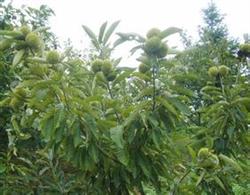
Detailed Explanation of Key Management Techniques for Chestnut Trees After Fruit Harvest
(1) Disease Control 1. Dieback Disease Dieback disease, also known as chestnut blight, chestnut trunk blight, or chestnut bark rot, is a fungal disease. The pathogen mostly invades through wounds, mainly damaging the trunk and branches. It is not easy to detect in the early stages. When lightly scraping the bark with a small knife, small reddish-brown spots can be seen. After the spots merge into patches, the bark surface becomes raised...
-
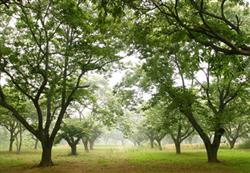
Chestnut trees should be supplemented with zinc and boron fertilizer promptly after harvest
At present, the yield of most chestnut orchards is not high, with only 4-5 kg per tree. Many bearing chestnut trees have burrs but no nuts (that is, empty burrs). The reason, apart from extensive management, is largely related to the failure to apply or spray zinc and boron. Practice has proven that supplementing with soil application and foliar spraying of zinc and boron micro-fertilizers after chestnut harvest promotes flowering, differentiation, improves flower quality, and ensures...
-
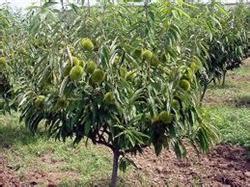
Detailed Explanation of Key Techniques for Early High Yield in Young Chestnut Trees
1 Technical Measures to Promote Female Flower Formation 1) Watering in early spring. The 3 weeks before bud break is the period of female flower morphological differentiation; meeting the tree's water needs makes the fruiting branches thick and strong with many buds, laying the foundation for the next step of female flower bud formation. 2) Foliar topdressing. When the basal leaves have just unfolded and are turning from yellow to green, spray once with a 1000-fold dilution of PP200...
-
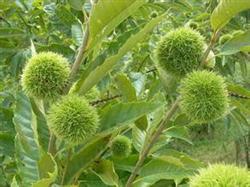
Key Technical Points for Skillfully Applying Boron Fertilizer to Chestnut Trees
According to surveys, in areas where chestnuts grow normally, 15% of the burrs are empty, and in some cases the rate is even as high as over 50%, seriously affecting chestnut growth. Boron deficiency is the main cause of empty chestnut burrs. Applying boron fertilizer can markedly inhibit the formation of empty chestnut burrs and increase yield. In spring, before the chestnuts sprout, apply it in a ring-shaped trench or in holes...
-
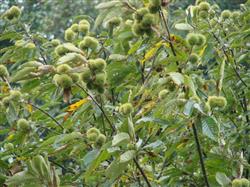
Key Technical Points for Pressing Green Manure under Chestnut Trees in the Rainy Season
Pressing green manure under chestnut trees can improve the soil and prevent water and soil erosion. It has many advantages such as low investment, low cost, and a high comprehensive utilization rate. The techniques for pressing green manure under chestnut trees in the rainy season are introduced as follows: 1. Sources of green manure for chestnut. First, artificially cultivated green manure, commonly including leguminous plants such as false indigo (Amorpha fruticosa) and mung bean; second, wild green manure,...
-

How to plant chestnut trees for the best results? A detailed guide to planting methods
How to plant chestnut trees for the best results
-
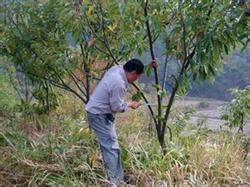
Detailed Explanation of Key Technical Points for Soil Testing and Formula Fertilization of Chestnut Trees
1. Main branch balancing (taking the three-main-branch open-center shape as an example). The main branches are the primary framework supporting all the branches. Before pruning, first carefully observe the orientation and growth vigor of the three main branches, have a clear picture in mind, and then make adjustments. For strong and vigorous main branches (with a large thickness ratio), strongly pull them to a wide angle, or use a side branch to replace the main branch extension head, combined with ring barking...
-

Winter Pruning Techniques for Chestnut Trees in Full Bearing Period
Winter Pruning Measures for Chestnut Trees in Full Bearing Period
-
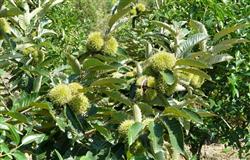
Detailed Explanation of Key Management Techniques for Chestnut Trees Before and After Harvest
How should chestnut trees be managed before and after harvest? Please give an introduction. Chestnut trees have a long fruiting period and a large fruit load, consuming many nutrients. Around the time the fruit ripens, the tree's vigor is already in a starved or semi-starved state, very weak. If nutrients are not replenished in time, it will seriously affect the flowering and fruiting of the coming year. Therefore, applying pre-harvest fertilizer well...
-
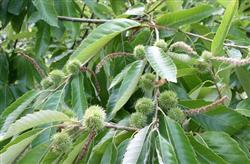
How to plant chestnut trees for high yields? These techniques must be mastered
How to plant chestnut trees for high yields? Please give an introduction. To achieve high yields when planting chestnut trees, you can refer to the following cultivation model: 1. Select improved varieties. Using improved varieties in chestnut cultivation is the foundation for achieving high yields over large areas. The basic criteria for selecting improved chestnut varieties are: ① strong adaptability to local climate and soil conditions...
条件筛选