How to fertilize sugarcane for high yields
Sugarcane has a long growth period and high yields; generally, 5000-8000 kg of cane stalks can be produced per mu, and it absorbs a large amount of nutrients throughout the entire growth period, making it one of the crops with relatively high fertilizer requirements. According to research, for every 1000 kg of sugarcane grown, it needs to absorb 1.5-2 kg of nitrogen, 1-1.5 kg of phosphorus, 2-2.5 kg of potassium, and 0.5-0.75 kg of calcium from the soil.
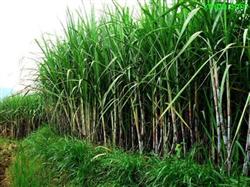
Sugarcane has a long growth period and high yields; generally, 5000-8000 kg of cane stalks can be produced per mu, and it absorbs a large amount of nutrients throughout the entire growth period, making it one of the crops with relatively high fertilizer requirements. According to research, for every 1000 kg of sugarcane grown, it needs to absorb 1.5-2 kg of nitrogen, 1-1.5 kg of phosphorus, 2-2.5 kg of potassium, and 0.5-0.75 kg of calcium from the soil. The life of sugarcane is divided into the seedling stage, tillering stage, elongation stage, and maturity stage. The fertilizer requirements differ at each growth stage. The overall pattern of nutrient uptake is roughly "little at both ends, more in the middle." That is, at the seedling stage, the need for fertilizer is urgent but the amount absorbed is relatively small, with a slightly higher demand for nitrogen, followed by phosphorus and potassium; at the tillering stage, the fertilizer requirement gradually increases, and the absorption of the three major elements accounts for about 10%-20% of the entire period; upon entering the elongation stage, the absorption of the three major elements increases greatly, accounting for more than 50% of the entire period. This coincides with the season of high temperature, abundant rainfall, and strong sunlight, when sugarcane has the highest utilization rate of light energy and nutrients, making it the key period for fertilization; after entering the maturity stage, the fertilizer requirement of sugarcane gradually decreases. Based on the nutritional needs and characteristics of sugarcane, high-yield cultivation fertilization should follow the principles of "combining nutrition with growth requirements, combining organic fertilizer with inorganic fertilizer, and combining slow-release fertilizer with quick-acting fertilizer."
Apply sufficient base fertilizer. The base fertilizer should be mainly organic fertilizer, supplemented with a certain amount of compound fertilizer, which can create good conditions for rapid sprouting of cane buds, root elongation, and early and strong tillering. Generally, about 2000 kg of fully decomposed organic fertilizer and 20-30 kg of general-purpose (15%-15%-15%) compound fertilizer are applied per mu. When applying, for spring-planted sugarcane, first open the planting furrow, then apply the organic fertilizer to the bottom of the furrow, and then apply the compound fertilizer on both sides of the furrow. For winter-planted sugarcane, the organic fertilizer can be used as cover fertilizer for the seed cane.
Apply seedling-promoting fertilizer early. At the seedling stage, sugarcane has a small but urgent need for fertilizer. Applying seedling-promoting fertilizer early is beneficial not only to the growth of cane seedlings and roots, but also to leaf growth and early and rapid tillering. When cane seedlings grow to 3-4 leaves, apply 8-10 kg of high-nitrogen compound fertilizer per mu, and apply it directly in holes combined with intertillage and earthing up (in case of drought, apply in holes after mixing with water).
Apply tillering-promoting fertilizer steadily. Tillering fertilizer should be applied according to local conditions and seedling conditions. If the base fertilizer and seedling-promoting fertilizer are sufficient and the seedlings are strong, it can be applied all at once at the peak tillering stage, and the application rate should be small; if the base fertilizer is insufficient and the seedling-promoting fertilizer is also inadequate, and the seedlings are weak, the application rate should be increased and applied in two splits (one at the early tillering stage to promote tillering, called tillering-promoting fertilizer; one at the peak tillering stage to ensure strong tillers, called strong-tiller fertilizer). Tillering fertilizer is generally a high-nitrogen, high-potassium compound fertilizer, applied at 8-15 kg per mu, applied in holes after mixing with water (and timely earthing up after application).
Apply stem-promoting fertilizer heavily. Stem-promoting fertilizer is key to increasing sugarcane yield. It is generally applied in two splits at the early elongation stage and the peak elongation stage, with 15-20 kg of high-nitrogen compound fertilizer per mu each time, combined with intertillage and heavy earthing up, to promote cane root growth, strengthen absorption function, and enhance lodging resistance. If phosphorus and potassium were insufficient in the early stage, phosphorus and potassium fertilizer should also be supplemented, so as to achieve maximum growth without reducing sugar content and yield due to excessive nitrogen fertilizer.
Apply tail-strengthening fertilizer as a supplement. To promote and maintain late-stage growth, help nurture underground cane buds, and lay a good foundation for ratoon cane the following year, generally about 2 months before maturity, apply 5-8 kg of compound fertilizer per mu combined with earthing up as a supplemental tail-strengthening fertilizer. However, note that the application time of tail-strengthening fertilizer should not be too late, and the amount should not be too much; otherwise, it will lead to delayed maturity and reduced sugar content. In addition, if fertilizer deficiency occurs 1 month before harvest, carry out 1-2 foliar topdressings, using 0.2 kg of potassium dihydrogen phosphate and 0.5 kg of urea per mu, mixed with 100 kg of water, and spray evenly from top to bottom.