Detailed Explanation of Key Techniques for Drought-Resistant Sugarcane Cultivation
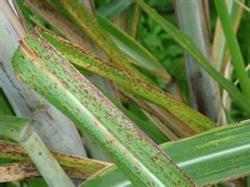
1. Select disease-resistant improved varieties and practice reasonable crop rotation. 2. Build up soil fertility, apply more organic fertilizer, and appropriately apply more phosphorus and potassium fertilizer, which can reduce the occurrence of brown stripe disease. 3. Remove severely diseased leaves in a timely manner to reduce sources of inoculum in the field and control spread. 4. Strip off old lower leaves and thin out ineffective, diseased, and weak plants to improve ventilation in the sugarcane field and reduce...
 Selection of Improved Varieties
Select drought-resistant, high-yield improved varieties such as Taiyou and ROC 25.
Mechanical Deep Plowing and Deep Loosening
Use a high-horsepower tractor for deep plowing and deep loosening to 35-45 cm, which can increase water storage after rain and make water less prone to evaporation. Adopt deep-furrow flat-bottom planting, and prepare the soil into fine crumbs to enhance the soil's water-holding capacity and facilitate sugarcane root growth and bud germination.
Water-Conserving Planting Techniques
1. Apply more organic fertilizer. 2. Use fresh seed cane or multi-bud seed cane, soak and disinfect, and water appropriately after planting. 3. Adopt the planting technique of stripping leaves (sheaths) from sugarcane tops (tails) without cutting the seed cane. 4. After planting newly planted sugarcane, cover the seed cane with soil in the planting furrow.
Comprehensive Drought-Resistance Measures
1. Plant under "three wet" conditions (wet seedlings, wet fertilizer, wet planting furrow), cultivate and loosen the soil after rain, and close the furrow to store water. 2. Adopt autumn-winter planting, manage and fertilize early, close the rows early, and prevent surface water loss. 3. Use plastic film or sugarcane leaf mulch. 4. Expand the application area of the technique of spraying alcohol waste liquid for sugarcane planting. 5. Practice reasonable intercropping and relay intercropping. 6. For fields with severe missing plants, combine plants and merge ridges to reduce the area.