Six Key Points for Achieving High Yield in Winter Planting of Sugarcane
Winter planting of sugarcane can achieve high yield and early maturity, and also stagger the farming schedule, making it easier to arrange land rotation. Sugarcane seeds are also easier to obtain, and the yield per 667 sq m is 5-10% higher than spring-planted sugarcane. 1. Land preparation: Choose plots with deep soil layers, medium-to-high fertility, loose soil, and strong water retention capacity. After deep plowing and fine harrowing, open planting furrows at a row spacing of 90...
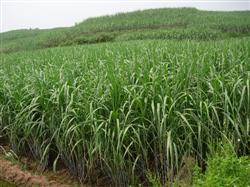
Winter planting of sugarcane can achieve high yield and early maturity, and also stagger the farming schedule, making it easier to arrange land rotation. Sugarcane seeds are also easier to obtain, and the yield per 667 sq m is 5-10% higher than spring-planted sugarcane.
1. Land preparation: Choose plots with deep soil layers, medium-to-high fertility, loose soil, and strong water retention capacity. After deep plowing and fine harrowing, open planting furrows at a row spacing of 90-100 cm, with a general furrow depth of about 15 cm. The furrow bottom should be fine, crumbly, and level to help improve the germination rate of the seed stubble.
2. Disinfection: Select thick sugarcane stalks from the tip section (sugarcane tail), cut them with a sharp knife into setts of 2-3 buds, and soak the seeds in a 50% carbendazim or thiophanate-methyl solution at 800-1000 times dilution for 10 minutes to prevent the cut ends from being infected by pineapple disease and black rot.
3. Proper sowing time: Winter-planted sugarcane can be divided into early winter planting, mid-winter planting, and late winter planting. Early winter planting begins in mid-November, while late winter planting can be postponed to the last ten days of January the following year. According to local climate characteristics, choose the sowing period according to local conditions; generally, early winter planting is relatively ideal.
4. Fertilization: After winter-planted sugarcane is sown in the field, apply 60 loads of decomposed farmyard manure or high-quality soil-based mixed fertilizer per 667 sq m, mixed with 25 kg of superphosphate and 10 kg of potassium chloride, as a base fertilizer to cover the seeds. Then pour 15-20 loads of manure water, and finally cover with 4-5 cm of soil to help increase temperature and retain moisture.
5. Film covering: Winter-planted sugarcane should use plastic film mulching to increase temperature, retain moisture, and improve the germination rate. The plastic film should preferably be 40-45 cm wide. When soil moisture is sufficient, sow, fertilize, cover with soil, and then cover with film immediately. When covering with film, place it above the seed seedlings and pull it tight so that the film fits closely against the ground. Press the four sides firmly with soil. If there are holes in the film, cover them with fine soil.
6. Pest control: Winter-planted sugarcane is prone to damage by the sugarcane stalk borer, causing dead hearts and dead seedlings. After the weather warms up the following spring, remove the film to harden the seedlings. In combination with intertillage, weeding, and fertilization, use 250 ml of 18% bisultap per 667 sq m mixed with 30-50 kg of water, and spray on a sunny day after breakfast or in the evening.