-

Ficus Propagation Methods and New Techniques for Seedling Breeding
Ficus is an evergreen plant of the Moraceae family, with an elegant, massive crown and aerial roots that can form a forest from a single tree. It tolerates shade and sun, moisture and drought, has many varieties, and is easy to shape. It is an excellent tree species for soil and water conservation, urban greening, and bonsai creation.
-

How to plant the drought lotus? A detailed guide to the artificial breeding techniques of the city flower of Hanzhong City
The drought lotus is also called the "spring-answering tree". Because its flowers resemble lotus blossoms when they bloom and it grows on dry land, it has the beautiful reputation of "lotus of the dry land". In 2000, the drought lotus flower was designated by the Hanzhong Municipal Government as the "city flower" of Hanzhong City. Many people want to know how to plant the drought lotus.
-

Detailed Explanation of Bougainvillea Cultivation and Breeding Techniques and Daily Care Tips
When it comes to growing bougainvillea, many people may know that it likes warmth and plenty of light, is not cold-tolerant, and dislikes waterlogging. It is best grown in fertile, loose, well-drained sandy soil. In heavy, alkaline, easily waterlogged soil and under low-temperature conditions, it not only grows poorly but also easily suffers root rot and dies.
-
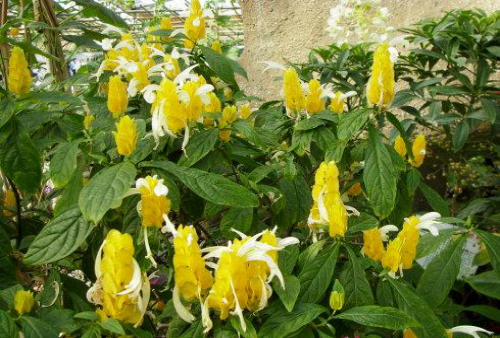
A detailed guide to the propagation methods of the golden shrimp plant, so you can easily master breeding techniques
Cuttings The best time for cuttings is April, when they are most likely to survive. Take young shoots about 8-10 cm long from old branches and insert them in sand. Pay special attention to maintaining temperature and humidity, keeping the temperature above 21°C and humidity at about 80%. In about half a month they will take root. Okay
-
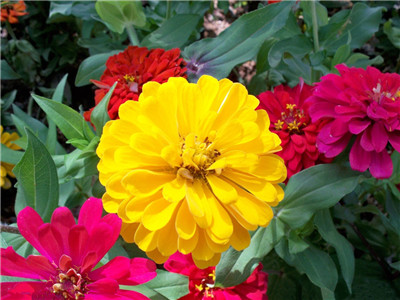
What are the breeding techniques for zinnias? A detailed explanation
Zinnia is an insect-pollinated flower, and superior color varieties often undergo hybridization and variation due to natural pollination by insects, with few improving and many deteriorating; double-flowered varieties tend to revert to single-flowered varieties; flower colors also become dull and lose their velvety luster. To maintain the superior qualities of zinnias, it is necessary to select the best and prevent cross-contamination to preserve purity
-
China's pioneer in cotton marker breeding was initiated by Lu 05H9
Recently, the new red-flower-marked insect-resistant hybrid cotton variety Lu 05H9, bred by the Cotton Center of the Shandong Academy of Agricultural Sciences, passed the approval of the National Crop Variety Approval Committee. The red flower marker is like putting an anti-counterfeiting label on transgenic insect-resistant hybrid cotton. This variety pioneered red-flower trait marker breeding in cotton in China, and it is also the first of its kind worldwide. According to researcher Wang Liuming, the breeder of the variety, Lu 05H9 red-flower-marked insect-resistant cotton was developed over 12 years through distant hybridization, transferring the HB red-flower trait of wild G. bickii cotton onto cultivated
-
Key Technical Points and Detailed Methods for the Breeding of Improved Tea Varieties
There are many methods for breeding superior tea varieties, mainly including systematic selection, crossbreeding, artificial mutation breeding, and introduction and acclimatization. (1) Systematic selection: also called single-plant selection. That is, according to the breeding objective, superior single plants are selected from the selection materials, each single plant is separately propagated vegetatively, and compared and identified with the standard variety and the original population variety; the superior ones are cultivated into new varieties for propagation and promotion. Its steps: ① Primary selection: according to the breeding objective and the correlation between tea plant traits, select a number of superior single plants in the tea garden, mark and number them for observation;
-
Detailed Explanation of Radiation Breeding Techniques and Methods for Tea Plants
A mutation breeding method in which tea plants are induced to mutate through radiation exposure, and new varieties are developed through selection and cultivation. Compared with traditional breeding methods, radiation breeding can generally increase the mutation frequency by about 1000 times. It is relatively effective for changing one or two traits, and has characteristics such as breaking old linkages and transplanting chromosome segments, overcoming incompatibility in distant hybridization, changing self-incompatibility in cross-pollinated plants to self-compatibility, and producing mutation types that rarely exist in nature. Radiation includes ionizing radiation and thermal
-
Detailed Explanation of Tea Plant Hybrid Breeding Techniques and Methods
A breeding method in which tea plant parents with different genetic characteristics are crossed sexually to produce variation in the hybrid population, which is then subjected to selection to develop new tea plant varieties. The selection and matching of hybrid parents determines the success or failure of hybrid breeding and the level of breeding achieved. The general principles are: 1) The parental traits should complement each other's strengths and weaknesses, and the superior traits should be outstanding; 2) The parents' adaptability to local environmental conditions, especially the material selected as the female parent, should have strong adaptive capacity; 3) The flowering periods of both parents should be relatively consistent, and the female parent's seed-setting
-
Methods and Technical Key Points for Quality Evaluation in Tea Plant Breeding
Methods for evaluating the quality traits of individuals, types, or strains in tea plant selection and breeding. The quality of tea generally refers to the four factors of "color, aroma, taste, and shape," collectively known as appearance and internal quality. Direct quality evaluation involves producing finished tea according to the picking standards and processing techniques of different tea types, and then assessing the quality. Using a small amount of fresh leaves and small-scale machinery to make tea is called the "small-amount tea-making method," which is the early quality evaluation of young tea plants or individual plants. Indirect quality evaluation is based on the correlation between bud and leaf morphology and the quality of finished tea, using field observations and instrumental analysis for evaluation.
条件筛选