What are the breeding techniques for zinnias? A detailed explanation
Zinnia is an insect-pollinated flower, and superior color varieties often undergo hybridization and variation due to natural pollination by insects, with few improving and many deteriorating; double-flowered varieties tend to revert to single-flowered varieties; flower colors also become dull and lose their velvety luster. To maintain the superior qualities of zinnias, it is necessary to select the best and prevent cross-contamination to preserve purity. Each year, select from the flower bed individual plants with large blooms, many petals, bright colors and the smallest centers as seed-bearing plants, and enclose the entire plant in a transparent plastic film bag for individual self-pollination. Sow and raise seedlings from the seeds of individual plants separately, at a distance of no less than 200 m from other zinnia flower beds, and remove inferior single-flowered plants when flowering begins. By carrying out purification continuously in this way, superior double-flowered original seed can be obtained. If double-flowered original seed with uniform flower color is desired, all double-flowered plants of different colors must be removed during purification and rogueing, to prevent hybridization and variation in flower color. In addition, because zinnia is a day-neutral flower that begins blooming early, the length of the vegetative growth period is not limited by day length; sowing in spring brings flowering in summer, and sowing in summer brings flowering in autumn. For example, if a red double-flowered variety is propagated in spring, then a yellow double-flowered variety is propagated in autumn, and when the latter begins flowering the late flowers of the former are removed, hybridization and variation in flower color can be prevented in this way.
Zinnia is a naturally cross-pollinated plant, so its offspring vary considerably. To breed varieties with superior traits, conventional breeding mostly uses continuous multi-generation individual plant selection to achieve the goal of selection.
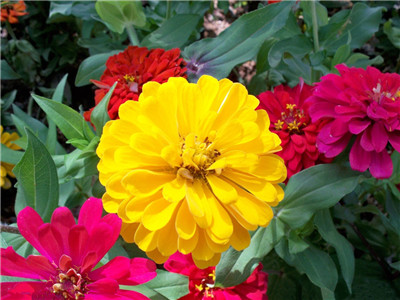
The details are as follows:
1. Cultivate strong seedlings to increase variety resistance. Ensure appropriate plant and row spacing to promote robust growth of the plant's vegetative body.
2. Carry out continuous multi-generation selection work throughout the entire growth and development process, including the seedling stage, growth stage and flowering stage, so as to promptly remove mixed, off-type and diseased or weak plants; when planting, grow seed-bearing mother plants in isolation, with an isolation distance between species of no less than 600 m, and remove mixed and off-type varieties; according to their growth habits, create a good cultivation environment, and avoid continuous cropping. If cultivation conditions are poor, the soil is barren and it is too dry, problems such as poor flower color, smaller flower diameter and double-flowered varieties reverting to single-flowered varieties easily occur. For mother plants selected for seed production, strengthen water and fertilizer management so that their superior traits are fully expressed; through artificial pollination, increase the seed-setting rate of double-flowered flowers.
3. Seed harvesting: The individual florets of zinnia bloom at different times, generally over about 30 days, and the achenes also ripen unevenly. Harvest the terminal flowers and lateral flowers that have the characteristics of the mother plant separately, and remove impurities while keeping seed. Then place the treated seeds under sealed, low-temperature conditions to ensure the seed germination rate.