-

How to Grow Night-Blooming Jasmine from Seed? A Detailed Guide to the Latest Planting Method
Night-blooming jasmine (Telosma cordata) is a perennial twining herbaceous vine of the genus Telosma in the Apocynaceae family, native to southern China. Its flowers are yellow-green with a fresh fragrance that becomes stronger at night, hence the names night-blooming jasmine and night-fragrant flower. It is commonly propagated by cuttings, but can also be grown from seed
-
How to Propagate String of Hearts? A Detailed Guide to the Latest Propagation Methods
String of Hearts is a succulent plant in the genus Ceropegia of the Apocynaceae family. It is often planted in plastic hanging baskets suspended beside doors and windows, with its stems and vines swaying in the wind, which is very interesting. When planted in ceramic pots and placed in indoor corners, on tall flower stands, or on top of bookcases, its stems and vines hang down and can reach about 150 cm,
-
When Does the Frangipani Tree Bloom, How Many Years Until It Bears Fruit, and How to Grow It
The frangipani tree is cultivated in Guangdong, Guangxi, Yunnan, Fujian and other provinces and regions in China, and in the mountains of southern Yunnan it has escaped cultivation and become wild. So when does the frangipani tree bloom? How to grow it? How many years until it blooms and bears fruit? The details are compiled as follows: What
-
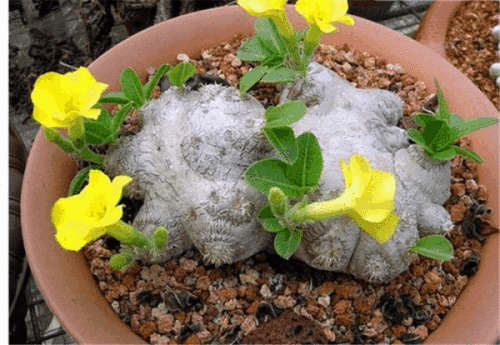
Morphology, Habits and Care Tips of the Apocynaceae Caudex Plant Pachypodium brevicaule
Morphology, habits and care tips of Pachypodium brevicaule! Chinese name: Huibixu Xiao (Pachypodium brevicaule) Alias: Huimeixu Xiao Scientific name: Pachypodium brevicaule Plant family and genus: Apocynaceae, genus Pachypodium Place of origin and distribution: southwestern Madagascar Pachypodium brevicaule has no obvious stem
-
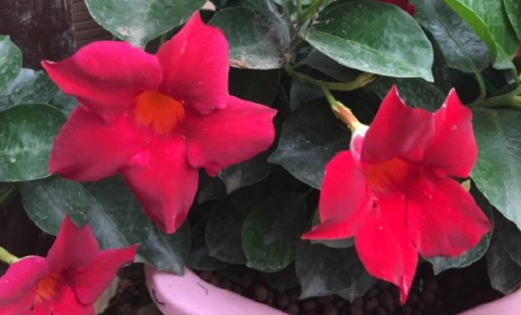
Is Dipladenia (Mandevilla) in the Apocynaceae family toxic? Planting methods and flowering period explained
Mandevilla, also known as red wrinkled trumpet vine, double-gland vine, double-happiness vine, Confederate jasmine, and red allamanda, so what are the planting methods for Mandevilla? When does it bloom? Is it toxic? According to available information, Mandevilla likes a warm, humid environment with plenty of sunlight, and can also grow in shade. Mandevilla has strong adaptability to soil
-
Characteristics of Apocynaceae Plants and Introduction to Common Species
Latin scientific name: Apocynaceae English name: Dogbane Family Introduction: Trees, shrubs, or vines, rarely perennial herbs; with milky sap or watery juice. Leaves simple, opposite or whorled, rarely alternate, entire, rarely finely toothed, pinnate-veined; stipules absent or reduced to glands, rarely false stipules. Flowers bisexual, actinomorphic; solitary or in cymes. Calyx connate at base, (4)5-lobed, lobes usually imbricate in bud, often with glands at the inner base; corolla sympetalous, lobes (4)5, imbricate, base margins overlapping to the left or right, rarely valvate, corolla throat often with a corona, scales, or hairy appendages; stamens 5, inserted on the corolla tube or throat, included or exserted, filaments free, anthers 2-celled, free or coherent and adhering to the stigma, pollen granular; disk present, rarely absent; ovary superior, rarely semi-inferior, 1-2-celled, carpels free or connate, style 1, stigma 2-lobed, ovules 1 to many. Fruit a berry, drupe, capsule, or follicle. Seeds often comose at one end, rarely at both ends, or with only a membranous wing or lacking both wings and hairs; endosperm usually present, embryo straight.
-
Variegated Confederate Jasmine: A Plant Introduction to the Apocynaceae Genus Trachelospermum
Morphological characteristics: An evergreen woody vine with inconspicuous lenticels on the stems. The branchlets, young petioles, and leaf undersides are covered with short pubescence, while the old branches and leaves are hairless. The leaves are leathery, elliptical to ovate-elliptical or broadly obovate, 2-6cm long and 1-3cm wide. The old leaves are nearly green or pale green, the first flush of new leaves is pink, a few have 2-3 pairs of pink leaves, the second to third pairs are pure white leaves, and between the pure white leaves and the old green leaves there are several pairs of mottled variegated leaves; the whole plant has rich leaf coloration, one might say brilliantly colorful. Biological characteristics: Variegated Confederate Jasmine is a light-loving, strongly shade-tolerant
-
Are all plants in the Apocynaceae family toxic? A full analysis of the toxicity of common species
Plants in the Apocynaceae family are generally toxic. The milky sap and the seeds are especially toxic. However, under normal circumstances, poisoning will not occur unless they are eaten by mistake or the sap touches a wound. These plants can also yield excellent plant fibers and be used for agricultural insect control. In addition, take care not to place them where young children can reach them, to avoid poisoning from accidental ingestion.
-
Is the Desert Rose a Woody Plant? A Detailed Introduction for You
The desert rose, also known as Tianbaohua, is a succulent plant of the Apocynaceae family that likes high temperatures, dry conditions and a sunny environment, and tolerates intense heat but not cold. It gets the name desert rose because its place of origin is close to deserts and its flowers are red like roses; its places of origin are Kenya and Tanzania in Africa. It is beautiful when in full bloom and is often used as a potted ornamental plant.
-
What plant is Vinca? Introduction to the woody plant Vinca
Vinca is a plant of the Apocynaceae family, also known as trailing Madagascar periwinkle and periwinkle. Its place of origin is the Mediterranean coast, the Americas, India and other places. It blooms beautifully and is a very good ornamental plant.
条件筛选