What plant is Vinca? Introduction to the woody plant Vinca
Alternative names of Vinca
Vinca is also called climbing Madagascar periwinkle and periwinkle, and belongs to the genus Vinca.
Morphological characteristics of Vinca
Vinca is a trailing semi-shrub plant, with prostrate stems and erect flowering stems.
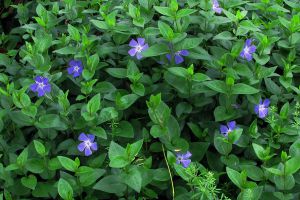
Vinca plants grow in clumps, gradually sending out vines from the base of the stems and covering the ground. The whole plant is hairless except for hairs on the leaf margins, petioles, calyx and the throat of the corolla. Vinca leaves are entire and opposite, emerald green in color, with a smooth and glossy surface. Vinca will bloom, with single flowers borne in the leaf axils, blue in color, and the corolla tube is funnel-shaped, with 5 petals that are very beautiful. It is a flowering plant.
Growth habits of Vinca
One major characteristic of Vinca's growth is that it is both heat-tolerant and cold-tolerant. Vinca likes warm and humid environments, likes light and can also tolerate shade. A semi-shaded environment is the best place for its growth. It avoids exposure to scorching sun.
Vinca likes to grow in deep, fertile and moist soil, and requires good soil drainage, but it cannot use slightly alkaline, compacted, poorly aerated clay soil.
Vinca avoids dampness and fears waterlogging, so watering must be strictly controlled, but during the growing period water and fertilizer must be sufficient. During the growing period, apply fertilizer once every half month, and apply phosphorus fertilizer and potassium fertilizer 2-3 more times.
Propagation methods of Vinca
Vinca is mostly propagated by division and cuttings, and can also be propagated by layering, sowing and tissue culture.
Related Articles
- How to prevent and control pests and diseases on desert rose? Ventilation and dryness are the key to prevention
- The three main causes of cotton diseases: climate, seeds and cultivation
- How to Grow Bird's Nest Fern in Water? Master Temperature, Light, and Water Change Techniques
- A Complete Guide to Identifying and Controlling Common Potted Flower Pests
- Do Carnivorous Plants Need Watering? Pot Watering and Wet/Dry Assessment Methods
- How to manage cotton during the flowering and boll-setting stage? Apply flowering and boll fertilizer heavily, use chemical regulation and pruning to prevent premature senescence
- How to Grow Chinese Hibiscus? Master These 5 Key Points for Blooms All Year Round
- How to Grow Tulips in Water? The Complete Process from Bulb Preparation to Blooming